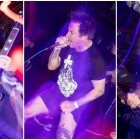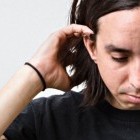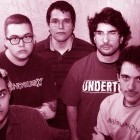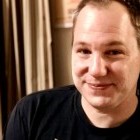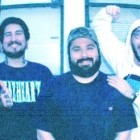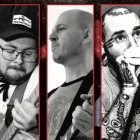
Few musicians can claim a résumé that threads through as many pivotal corners of hardcore as Franklin Rhi. Beginning at the dawn of the '90s decade, the Queens, New York native carved out a discography that includes records by Crown of Thornz, 108, and Shelter, not to mention the more underground NYHC bands, Show of Force and Ocean of Mercy.
Despite growing up very close to each other and being around the same age, I didn't get to know Franklin til a few years ago when Andrew Kline (Strife, Berthold City) introduced us. We've become good friends in the time since and I wanted to interview him to talk about his life before hardcore, his musical career, the lessons learned along the way.
Let's start with your upbringing. I have a feeling I will probably relate to a lot of it being the son of immigrants myself.
Okay, so my parents came from North Korea. The came cross the border to the south during the war. From what I was told, my grandmother had to cross the border from the north, a baby tied on her back and her front, running for her life dodging bombs.
I was born in Jamaica, Queens, and then we ended up in Corona for a little bit, kind of near the Corona Ice King and all that stuff. From there, we moved to Forest Hills for a little bit, which is where I discovered, you know, more metal and stuff like that.
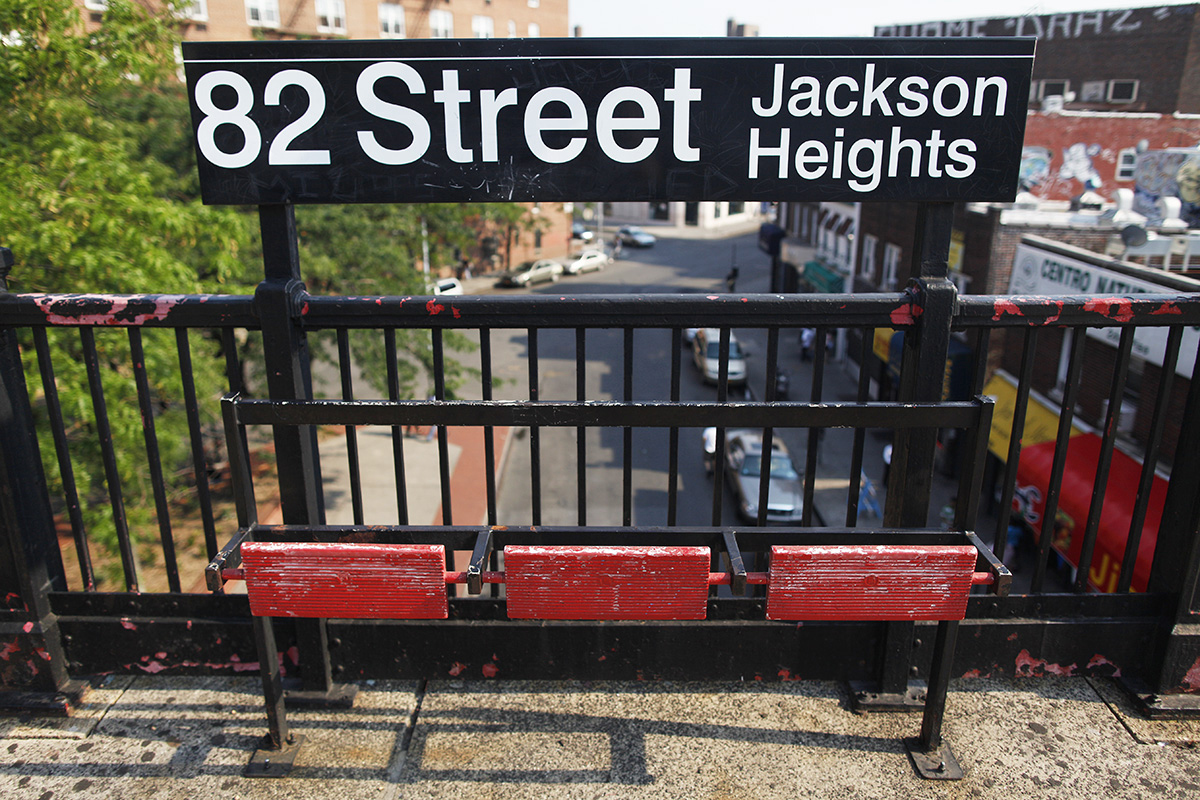
After my parents got separated, my mom took me and my brother away from my dad. We moved to Jackson Heights, and that's where the whole can of worms opened up [laughs].
When did music enter the picture for you?
I definitely had the music bug. I would probably say '81, '82. I started noticing the guys in the back of the candy store with the black shirts, kind of the long hair, smoking and cursing and with the leather vests on and I was very intrigued by something about it. Obviously, these guys were late '70s or early '80s rockers. It was not really metal.
I was intrigued with the shirts they were wearing and the whole look. So that took up my interest. I started looking up some of these bands, like Foghat and The Who, and I was severely disappointed because I wanted something hard and fast, man. Those bands didn't cut it. So, then in the pizza shop right next to the candy store, there's a jukebox there and [Black Sabbbath's song] "Paranoid" was on it. Okay, so that opened things out for me.
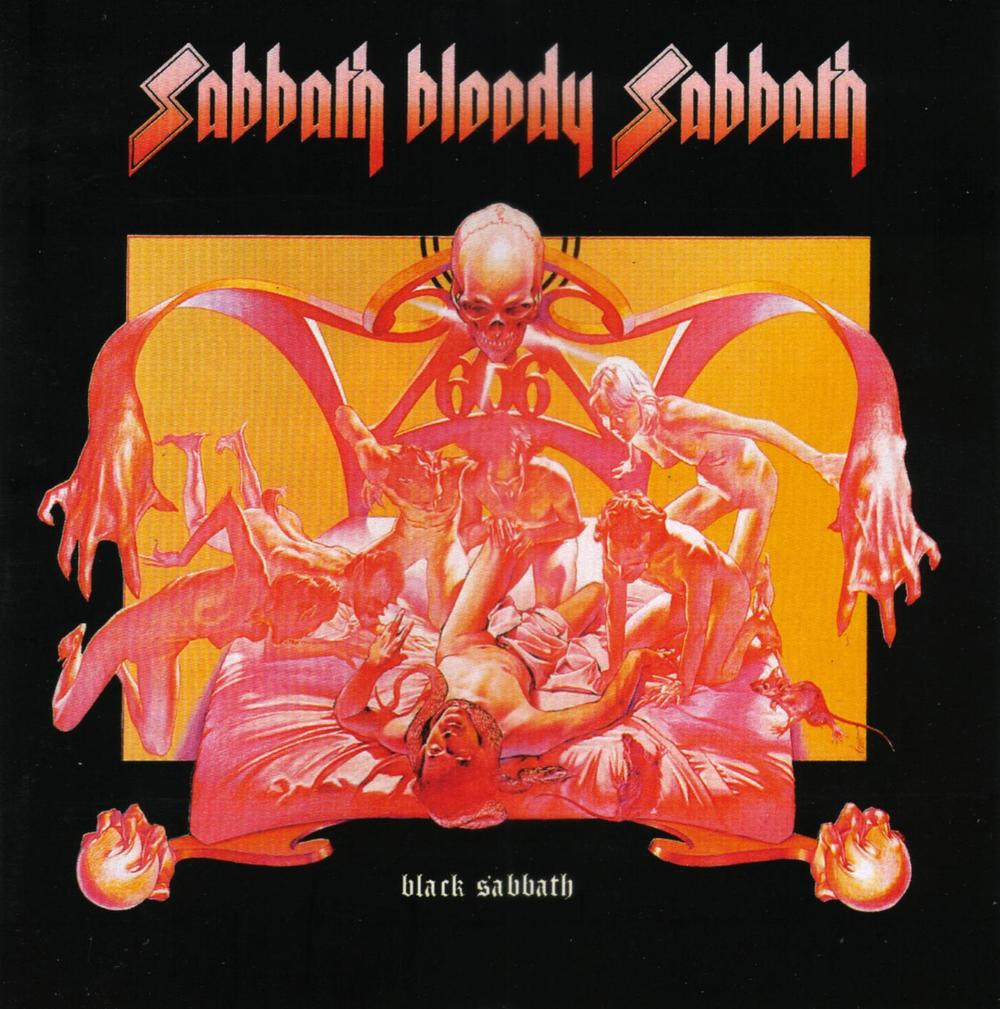
In 1982 and '83, that was when I bought my first records. My first record ever was Sabbath Bloody Sabbath and I got it on a cassette. It was weird, too, because I'm a kid, right? I remember Record World, or whatever that store in the mall on Queens Boulevard was called (Queens Center Mall) by the White Castle. That's where I bought the cassette. And I remember I looked at the two cassettes: [Black Sabbath's] Master of Reality and Sabbath Bloody Sabbath.
Master of Reality isn't exactly a metal-looking album cover, right? So you see the naked ladies and the skull devil and all that other stuff on Sabbath Bloody Sabbath. So yeah, I picked Sabbath Bloody Sabbath [laughs]. That changed my world.
I remember getting MTV around the mid-'80s. Did your building have MTV early on?
Yeah, I vaguely remember watching MTV, but I also lived my whole life without cable TV.
But I'm sure you watched U68!
[Editor's Note: U68 was a New York-based UHF television station that was around in the '80s that played music videos.]
That was the shit! I used to watch [heavy metal music video series] Power Hour! That turned me on to a lot of stuff, just like it probably did for you and everyone else we grew up with. I first heard Loudness on there from their "Crazy Nights" video. It was the first place I heard Vovod.
That crazy video for "Voivod" would come on and you didn't know what to make of it! I was like, "I don't know what this is. It's kind of weird. But yeah, I like it!" I remember seeing the video for "Evil Invaders" by Razor on there. Celtic Frost's "Circle of the Tyrants," Anthrax's "Madhouse," it was endless.
I know for me, heavy metal offered an escape outlet from the crap I was dealing with at home.
Yeah, my young life was tumultuous because I had moved to Jackson Heights after my parents separated and my mom took me and my brother with her. I was taken out of Forest Hills and ended up in this neighborhood that was a little sketchy, but curious. It was a little weird for me, man. I was going through some stuff.
Back in the '80s, parents didn't really get divorced. It was not like a big thing and you were different if you were like that. Especially immigrants.
READ MORE: The Hispanic Impact on the Early New York Hardcore Scene
Since we're talking about the old neighborhood and cool music, we have to give some love to Numbers Records & Tapes in Jackson Heights. That was a valuable resource for all of us.
Yeah, U68's Power Hour and Numbers were huge for me. I think his name was Harold? I don't think he knows what kind of an impact he had on the local music scene. There would be no Black Army Jacket, no Madball. I would never have joined any of the bands I ended up playing in if it weren't for the music I discovered there. [Crown of Thornz singer] Ezec, [Madball bassist] Hoya, all these guys,
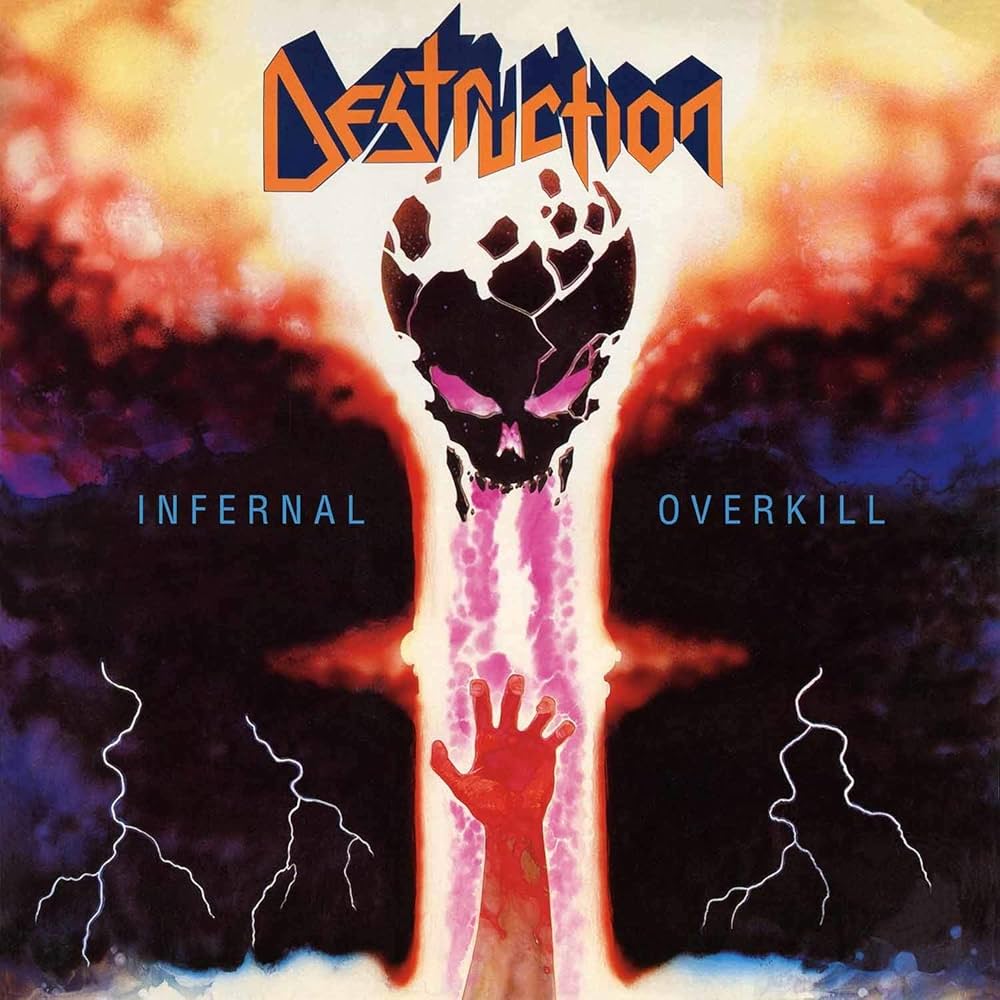
You obviously couldn't just go online to check stuff out. So back in those days, we actually bought records like Destruction Infernal Overkill just because the cover art looked cool. I never heard Destruction before that, but I just knew it was going to be good and it was. I still listen to that album.
Numbers is also where I also first saw hardcore records. I remember one time I saw an Insted record. I didn't know what to make of it. It had three holding hands on the cover [Bonds of Friendship]. I then I turn the sleeve around and I see some Leave it to Beaver kind of looking guys [laughs]. But there was something about it that seemed very radical. It didn't seem mainstream, and it appealed to me in a way.
But yeah, when I first heard [Cro-Mags'] The Age of Quarrel, I was like, "What is this? Why are all of the songs so short and why aren't there any guitar solos?" [Laughs] But something about it just appealed to me. I fell in love with that record.
Was there someone that you can point to from the neighborhood that kind of like "showed you the way"?
I first learned about a lot of the hardcore stuff by reading metal magazines like Kerrang! or whatever. They would cover bands like Cro-Mags, Agnostic Front, Murphy's Law, Crumbsuckers. But there was this skater kid in my junior high school, I.S. 141, who years and years later ended up on Judge Judy because he tattooed somebody while he was high on drugs [laughs].
Anyway, that kid let me borrow that Revelation compilation [New York City Hardcore: The Way It Is] and that opened up a whole new thing for me. I kind of tilted my head in curiosity at the two-minute songs with no solos and crappy recordings [laughs]. But Breakdown's "Sick People" instantly blew my away. I had never heard anything so hard like that.
The two Youth of Today songs on there were awesome. I first heard Supertouch on that comp. Sick of It All's "Pete's Sake"? Wow.
That's such an important compilation for hardcore music. Let's skip ahead a bit. What was the first band you were in that actually played shows and all that?
The first band that played a show was called Theria, and it was at a Battle of the Bands thing in Long Island City. The singer was Harry [Kazakos], who played bass for Cold Front. He had long hair at the time and it was kind of like this punkish, metal-y band. We did a show and then, you know, kind of just went our own ways.
After that, I joined Show of Force, and that's when I really got to be part of the hardcore scene. The lineup when I joined Show of Force was Randy Rodriguez on vocals, Mike Dijan (Crown of Thornz, Breakdown) on guitar, and Tony Kastanos on drums, who they called "The Greek." I took Jay Rufino's place, who was also in Outburst.
They were all Astoria guys, right?
Yes, and if you listen to those Show of Force songs before I joined, they're pretty progressive for that time. And then after I joined, we also added Hector Moncada on guitar. I asked him to join the band and this guy was just like a virtuoso. Me and Mike Dijan say to this day that Hector's the best musician we've ever worked with.
Show of Force really opened me up to the real hardcore scene because at that time, I was just a kid. I didn't know about anything, but then these guys opened me up to local bands like Outburst and Fit of Anger. It was the first time I saw a seven inch. As a metalhead I was like, "what the fuck is this?"
Of course I already knew about Leeway and thought they were a cool band, but the other Show of Force guys were such big fans of them that it just rubbed off on me. I ended up becoming an ever bigger Leeway fan than they were [laughs]. that's where really started it off for me.
Did you play a lot of shows with Show of Force?
Yeah, I played a few shows with them. I remember we played Unisound in Pennsylvania.
Did you fight Nazis?
No, they weren't there. Outburst also played. A lot of young straight edge kids were there. I played at the Safari Club in D.C. with them one time. But the big show I played while I was in Show of Force was the Super Bowl of Hardcore at the Ritz in NYC, the one Gorilla Biscuits played.
Randy, he wasn't in the band at the time because he overdosed. He's stalive and well, but he to go and take care of himself. But yeah, we couldn't say no to the show so we recruited Chiqui from Dmize to fill in for that show. But that was my last show with Show of Force.
What was the next band you played in?
That would be Discipline. Originally, I was just filling in on guitar because they had a second guitar player who wasn't working out or something. So that lineup of Discipline was Gus Straight Edge [Peña] on vocals, Harry Minas (25 ta Life, Cold Front) on drums, Mike Cooney on guitar, Ezec (Crown of Thornz, Skarhead) on bass, and me on guitar.
That CBGBs show was with that Italian band, Negazione. Fit of Anger from Queens also played. Oh, I think SFA was also on the bill.
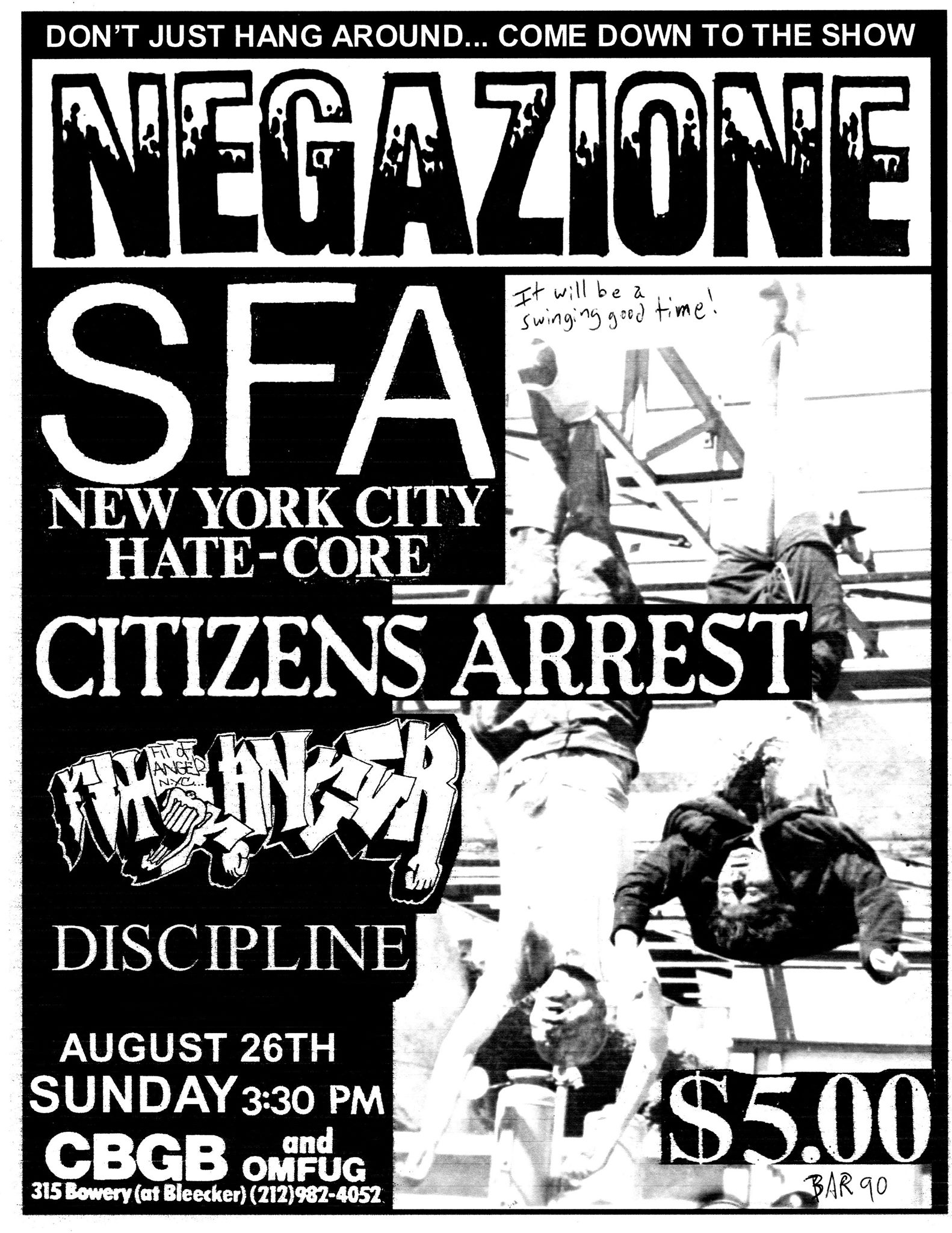
That was in 1990, and I was still playing in Show of Force but that broke up in 1991.
Ezec had quit Discipline at the time because, you know, he's a frontman. [Laughs] He's not meant to be playing bass on stage. So then I replaced him in Discipline on bass.
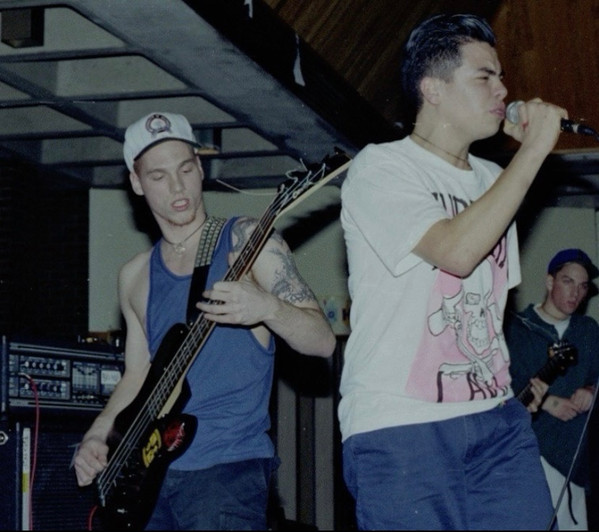
Discipline morphed into Ocean of Mercy.
Yes, it became Ocean of Mercy because Gus went on tour with Into Another as a roadie and we just wrote a batch of songs while he was away that they weren't even hardcore-sounding at that point. They were just different. You know, that stuff on that Ocean of Mercy seven inch. So decided to change the name. I was like, okay, but I hated the name Ocean of Mercy.
We did a handful of shows. I rememer we played Lost Horizon in Syracuse. But Ocean of Mercy broke up in 1992. It was the usual musical differences thing, and there wasn't too much of a scene for stuff like that in NYC at that time.
You had already played with Ezec in Discipline, but how did Crown of Thornz form?
One day, Ezec came over my house and was very upset. He just in a bad mood. I asked, "What happened, did you and your girlfriend get into a fight again, or did you guys broke up?" He's like, "Nah. Fuck those guys." He just came back from rehearsal and he was referring to the guys he was in a band with at the time called Third Eye.
The band was Ezec, Frank Smarra, Harry Minas, and Fred Mesk, all from 25 to Life. So he quit Third Eye. Since we were both band-less, I just said, "Let's start our own band." We shook hands and told each other we would just do the best that we can.
The first lineup of Crown of Thornz was the two of us, plus [original Dmize singer] Jere on drums, and these hardcore guys from Brooklyn named Fahim and Davy on guitars. We booked time at Underground Studios in Queens to rehearse but nothing was happening with these guys.
Mike Dijan to the rescue!
It's crazy because Dijan has told me he feels like he owes his music career to me because I asked him to be in Crown of Thornz. But the truth is that I'm the one that owes Dijan because he's the one that got my foot into the hardcore door with Show of Force.
Anyway, the first day Dijan comes to jam with us, and he played "Mental Masquerade" on the spot. Dijan had the guitar parts worked out already.

How did Dimi Douvas join Crown of Thornz on drums?
Tony from Show of Force was playing with us. He was great and had a style that was like Reed Mullin of C.O.C. mixed with a little Mackie [Jayson of Cro-Mags]. Anyway, Crown of Thornz had our first show booked for Halloween with Murphy's Law in 1993. Close to the show date, Tony said he couldn't do it because his girlfriend wanted take him to a costume party. Dijan was livid [laughs].
I called Dimi because I knew him from all the way back in 1987. I was in junior high school one day and I was in the lunch line and the lady giving out the food sees that I'm a metalhead with long hair and asks, "Do you play music? My son plays drums." So that's how I ended up meeting Dimi. It's crazy.
So I first jammed with Dimi in his basement with some Vietnamese kid who barely spoke English and had a really wild mullet [laughs]. We jammed, but I was not impressed. Like he was just playing a one riff for the whole time [laughs]. So that was that.
But Dimi and became friends, you know, Jackson Heights and Astoria aren't far apart from each other anyway. In 1992, we actually played in a band together for a short time called Origins. It was kind of a metal band with a little hardcore touch. But so that's how I knew Dimi before Crown of Thornz. I knew his ability as a player and he was the perfect fit for what we wanted to do with Crown of Thornz.
READ MORE: NYC Councilman Justin Brannan Looks Back on His Days in Most Precious Blood
Having seen Crown of Thornz back then, I can say that it was definitely a great lineup where each player complimented each other.
We all did something for that band. Dijan handled the music, which was fine with me. "You handle that and I'll handle my bass lines." Dimi's mom let us rehearse in their basement. We had unlimited rehearsal time in that basement, and that's why we spent so much time working on the songs for Train Yard Blues.
Ezec was like the face of the band, and he was out there a lot. He started going out with [Killing Time vocalist] Anthony Communale's sister and when he started hanging out with people like that, it brought us Jackson Heights neighborhood kids to a different circle. Now he's actually meeting people from Killing Time, Sick of It All, Murphy's Law, people that we looked up to that were inaccessible to us. You know what I'm talking about.
Yeah, they were like rock stars. Which is silly if you think about it now, but at that time, yeah.
Yeah, so it was a big deal. Ezec started making some connections and then at the same time, I started playing in 108, so I was making some connections with that.
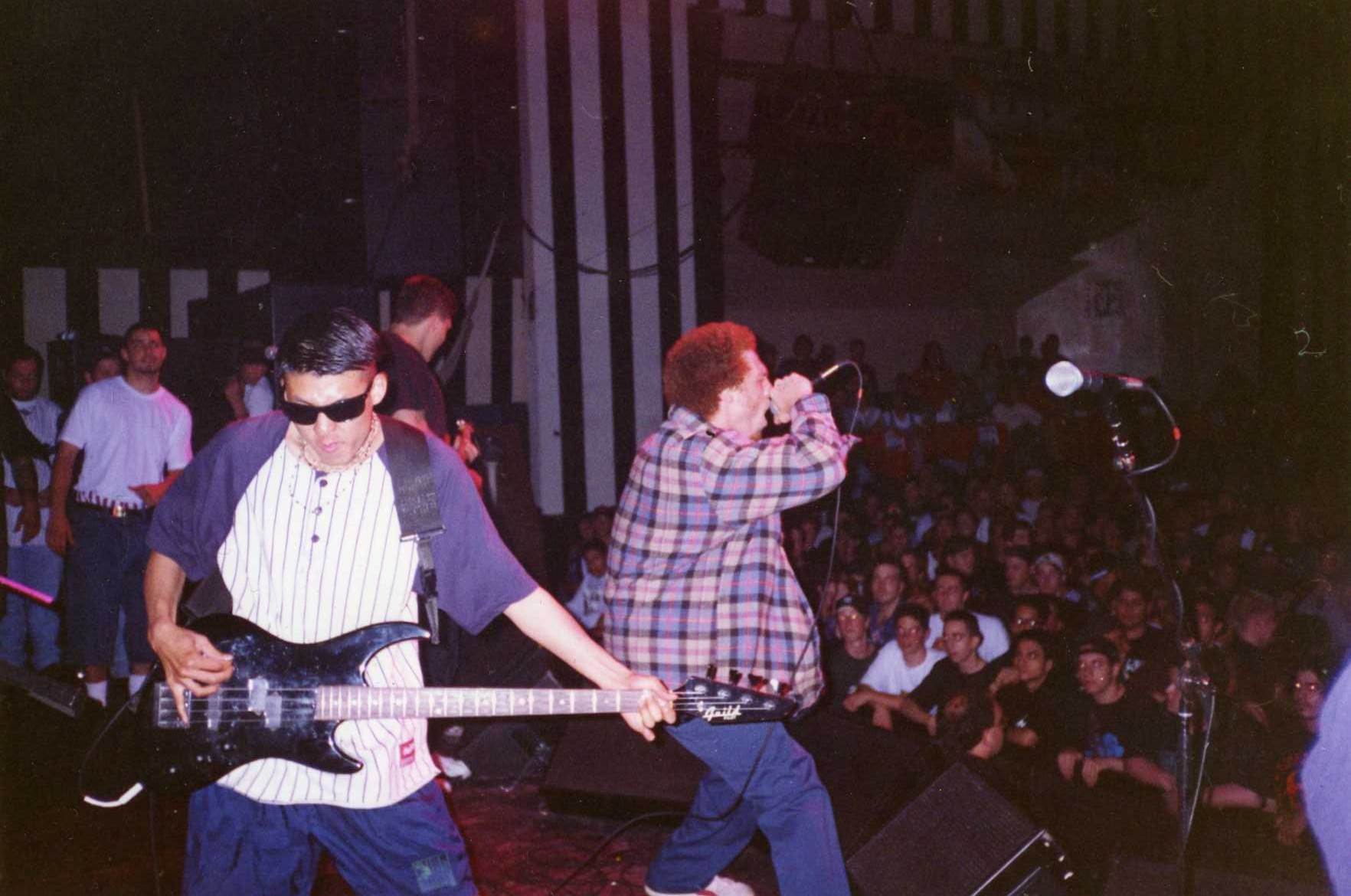
How did you end up joining 108? I remember thinking it was so sick that they brought you into the fold.
So I was at the Krishna temple on 26th 2nd Avenue just doing my thing. I loved 108 at the time, you know, Holyname was out already by then. I'd already known [108 guitarist] Vic [DiCara] because Discipline opened up for Shelter [Vic had also played in Shelter] and stuff like that. I thought Vic was an awesome guitarist.
108 had a bassist at the time named Tony, a tall skinny guy. Anyway, he told me he was leaving the band and then said that he thought I would be a great replacement for him. He said that if I was interested, he would talk to them. I was like, "Fuck yeah!" They gave me their record to learn and it all felt seamless.
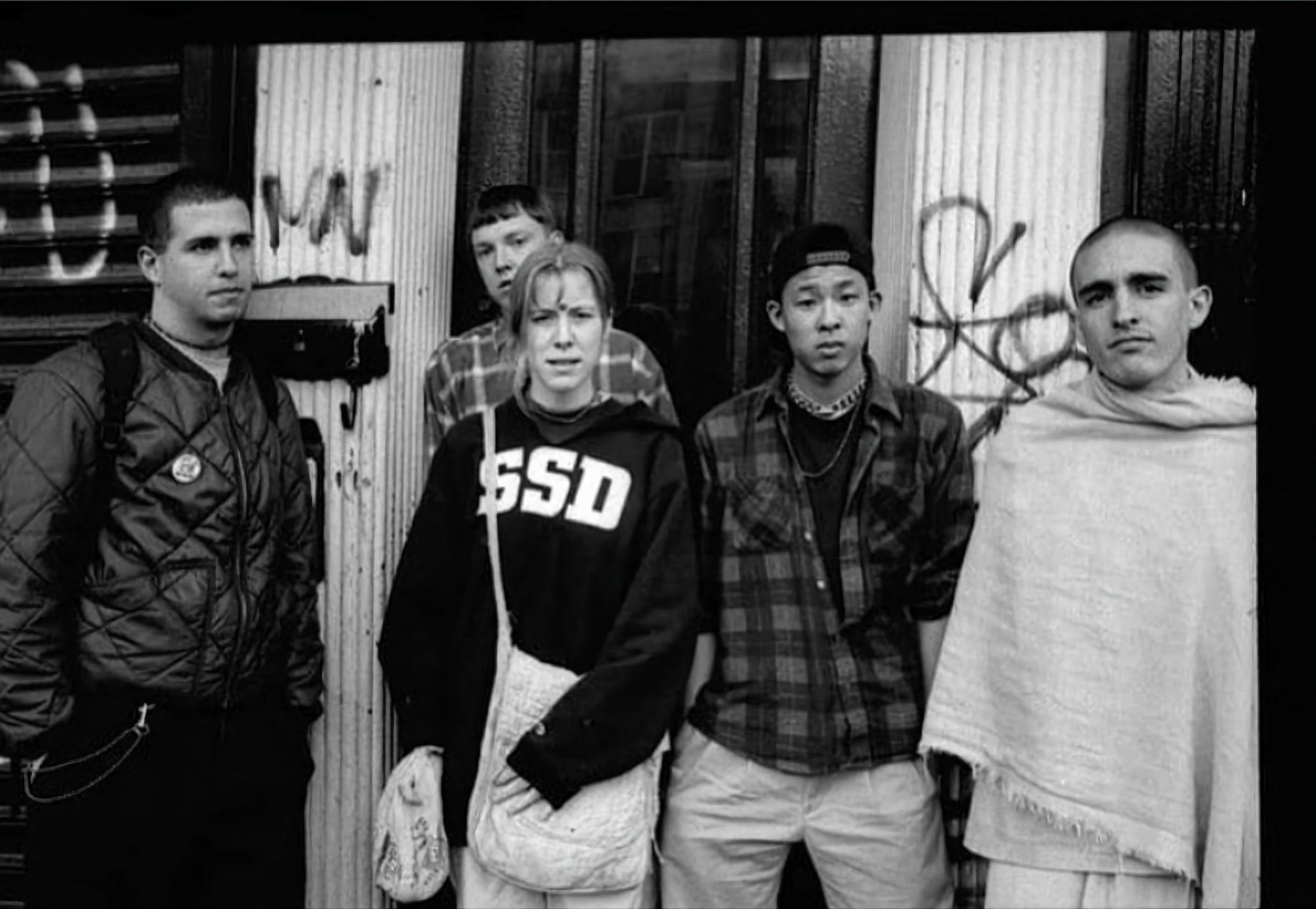
It was meant to be.
It clicked right away and it was exactly what I needed. Plus, Crown of Thornz was on hold because Ezec had gone out with [H2O singer] Toby [Morse] to be roadies for Sick of It All, while SOB and Minus from Merauder were roadies for Biohazard on the same tour. From what I heard, there was blood every fucking night, tons of fights, from East Coast to West Coast [laughs].
But when Ezec came back, Crown of Thornz got busy again. So I was playing in both Crown of Thornz and 108 during that time.
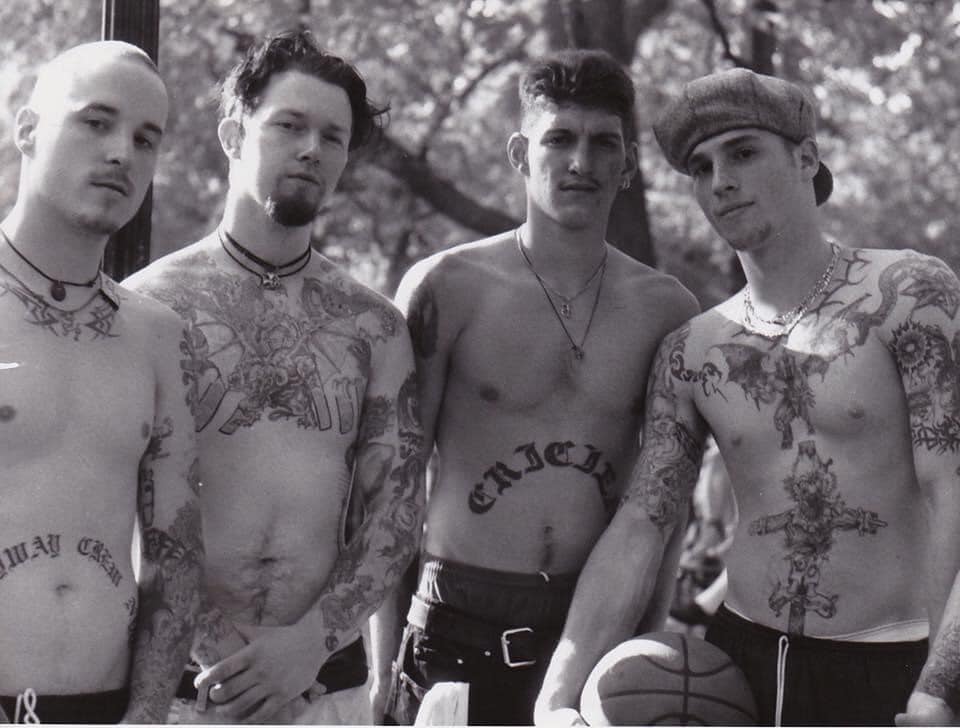
Let's get into Train Yard Blues, which I still think is one of the best hardcore records of the '90s. It struck a powerful balance of tough-guy grit and introspective melodies in the guitar and bass work.
I think that record took people by surprise because they were expecting some thugcore type of stuff from us. But yeah, like I was saying, Ezec started making all these connections and [Blackout! Records owner] Bill Wilson was one of those people. Bill gave us some money to make a demo.
We made the Crown of Thornz demo with A.J. Novello from Leeway and we're really happy with it. It had a really interesting, cold kind of sound to it. But to show you how naive we were, I was in 108 at the time and I asked [Equal Vision Records owner] Steve Reddy if he wanted to hear the demo. He's thinking it's gonna be some thugged-out shit because of Ezec and Jackson Heights and all that [laughs], but was curious to listen to it. But he was blown away and said he wanted to release it through Equal Vision!
I told the other guys in the band and they were down for that. We didn't even think, "This demo belongs to Blackout! because Bill paid for it." [Laughs] We were so stupid! So, Bill called Steve and said that it was his demo since he paid for it. Equal Vision ended up reimbursing Bill for the demo and released it as is.
Train Yard Blues was supposed to be a demo?
Yes!
So you were balancing both Crown of Thornz and 108 at the same time again.
Yes, and last thing I really did for Crown of Thornz happened when I went to Europe with 108. I was telling people, "This is my other band," you know what I mean? I was just like, you know, very proud of it, and the fucking people from M.A.D. [Tourbooking], Marc and David, ate it up because they loved all that NYHC shit. They were like, "We gotta bring Crown of Thornz over here!"
So M.A.D. put them on a tour with Madball and H2O in Europe, which I think was the best tour Crown of Thornz probably did. This was in 1995 and I was in Shelter by then, so I missed out on that tour.
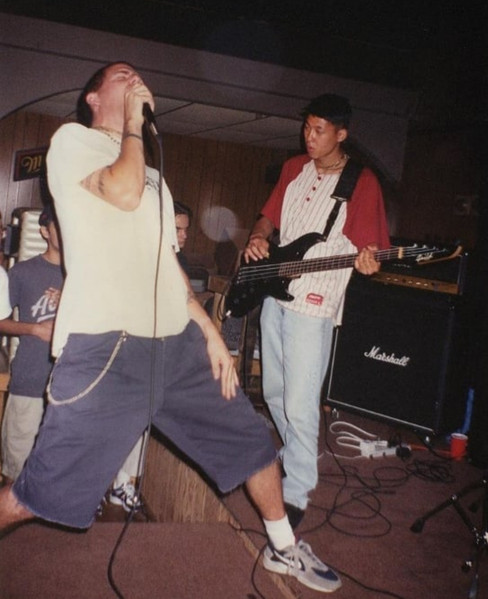
What happened with that?
I left both bands at the same time. So what happened was I went to, you know, I went to Europe with 108 and it was very intense. Have you ever watched footage of 108 from like 1995? The energy was intense. You were dealing with me, Vic, [108 singer] Rob [Fish], these guys out of our teens just dealing with demons in our hearts and our heads. We were are in our own heads.
I had also become disillusioned with the whole Krishna consciousness thing because sometimes when devotees get too fanatical, it can become a negative, you know, and too preachy and putting other people down. It was also becoming a little militant at the time. And I was just like, all the people that I hang out with from Jackson Heights are not straight edge or Krishna, and they never put me down for it. They never put anyone down for it.
Europe just really did a number in my head because I thought I knew it all, man. I was from Jackson Heights, I played a few gigs. You know, you go to the Eastern Bloc in 1994, which is not too long after the fall of the Berlin Wall, you're seeing some very serious poverty and hardship. It just ate away at me, man. I couldn't understand it.
I just had to just go away for a little bit. So I left both bands. I burned Crown of Thornz and they were fucking pissed at me for years [laughs]. Mike was fucking not really kind to me for years. I always knew why and understood, you know? But we're still friends, man. But yeah, they were fucking pissed, but I needed I just needed that time off.
I didn't know what kind of music I wanted to play because musically, my mind was starting to open up just a little bit. You know, at the core, I'm hardcore and thrash, but sometimes you want to delve into some different shit. But I started getting back into the whole Krishna consciousness thing. You know, I just started to realize more, you know, it's the philosophy itself and don't let it mold me.
READ MORE: 108 Vocalist Rob Fish on the Making of the Holyname Album
What happened next? Did you devote yourself full-on to Krishna consciousness at that point?
I decided to stop playing music and move back into the temple. I decided this is what I want to do, and I didn't tell my mom. I just told her that I was moving in with some friends, right?
So my story of joining Shelter is similar to [Shelter guitarist] Porcell's, and I was not trying to follow his footsteps or anything. I didn't know his story til I heard about a years later. But I sold all my stuff, most of my records and T-shirts. But there was a few things I couldn't get part with like my basses, a few Cro-Mags records, and, you know, like essential hardcore shit. So I bought them with me to the temple and I'm living in there with other devotees.
At the same time, Shelter is also living there. It was [vocalist] Ray [Cappo], Porcell, and [guitarist] Adam [Blake]. I would run into them in the temple programs in the morning at 4:30 am during the Mangala Aarti program. I was a huge fan of Shelter, but Mantra wasn't out yet. The thing is, when I still in 108, somebody had asked me if I wanted to join Shelter because they were in the band, and they needed a bass player. And even though 108 knew I was leaving already, I just thought it wasn't appropriate to join them while I was still in 108, technically.
So I declined Shelter bu a year late I joined. I didn't want to join because my whole intent was just to become this full-on devotee and just become like a monk or something, you know? I was living in the temple and I had a teacher. It's like in the The Karate Kid, you do service and then they teach you stuff. It's an ancient system, right? That's how it is. So I was doing stuff like that, you know, just learning from these senior gurus who had been practicing for 30 years or something.
I think they this kid who was into Krishna consciousness, but he may not be monk material because he's got too much energy in him. Maybe they thought I might be better off with Shelter. So they started talking to me and they're like, "You know what? You can still play music and be devoted."
I think it was nice that they actually looked out for me like that because that was the better move. I probably would have fried out in the temple, you know what I mean? Scrubbing toilets or something like that all day. You know, just temple service cleaning, cooking, selling books and whatever. So I kind of got into that program, and it was a natural fit. I mean, I loved Shelter already.
You didn't make it into Shelter in time to appear on the Mantra album, but you were in the "Here We Go" music video.
I know you can make a music video with an iPhone these days, but "Here We Go" was a big production. The band had an RV, there was a 10-person crew there to make it and all that. It took all fucking day from morning to night.
We were on Roadrunner Records, which was a big deal for a metalhead kid like me. We had a publicist and doing a ton of interviews. It was definitely an exciting time.
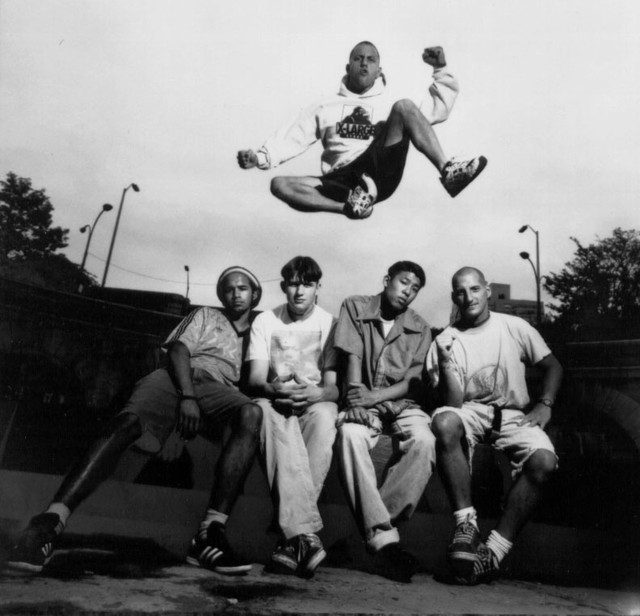
Did any of that get to your head? I mean in the ego sense.
No, I didn't really get to me that way. Yeah, you know, we were proud of it and stuff, but I think, for the most part, Shelter, we were pretty chill about it. I never saw them or any of us just acting like fucking snobs to people. But you know, when you're in your 20s, you can have a certain amount of pride sometimes.
You also notice that with a lot of musicians, and especially the ones that are still playing music after 30th, they're really humble because they realize how lucky they are.
You played on the next Shelter album, Beyond Planet Earth, which many people in the hardcore scene refer to as "the ska album," like KISS' Dynasty album is written off as their "disco album" because of "I Was Made for Loving You" is on it. What are your thoughts on Beyond Planet Earth and its reception?
I think I may possibly be at fault for that one. I think I might have had some hand in that ska song ["">Alone on My Birthday"] indirectly. When we wrote that song, it was like a kind of a poppy, ike a "Here We Go" or "Empathy." You know, a standard type of pop song. Then after we we did that No Doubt tour, we went back to continue working on Beyond Planet Earth.
One day in the studio, as a joke, I started playing that ska-ish bass line. I was being sarcastic: "Let's write a ska song!" The drummer jumps in with a ska beat. [Producer] Tom Soares just stops what he's doing and screams out, "Hey! Play that out again. That's awesome. We're keeping that." [Laughs] I couldn't believe it.
Ska was big at that time. I never liked any of that of music. But the thing is, I think it's a good song with a great recording, but it just wasn't a Shelter song.
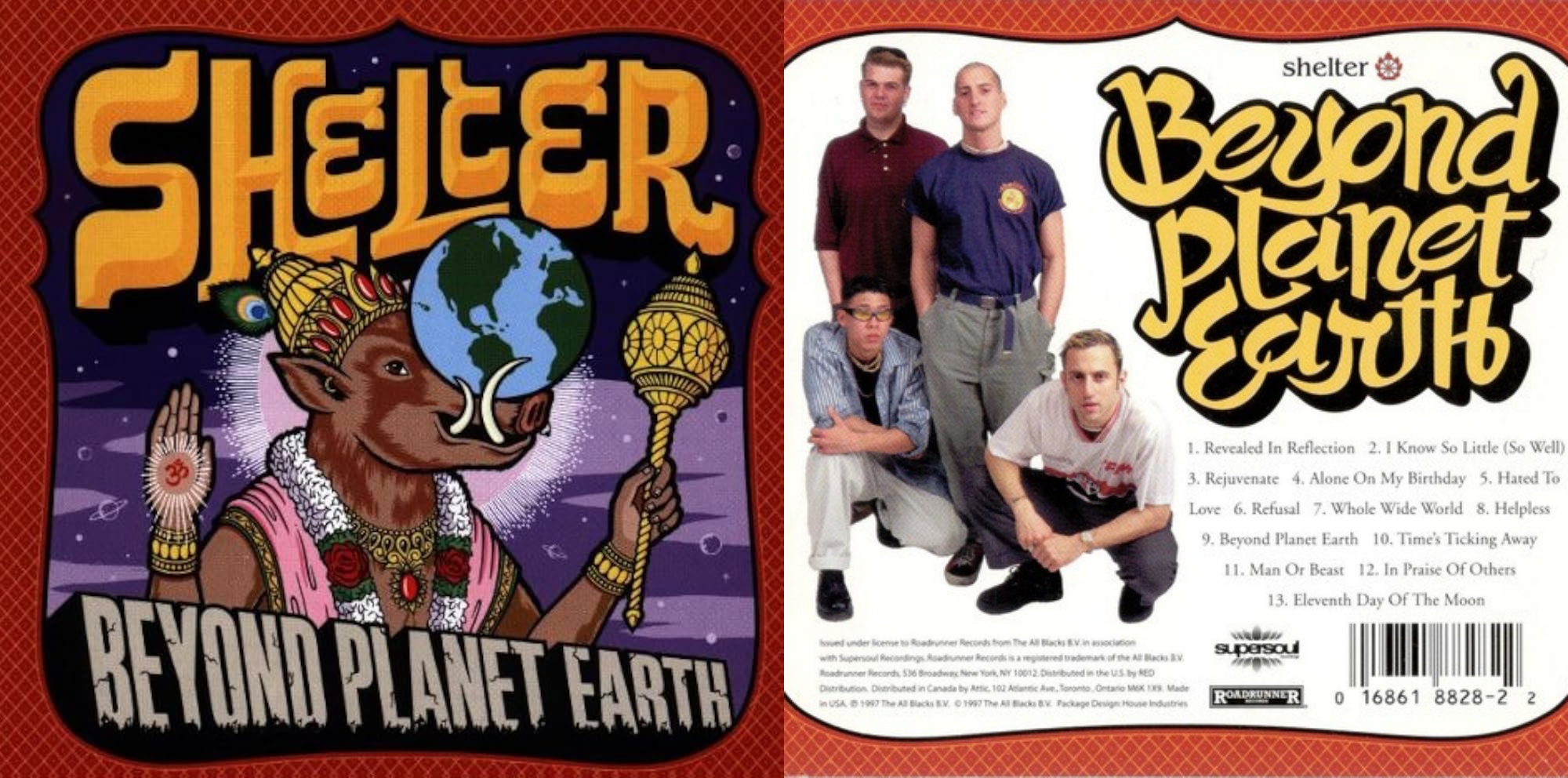
Do you feel that one song ruined the perception people have about Beyond Planet Earth?
I think it was a good record, but there are three songs that just really alienated the fans. If you took out those three songs, people would feel differently about the album. Those songs would be "Alone on My Birthday," the industrial metal song, "Man or Beast," and then the fucking rapcore song, what the hell is it called? Oh yeah, "Helpless."
I think they're really good if just listen to them as standalone songs, but in the mix with that album, they are too different.
Did Roadrunner Records force the band's hands on the single choices?
I remember the band being in the Roadrunner boardroom and they're just trying to force us to do stuff. And we did not want "Whole Wide World" as a single. We wanted to do either "Hate to Love" or "I Know So Little (So Well)" as a single. I don't know why the label vetoed that.
So we made the single "Whole Wide World" and filmed a music video for it, but it didn't really do well, just ike we said it wouldn't. So then they decided to push the ska song. They paid for a whole campaign. They remixed the song to make it like sound right for FM radio.
Roadrunner tried to put us on tour with some fucking ska bands. The Pietasters or some shit. It just didn't work. Voodoo Glow Skulls was another tour, but that was fun and they are great guys. We had a good time with them.
How did the touring cycle behind Beyond Planet Earth go?
I have to go backwards a bit. So what happened with Mantra was we started playing these festivals in Europe, and playing overseas with different kinds of bands, not just the typical New York hardcore bands because we kind of crossed that border into the mainstream or whatever. So it exposed us to a lot of different kind of music and I started seeing it in the other band members.
So when we wrote Beyond Planet Earth, the material was very, hmm, it was Shelter-like with something like [Smashing Pumpkins' album] Siamese Dream mixed together. It was very experimental with longer songs and we wrote the whole album and it was was looking good. You know, it was going to be something different, something interesting.
So we're in the Music Building in Hell's Kitchen and all of the Roadrunner bigwigs are there, literally stuffed in a little room with us in the band and they're all standing there watching us play the new material. [Roadrunner Records executive] Monte Conner was there, and he wasn't even on A&R, but this record was so important for Roadrunner that he had to check it out.
Wasn't Howie Abrams Shelter's A&R guy?
No, he wasn't there anymore by that time. It was Mike Gitter, who was really cool to us, but he caught Shelter at the tail end of things. But they were all there just watching the band and they made us scrap the whole fucking album. So, yeah, Shelter had to write an entire album in like a month because we were going over budget.
I didn't even think Shelter should have been making an album at that point because I truly felt we could have had two more singles from Mantra. I think "Empathy," "Civilized Man," or even "Letter to a Friend" could have been singles. Actually, "Mantra" could have also been a strong single. But Roadrunner cut us off from touring because they wanted a new album. That 'Beyond Planet Earth' album was all rushed.
I've never been happy with my bass lines on Beyond Planet Earth because I didn't have enough time to work on them as much as I wanted. I think it's a good record, but not anywhere where it could have been, especially if we were allowed to work on that original material more, you know, the stuff that Roadrunner wanted us to scrap.
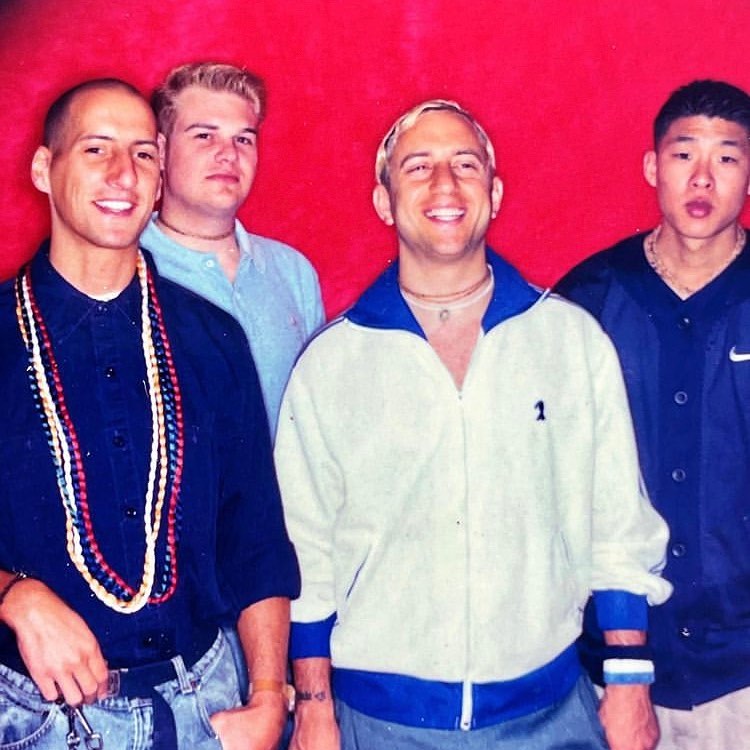
How did the relationship with Roadrunner Records and Shelter end?
We were going out on a really good European tour in January of' 98, but Roadrunner told us we couldn't do it. They said it was because they had paid for a remix for the ska song and were pushing it to radio and wanted us to play in the U.S. instead. We were like, "No, we're going to tour Europe." We didn't ask for any of that ska song promotion to happen.
Roadrunner was like, "Okay, we're going to cut your tour support." Our attitude was , "Okay, fuck you, we make enough money on the road and we don't need your support. We can pay for our own bus and road crew." So that's what we did and Roadrunner said, "Okay, you don't what? Fuck you guys, you're dropped." [Laughs] It went down just like that.
It was also the market. Earth Crisis, VOD, Madball, the label just fucking dropped every hardcore band they had. So we went to Europe, and it was a fucking amazing tour. One of the best tours I've ever done. We headlined and Nastasee opened up. You know, Dan Nastasi from Dog Eat Dog's band? Yeah, we shared the bus with them. And after that tour, we did Japan, Brazil, even though we weren't on a label during that time.
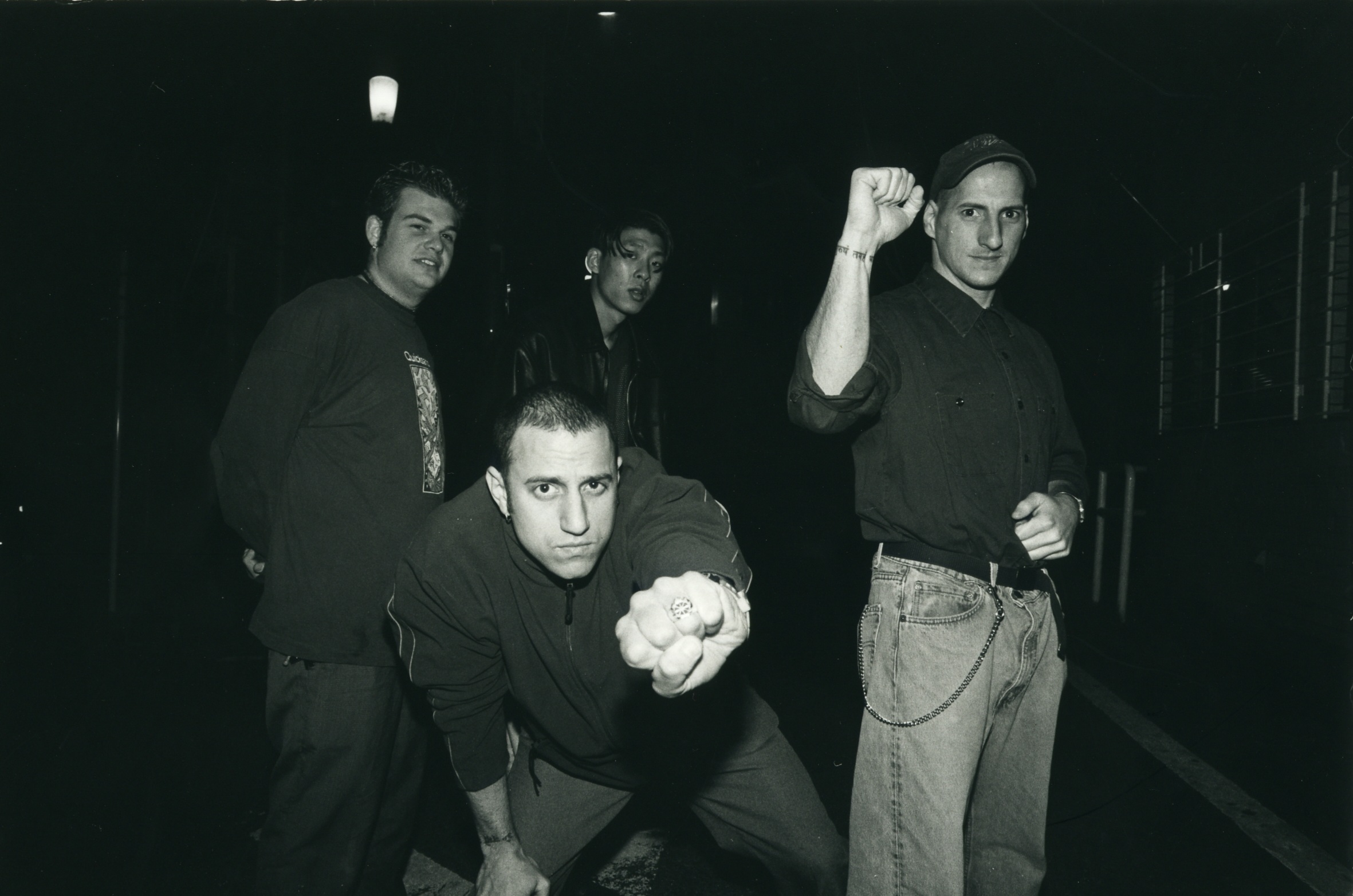
What happened next for you? Were you still living in the temple?
No, I was living in Bayside, Queens by then.
So, when did you quit Shelter? I don't remember the timeline well.
Well, we decided we were going to break up. But right after I moved to California, I found out they put out another album on Victory Records, I'm When 20 Summers Pass [laughs]. But I was already done with Shelter at that point anyway. I wanted to musically do something a little different. So I was fine with that and I still was friends with them.
What year did you move to Los Angeles?
It was 1998 and then I linked up with [Strife guitarist] Andrew [Kline]. It was funny because we had met once before because Shelter and Strife played once in L.A. But, you know, he's from the West Coast, and I was all the way on the East Coast, and we never got a chance to get to know each other before I moved out here.
I remember Shelter had toured with Shift and Man Will Surrender and I had told [Man Will Surrender] vocalist] Lance [Webber] I was going to move to L.A. and start a more metal-sounding band. And he goes, "Well, you know, Strife just broke up and Andrew is into more metalcore-type stuff. You might want to talk with him."
And then I came out here, apartment hunting. I linked up with him and we just hit it off. And when we jammed and it was all quick, man. It was band called Angermeans with me, Andrew, and Sid [Niesen] and Rick [Rodney] from Strife. We did we did a few shows on that. Victory was supposed to put something out, but it never panned out.
READ MORE: Raiding the Victory Records Vault: How I Spent $12,095 on an Unmarked Chest at an Auction
Angermeans ended up morphing back into Strife.
Right. It went back to Strife, and I think maybe I had a little hand in getting that reunion back together because what happened was I was in Angermeans, and then this guy named Tom was also in the band. Tom became a fireman or something, so they got [Strife guitarist] Todd [Turnham] in the band.
Strife ended up having bassist Chad Pearson come back and they official reformed, and calling their next album Angermeans. But you did tour with Strife as a second guitarist when Todd wasn't in the band for a bit. What came next for you?
I didn't really do much. I'm already hitting my 30s, hardcore is completely dead in 2002. You have to make a choice; are you going to couch surf and play some shows or get a job and have some standards, man. And I'm not couch surfing. So I just started working.
I continued playing music until around 2006 pretty actively, different bands, Cro-Mags and Bloodclot.
Oh, yeah. Tell me a little bit about that.
So right after the Strife tour, A.J. calls me and says "I got a proposition. Harley [Flanagan] just had a kid and he can't play some shows we have some shows coming up we need a bassist for." The lineup was John Joseph singing, A.J. and Rocky George on guitar, and Garry Sullivan on drums. I was just filling in. But then John says he's not gonna call it Cro-Mags. I think I played some shows later under that name, but we also shows under the names Both Worlds and Bloodclot.
I did some West Coast shows, Midwest, some New York ones. It was 2002 and a horrible time for hardcore. The Hope Conspiracy were opening some of the shows. I also did Japan and Australia tours under the name Cro-Mags. I ended up quitting that after a while after it morphed into Bloodclot.
Looking back on your musical career, would you have done anything differently?
As a dumb teenager, I had a stupid dream of just running away from home to the Bay Area to be in a thrash band [laughs]. But I never got to play in a band like that. I tried to find people, but it's so hard to fucking find good musicians wanting to play that. It's very hard for me to write a song that's under five minutes, and you know hardcore people hate long songs [laughs].
San Francisco had thrash metal. Florida had death metal. But New York City and Queens, we had NYHC. It's a beautiful thing. Like that lunch the other day with me, you, Andrew Kline, and Sammy Siegler. I had known Sammy a bit throughout the years, of course [both Franklin and Siegler have been in Shelter at different points], but I've gotten to know him better more recently. Because of our shared experiences and backgrounds, we can all sit down and talk like family. That's the beauty of hardcore to me.
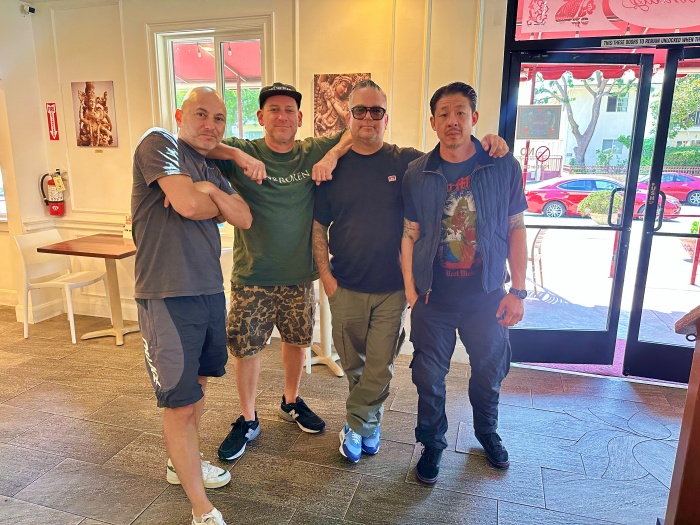
Let's wrap this up on a musical note. Of all the bass lines you've recorded throughout the years, which one is your favorite?
I'm very proud of the song "Crown of Thorns." I got so many compliments on my bass lines on that:
You know how in the beginning of the song it kicks in with the bass? That was me trying to be Tony Bono (Whiplash, Into Another). And in the middle of the song when it gets fast and hard, that was me emulating Harley. Those guys are my influences, man.
***
Tagged: 108, 90s hardcore week, a life in hardcore, cro-mags, crown of thornz, ocean of mercy, shelter, show of force