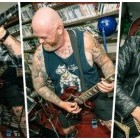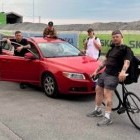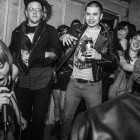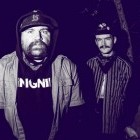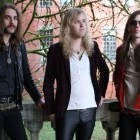
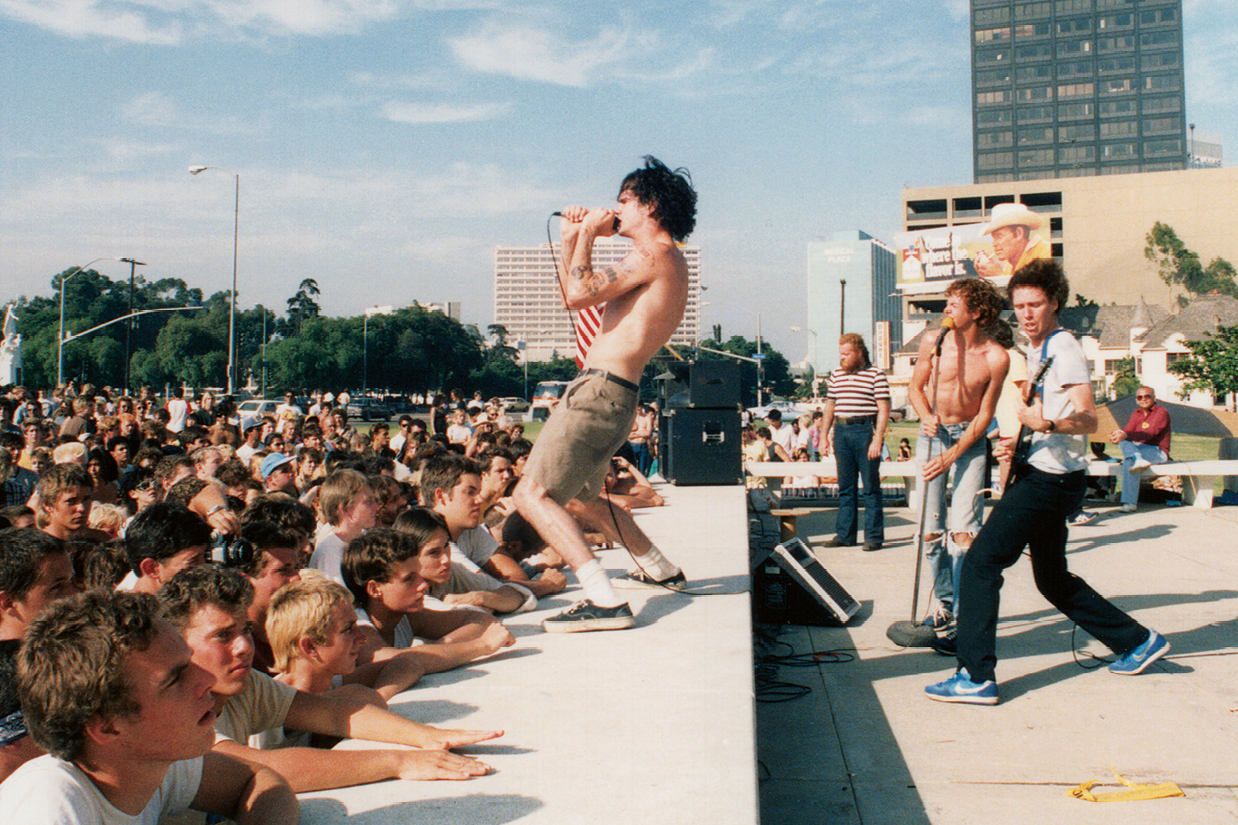
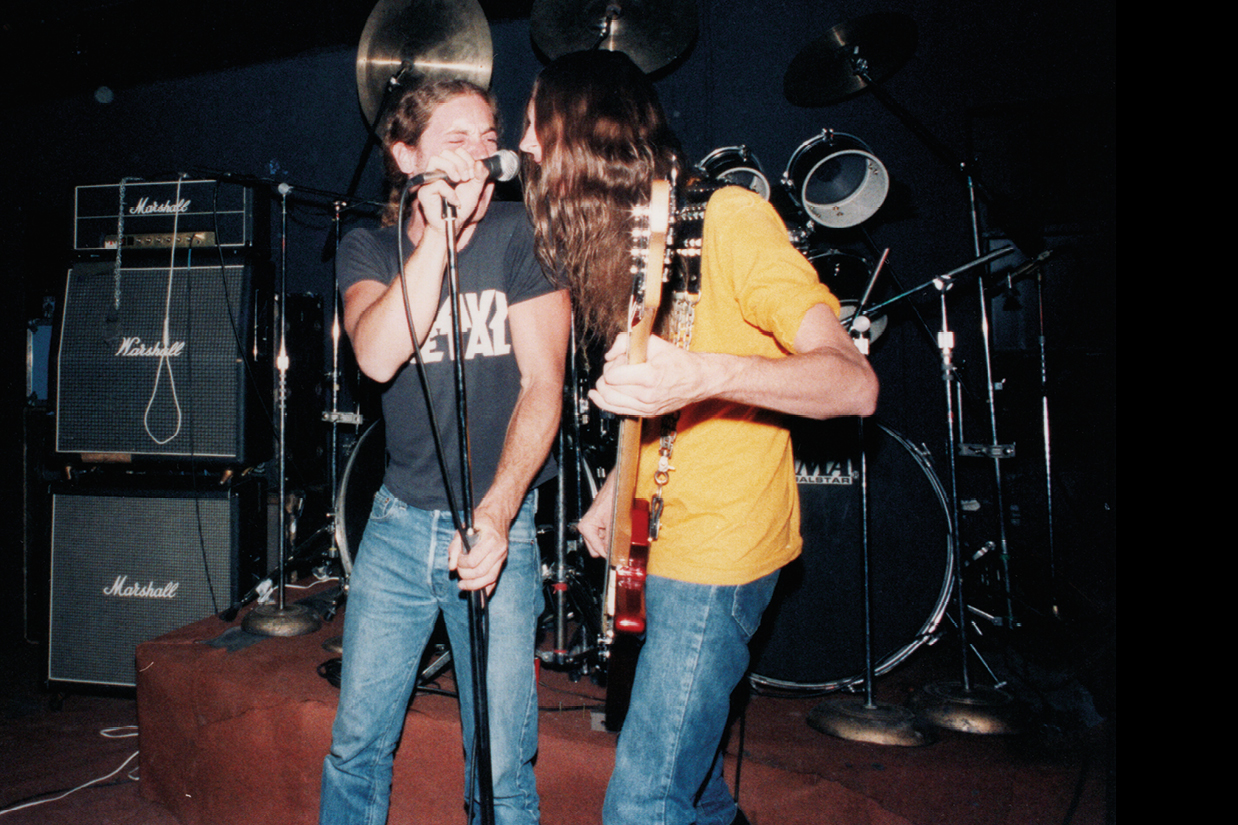
In the summer of 1983, 18-year-old Michael Pearson brought his camera to two Black Flag shows in Los Angeles, capturing the band during a pivotal moment as hardcore was beginning to collide with metal, hard rock, and other influences.
His photos document not only Black Flag, but the kids, musicians, and characters surrounding the Southern California punk scene at the time.
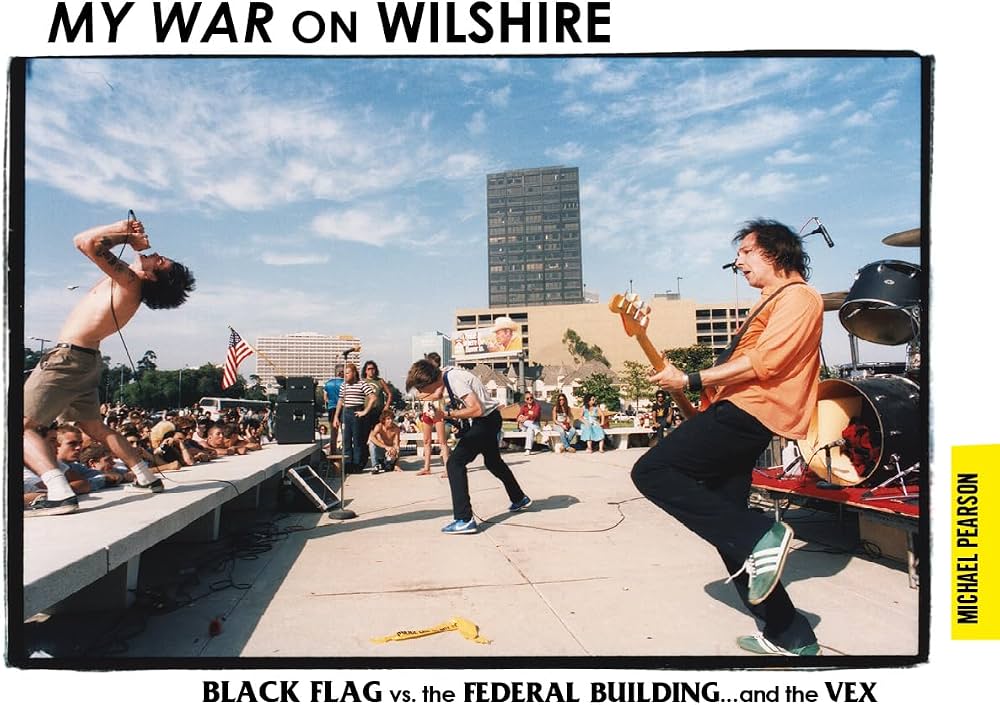
Those images are collected in My War on Wilshire: Black Flag vs. the Wilshire Federal Building…and the Vex. I spoke with Pearson about that summer, Black Flag's changing sound, the people in his photographs, and why the band's impact still resonates more than four decades later.
How much of a local buzz did Black Flag have in the summer of 1983? Hardcore and punk fans both claimed them by then, but what about metalheads and people burned out on new wave and power pop? I would think metalheads appreciated the heavier, slower direction.
Black Flag had been popular for a couple of years, and their fan base kept growing as more teenage kids came into the scene. When they started out, there were maybe a couple hundred punk rockers around and only a handful of bands you could really call hardcore.
By ’82 and ’83, thousands of kids from all over the suburbs showed up, especially from the South Bay and Orange County. We were near Santa Monica, and a lot of kids there had cut their hair and gotten into punk over the previous couple of years.
I didn’t know many metalheads back then. Metal was the mainstream stuff, the radio and arena bands. There were a few kids into Ozzy, Judas Priest, Iron Maiden, things like that. I didn’t know any really cool thrash kids until a year or two later, when Metallica, Exodus, and bands like that started blowing up.
After a couple of years of hardcore, a lot of it had gotten formulaic and started to sound the same, so people got excited about mixing rock and metal into punk. It was controversial at first because punkers thought they had to be anti-old rock and anti-hippie.
People like [ex-Black Flag singer] Dez Cadena were provocative just by going in a completely different direction. He looked like some dirty hippie from 1971. The McDonald brothers [Red Kross] grew their hair out and got into something new, mixing punk with ’70s pop rock and cartoon and TV pop culture.
The new wave and power pop kids from the Westside were part-time punks. They could transform themselves into punk rockers whenever they needed to. Their Flock of Seagulls hairdos sometimes gave them away, but a lot of them enjoyed the heavier, faster sounds too.
How did you feel about Flag's slower-paced material during that period?
All my friends loved Black Flag's new direction, slowing down and getting heavier, more Sabbath-like, almost proto-grunge. It was a nice change, and it was just as powerful. That summer, we heard the My War songs live before the record even came out, and it was intense. [Bassist] Chuck Dukowski would warm up before shows playing that plodding, sludgy but propulsive sound. It was so cool. And the thrash guys were clearly listening to punk too. You can hear it and see it in the sound and look of Slayer and Metallica.
The Federal Building photos are striking: Black Flag playing against a distinctly American backdrop, with the government building, U.S. flags, palm trees, even the Marlboro cowboy. At the time, did you realize how loaded those images were, or were you just a kid taking pictures of a band you loved?
I didn’t think anything about the backgrounds. I was 18 and just wanted to get some good shots of Black Flag.
Now I can see the juxtaposition: the Federal Building, the U.S. flag, the idyllic palm trees, the macho Marlboro Man, all set against Black Flag and the rest of us punkers who complained about everything that was fucked in America and in our own lives.
We bitched constantly about Reagan, about his corruption and the way he gutted mental health care and social services for people who needed them. But if we could have seen the future, we never would have believed it. Not in our most drunken shit-talking sessions could we have imagined a president like Trump: a buffoon starting wars, using the Justice Department to go after his enemies, refusing to accept election results, talking about blowing up LA and San Diego (which has a ton of Republicans, by the way), and his family pulling in billions from crypto and other deals while he’s in office. And we loved to speculate about how bad things could get, nuclear war, for instance! But this would have been unimaginable to us.
Still, the photos cut both ways. Black Flag against all that Americana is a great contrast, but the pictures can also look like a wholesome, all-American event: a beautiful day, a bunch of kids enjoying a band they all looked up to. There was no violence or debauchery at that show that I can remember.
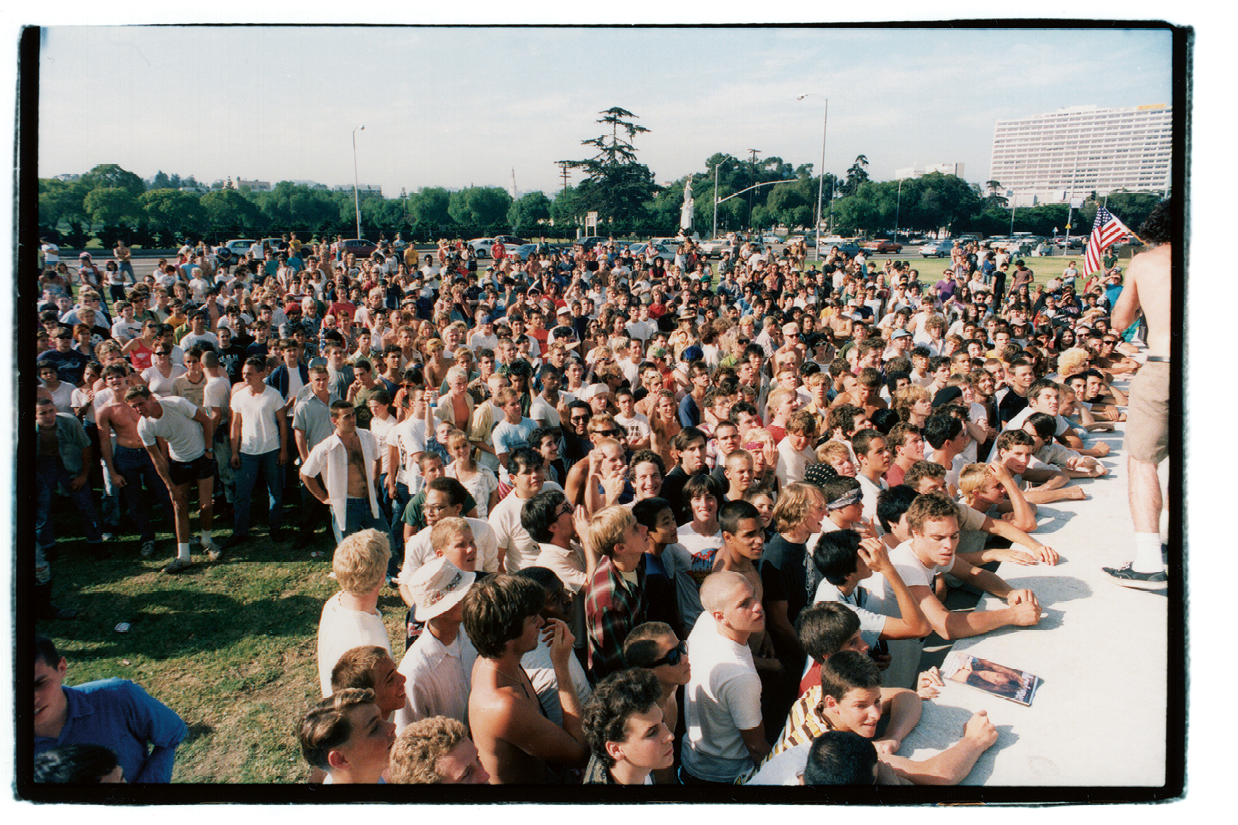
One of my favorite things to do is scan the audience in old-school live photos and see if I can spot people from bands. I appreciated how you highlighted that in the book. Did you roll with a big crew of friends to hardcore and punk shows that summer? I’m picturing a Suburbia-like group of kids walking down Wilshire.
I had a truck, and that summer I hauled my friends to hardcore shows in the back. My friend Ken Waco (RIP), the guitarist in our hardcore band Armed Response, rode up front with me, and we’d pick up whatever kids we knew along the way. We saw some killer shows that summer: SS Decontrol, Minor Threat, Suicidal, all kinds of stuff.
I had a shell on the back, so we could get on the freeway and the cops wouldn’t see a bunch of loose kids rolling around in the bed. I don’t think they cared much back then anyway.
One night, a guy in the back drank so much beer that he couldn’t wait (or didn’t want to wait) for us to stop. He dropped the tailgate and peed straight out into traffic. The car behind us was maybe ten feet away and might have gotten splashed. It was pretty gross.
I’d forgotten about a lot of this until recently. I was at a get-together where a friend’s band was playing, and a guy came up and asked how he and his friends used to get to shows. He was 14 at the time. He said, “Pearson. We’d just jump in his truck and go.” I hadn’t remembered that kid riding with us in 43 years until the other night.
When I look at the crowd at the Federal Building, I see a lot of people I know. Most were teenagers, some older punk veterans, and many played in bands. A few of them have since passed away. It was the beginning of crossover, so you can spot who was early to grow their hair out from the punk buzz cuts: David Jones (who played with Alice Bag), Jeff and Steve McDonald of Redd Kross, and some others. It was a cool time, with things shifting from straight hardcore to a mix of metal, hard rock, and punk.
When you go to a smaller hardcore show these days, you’ll find anywhere from three to seven photographers shooting the action. How about the shows documented in the book? How many other photographers do you remember? I don’t remember ever seeing photos from that Vex gig Saint Vitus played. In fact, I don’t think there are enough classic Vitus live shots around!
Usually, there were only one or two photographers at each show. I only shot these two shows. Before that, I didn’t bring my camera to shows because I wanted to slam, go crazy, and be free to watch the band and be in the moment. But I loved Black Flag so much that I decided to bring it, and I brought a small blaster to record the music, which came out awful and completely distorted.
At the LA shows, Edward Colver and Glen E. Friedman usually photographed, and Kevin Salk has some great photos too. Naomi Petersen and Linda Aronow took great shots, along with a few others. Disposable cameras didn’t come out until the late ’80s. A few kids had those little pocket cameras with the tiny film, but the photos usually came out small and blurry. The serious shooters were the ones who really loved both photography and music and owned 35mm cameras.
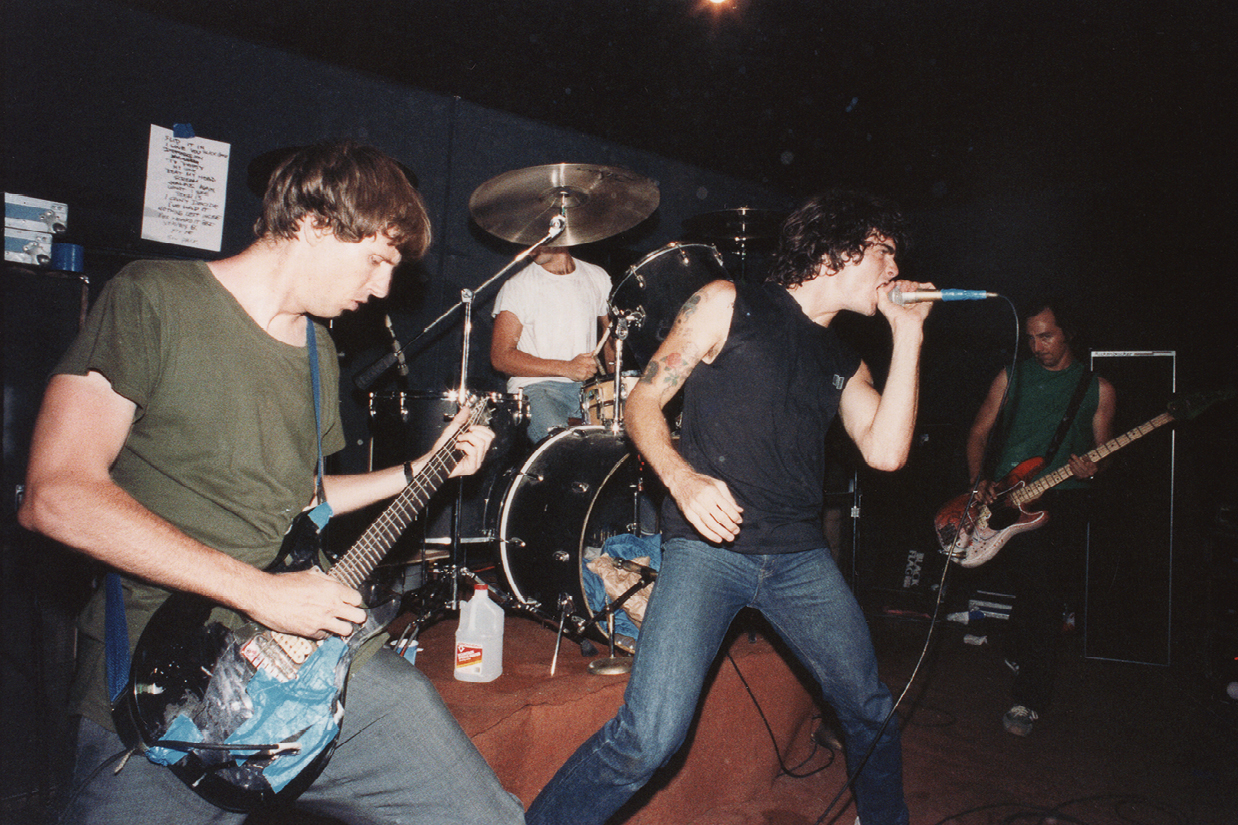
Saint Vitus played with Black Flag a lot back then, but as you said, you don’t see many photos of them. Vitus loved metal and appreciated punk. In my shots, you can see the guitarist, Dave Chandler, wearing a Germs shirt with a big flannel tied around his waist like the punkers did.
They were cool, and they were brave. For a year or two, they took a lot of shit because punk meant hardcore and crossover wasn’t acceptable yet. Punks would go off on them for looking like hippies or rockers or whatever. But by July of ’83, the punkers were cool with them and rocking out to them.
Another cool (and outrageous) band from back then was Nig-Heist. There aren’t enough pictures of them either.
Why are we still talking about, and writing books about, Black Flag all these decades later? Was what they did ultimately more important than the music itself?
Yeah, it turns out they’re a classic rock band. I mean a classic punk rock band! Excuse me! [Laughs]
Black Flag took what angry kids were feeling and boiled it down to its essence. Rock bands before them could get angry and frustrated, but they always tempered it and made it acceptable, even apologetic. Black Flag just wore their rage, fury, and intensity right on the front of their face. They were one of the first bands to really let it all out. When 'Damaged' came out, it was like, what the fuck?! It gave thousands of bands permission to be just as insane, and plenty of them soon went off even harder.
But something about Black Flag was special. Chuck Dukowski was a great bass player. They had unbelievable drummers like Robo and Bill Stevenson, and every one of their singers (Keith Morris, Ron Reyes, Dez, Henry Rollins) brought something different. Then there’s Greg Ginn’s guitar. I’m not sure where he pulled that from: a mix of rock, jazz, and who knows what. The leads sounded like gibberish, but they still sounded great.
It’s an awesome band, made even more special by its iconography. The logo and flyers were by Raymond Pettibon, Greg Ginn’s brother, an iconoclast and creative genius in his own right.
They’ve stood the test of time. It was good that they kept changing and didn’t stay in one mode. I only wish My War and some of the later albums were recorded better. They sound a bit weak. If you ever saw them live back then, it was a huge sound and a full-on attack.
But what makes them more important than just the music is their DIY approach. They created SST Records, which gave so many artists a home to release records and tour. They showed you could start your own label, get in a van, and tour the country without anybody’s permission. They worked their asses off, and they deserve the legacy they have.
Before we wrap up, is there anything else from that period or your relationship with punk that you think is important to the story?
I’ve been fascinated with punk rock since I was 15, in 1979, and I still am. I was lucky enough to get to the early shows on my moped, and my friend and I rode all over Hollywood to see bands.
My friends and I grew up with almost no supervision. We were basically on our own, doing whatever we wanted. We had a lot of freedom, and everything seemed exciting and fun, but emotionally we were very neglected. Nobody ever stopped to check in and say, “Hey, how are you doing?” The truth is, a lot of us were really struggling. We were angry, but underneath it we were sad, and when you’re a teenage guy, sadness gets converted into anger. Punk rock was where all that went.
In my 20s, the anger turned into more of a tired depression, and that’s what got me into therapy. Therapy finally gave me a place to talk about what I’d been through and what I was feeling, and to understand why I felt the way I did. Punk gave me a place to put the feelings. Therapy helped me understand them, heal, and treat myself better. That’s what led me to become a therapist, and I’ve been one for 25 years now.
For nine years, I worked in a locked psychiatric facility with kids who were more hardcore than any of my punk friends. Most of them had “failed” out of 10 to 15 placements: foster homes and group homes. Many had been severely neglected on every level and abused. They were unbelievably angry, often violent, prone to self-harm, and at times hilarious too. It was challenging, but also uplifting and fulfilling to help them get through some of their rage, pain, and trauma.
So the anger of hardcore punk led me to help people with the same feelings: feeling different, left out, alone, frustrated, hopeless, and angry. It’s been nice to soothe the hardcore savage beasts in myself and others.
***
My War on Wilshire: Black Flag vs. the Wilshire Federal Building…and the Vex is available via Bazillion Points.
Tagged: black flag, book, saint vitus