Hailing from Syracuse, New York, Earth Crisis emerged in the early '90s as one of the most militant and musically uncompromising voices in the hardcore scene. While many bands of the time flirted with politically charged content, Earth Crisis embodied a total war ethos: vegan straight edge ideology weaponized through crushing breakdowns and metal-inspired riffs.
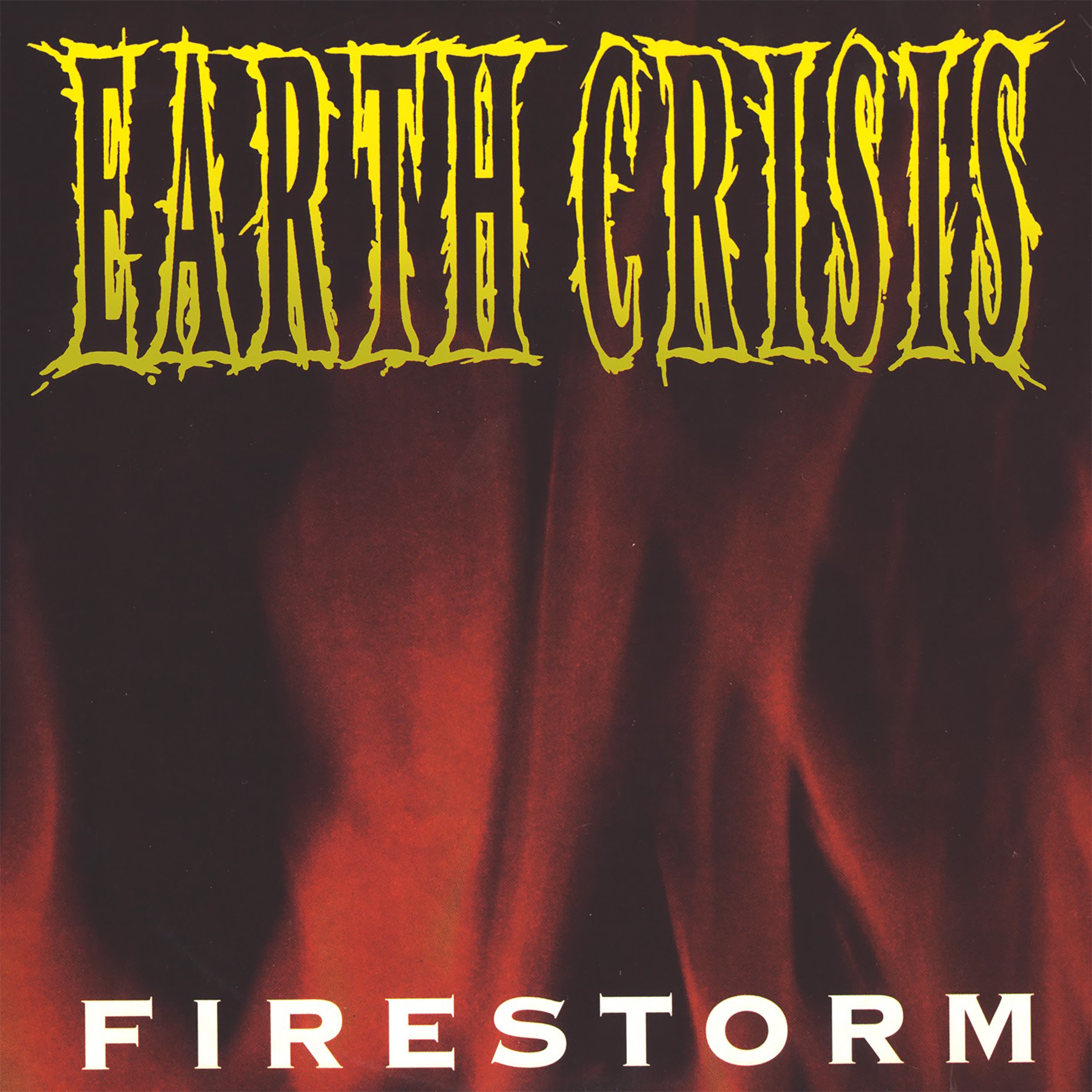
Their sonic and philosophical evolution from the raw intensity of their 1992 All Out War EP to the punishing and refined Firestorm EP two years later, it marked a watershed moment in hardcore history. Despite mixed reactions at the time, Firestorm had undeniable impact, and its title track remains one of hardcore's most iconic anthems.
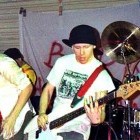
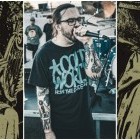
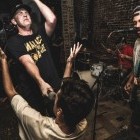
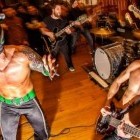
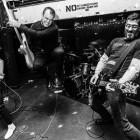
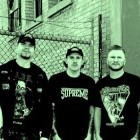
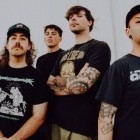
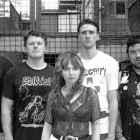
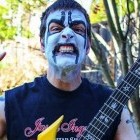
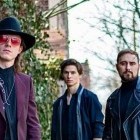
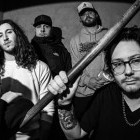
I sat down with guitarist Scott Crouse to talk about the making of this now legendary record. Much thanks to Scott Forgerelli and Adam Tanner for hooking us up with their photos for this story.
Earth Crisis emerged from the Syracuse scene at a time when hardcore was splintering in different directions. Can you walk us through the early formation of the band and how your ideology began to shape your sound?
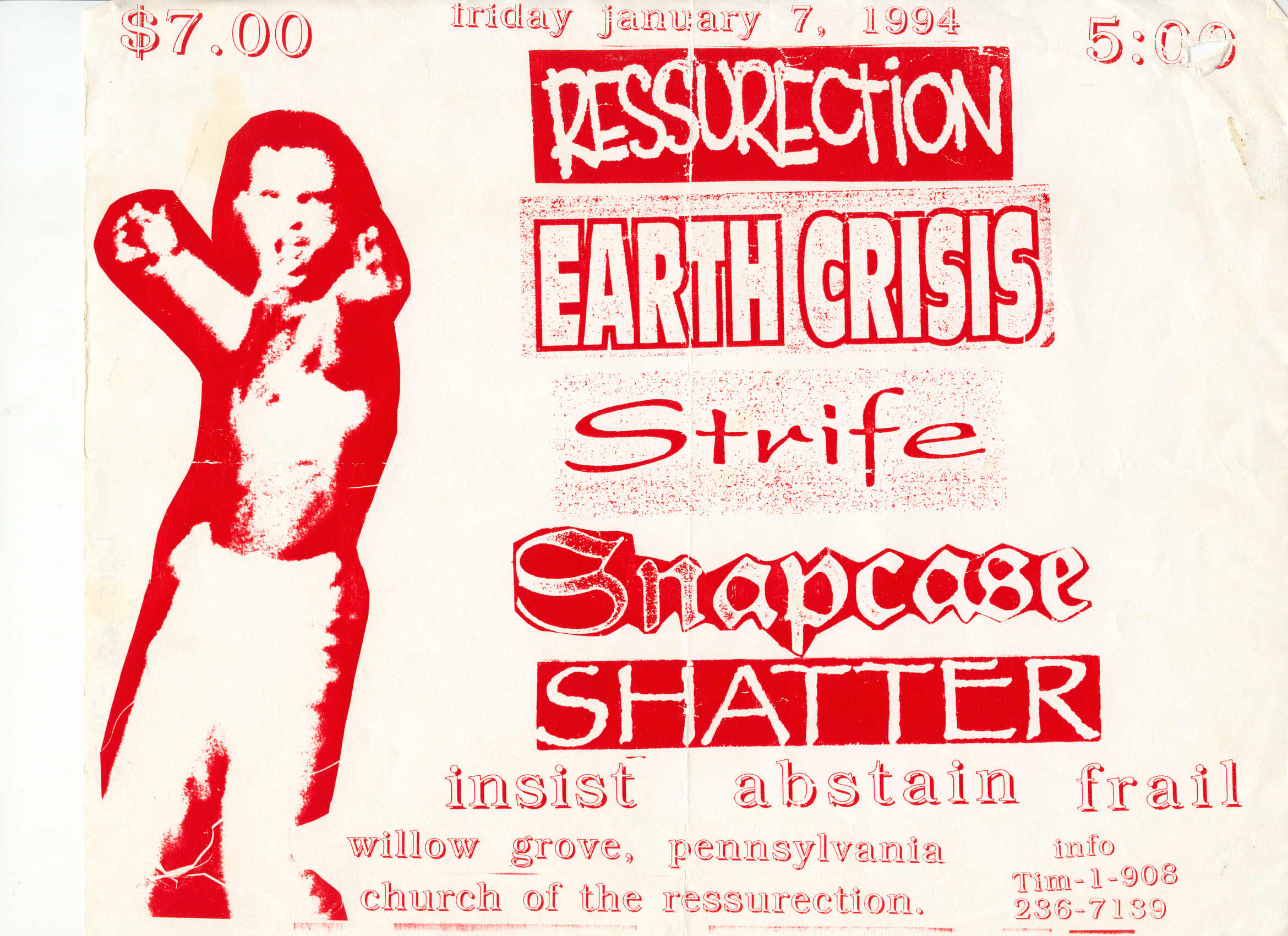
I think you hit the nail on the head. Hardcore was becoming this place where you could try other shit for a change. There were very isolated little boxes of what you were allowed to do. I think bands like Ressurection and others we're sort of pushing the envelope a little bit of what a straight edge band could be. Instead of just being like a Youth Crew band sound wise.
Earth Crisis had the same kind of mentality, we were straight edge guys, but we didn't necessarily want to be a Youth Crew type band. We were coming from metal backgrounds and wanted a little bit more imagery in our lyrics. We didn’t want to be so straightforward lyrically, and we wanted to put a little bit more of a vibe into things versus the directness of a band like Youth of Today. We wanted to have a little bit of darkness.
Obviously, lntegrity were kind of the pioneers of that idea and we wanted to take that up a notch lyrically and musically. We wanted to be slow and doomy and have a darker vibe. I know that was really what a lot of the talk in the rehearsal space was at the time. If you ever heard our demo with "Firestorm" on it, it's much faster, much more upbeat and so when we went into record it (for the 7") we wanted to lay back and add a lot more groove to it.
We were straight edge guys that were listening to stoner bands like Iron Monkey and stuff so we were sort of trying to mold these two worlds together that maybe didn't need to go together, but we wanted to do it.
I remember [Earth Crisis guitarist] Ben Read name-checking bands like Crowbar as an influence before anybody else was.
Yeah, exactly. We were very much into metal like Believer, and we ended up recording Destroy the Machines at their studio. We loved Believer, and we loved Crowbar, Iron Monkey. Corrosion of Conformity Blind was one of our favorite records.
Not to disrespect any of those bands, but it's just like people assume that if you were straight edge at that time you loved Youth of Today and Insted, and I absolutely do, but that wasn't where we wanted to come from musically.
READ MORE: The Story of the Making of Terror's Lowest of the Low Album
Between All Out War and Firestorm, Earth Crisis made a noticeable leap in heaviness and precision. What inspired the change in musical direction—and how deliberate was it? What influences would you site as inspiration for this musical change?
It was very deliberate. All Out War was more of us just doing Karl a favor. He had written all the music, and we punched it up a little bit, but we weren't taking it all that seriously. He came to us and was like “I have the songs and I can't find a stable lineup…I’d love if you guys could help me out."
We were doing a band called Framework at the time and he wanted all vegan straight edge guys, so I think we were the only confident musicians that were vegan and straight edge in our area at that time. So All Out War was really just us playing Karl’s songs that he wrote. We wanted to leave his songs alone and let his thing be his thing. It was really just us sort of having fun and helping somebody out.
We recorded All Out War for $400 in an afternoon. When we started playing shows there was just an undeniable vibe. People were having a good time and we were having a good time so we decided to do it for real. We decided to sit down and write songs together and put some energy into it.
There’s a big shift between All Out War and Firestorm and the demo that was in between those EPs. That big shift was us sitting down and being like, "OK let's make this a real band, let's put some energy and thought into this."

Has Karl written any other music for Earth Crisis since All Out War?
Not really…he’s come up with some stuff in the practice space. He will have a vocal idea and want a riff that could lock in with it. But as far as sitting down and actually picking up a bass, cause that's mainly his instrument, he doesn’t really do that anymore.
Karl has talked lately about a song that he had from that era that he never did anything with and so there is some talk of him busting that out at some point, but I've yet to hear it.
You recorded Firestorm with Bill Korecky at Mars Recording Compound? That studio has become almost mythological in hardcore circles. What recordings were inspiration for the band to travel to Ohio to record, and what were the logistics of the recording?
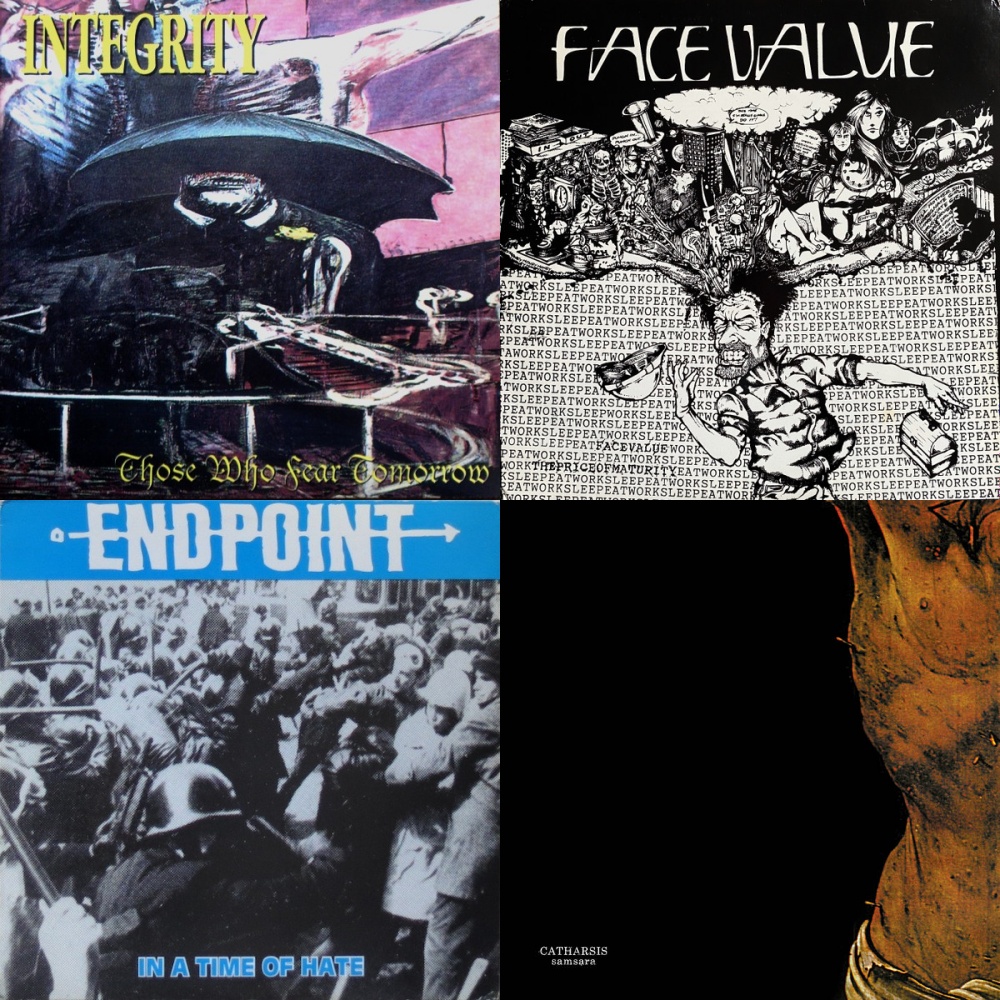
It was 100% Integrity. Integrity just had the vibe that we wanted. We wanted to take Integrity’s vibe and bring it up 10%. Their recordings were significantly better than what anybody was getting in those days. Everybody was recording with Don Fury and not to knock him, but it just all sounded the same.
Integrity was just very different and their recordings just sounded very unique. So we were like “OK well, we gotta go there (Mars)” and we booked a tour. We played a few shows leading up to the recording and then stayed there for three days, recorded, and then moved on and finished up the tour. We had a different bass player with us because Ian [Edwards] was too young to go on tour so he didn't actually play on the record.
Kurt from Catalyst Records was playing bass on the tour with us, but Ben and I ended up playing bass on the record. I played two of the songs and then Ben played on the other two. I don't remember why we did that… I don't know why one of us didn’t just play all of it.
I was listening to Firestorm last year when we remastered it for the for the anniversary vinyl release, and it's really a strange recording. There's a lot of weird things about it. I think we did one guitar one each side and then one up the middle. The panning of the drums is very strange - it’s not stereo, and the toms are in a weird position.
Everything’s in a very weird position, the ride cymbal and the hi-hat are on the same side and it's just very strange. I feel like what probably happened was that we were running out of time and Bill wanted to get it sounding decent and get it done.
I'm assuming this was before you started recording bands on your own. Do you remember anything about the studio set up and the recording gear and the process of actually putting these songs to tape?
I don't remember that much but he had the standard gear of the time. I think there were some ADATs and a tape machine, you know pretty much all the standard late '80s and early '90s gear you'd find in a studio at the time. But the place was weird. I don't know the history of it enough to know what version of the studio we were in, but it was in a dilapidated building.
The building looked like it was not even habitable. It was so fucked. We had to take this fucked up elevator to bring our gear up and I was nervous because I didn’t know what we had gotten ourselves into. I remember going through a door and we had to move these tarps to get inside, but then at some point it was like the Wizard of Oz. Inside was a nice, clean, professional studio.
My buddy Jimmy that plays in Sect with me recorded there with his band Undying and we were sharing notes about it. They recorded at a different version of Mars that was in an old airplane hanger out in the middle of nowhere.
READ MORE: '90s Hardcore Week on No Echo (Part I & II)
I would assume you probably recorded at an earlier version of Mars than Undying.
I'm pretty sure we did too. We had so many questions about Integrity while we were there. Bill showed us the mic that [Integrity singer] Dwid used, so I'm pretty sure we recorded at the same spot that all the Integrity shit was recorded at. It seemed very makeshift at the time and very thrown together but it was a cool experience.
I don't remember much of Bill. He passed away recently and I was trying to remember some memories of him but Bill and I didn't really interact all that much. I think we were just there to get the record done. I was stressed out because it was my first real recording for an actual release that was going to be on a record label. Karl lost his voice at one point during it too so there was a lot of stress.
I remember Bill was upset about our guitar tone. He wanted us to use JCM 800, the same amp that Integrity used, but if you listen to their records, the Integrity guitar sounds is very clean. I wasn't used to that and I plugged into the Marshall and realized that it didn’t have enough balls.
We had our Crate heads with us and I told Bill that I was going to use it and he got so fucking mad! But that Crate head made it onto both Firestorm and Destroy the Machines.

Did Bill help shape the sound of the record as a producer, or did you pretty much go in there with the songs and the direction of what you wanted the songs to sound like?
Yeah, it was that. To be fair, I would've had the same attitude. I think he looked at us like like we were young kids that were not very professional. I guess we were decent players for our age but I think he just thought that it was a weekend gig and he wanted to get us in and then get us out. He had a few little things to say, but nothing structurally really, just sound wise.
I think he beat us up a little bit over the performances to get us to lock in tighter, that kind of thing. That's where the bass came in. I think I was having a hard time locking in on a part on the bass so he was like “can somebody do this? We don't have time for this…" so Ben ended up playing bass on the last 2 songs because of that.

Victory Records was becoming a hardcore powerhouse in the early '90s. How did you end up signing with them, and what was that experience like?
That’s kind of a cool story. Guav [Justin Guavin] did Conviction Records and put out the All Out War 7 inch, and he was our unofficial manager. We didn't even know what that was at the time, but he was was making a lot of calls on our behalf. He was getting us on shows, he got us on the Dayton More Than Music festival, which was like a big first big American hardcore fest, and he was always hooking us up with opportunities.
He made a few calls to Tony [Brummel] from Victory and they even exchanged some letters. Tony might have been kind of interested in us, but he didn’t know where we would end up. We got an opportunity to play in Detroit with Chokehold and Cinderblock, and it was just teenage insanity.
We all piled into cars and we all shared gear. We made it to Detroit and played this shot show at a coffee house. The three bands played for a total of 25 people.
One of the dudes there was this guy Chad Rapper from Chicago who was friends with Tony. He went back to Chicago and told Tony: “You should check out this fucking band that I saw, Earth Crisis. They're super good!” Tony said, “I'm familiar with them, this dude Guav is always talking them up to me.” After that, he paid a lot more attention to us. He ended up reaching back out to Guav and was like, “Yeah, I want to talk to these guys. I'd like to put a record out for them.”
It was sort of just being in the right place at the right time. We were making a little bit of waves playing and we were always bringing a carload of guys from Syracuse that were busting out in the pit with fucking masks and acting stupid and crazy, so we were creating a little bit hype. Everywhere we went people were talking - whether it be good or bad. Tony loved controversy so I think that was one of the reasons he wanted us on the label.
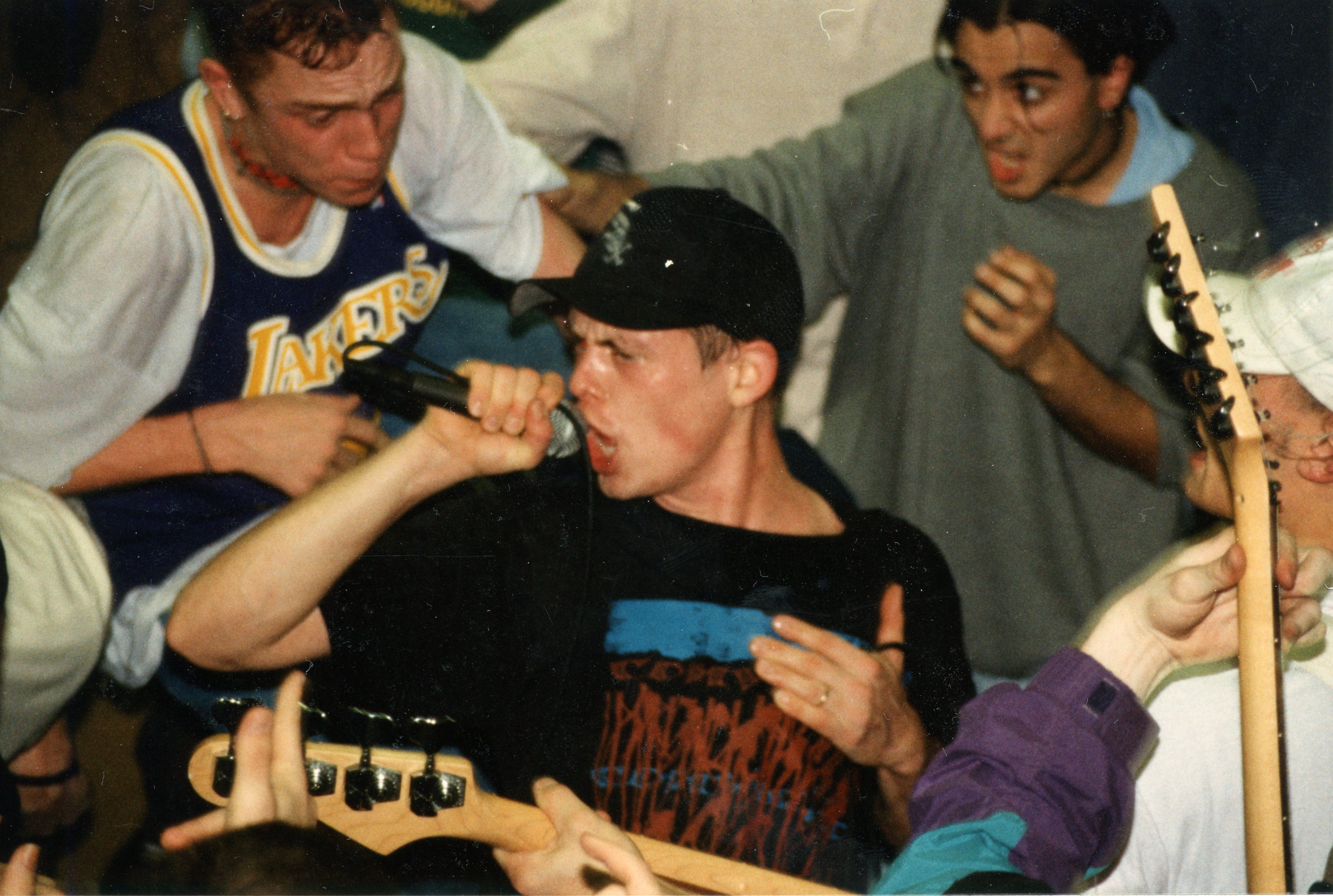
“Eden’s Demise” was left off the original Firestorm 7" and included only on the CD. Was that a creative decision, a label call, or due to time constraints on vinyl, or because Karl lost his voice? His voice sounds different on that track.
Yeah, it was 100% left off because Karl lost his voice. We were bummed, which is funny because I listen back to it now and it sounds fine. That was the first band heartache. I just remember sitting outside and just feeling for poor Karl. It's wasn’t his fault, I could change my strings, Dennis [Merrick] could get new drum heads, but you know when you're young and you don't really know how to take care of your voice you're gonna lose it - and he did.
Karl had never really pushed himself that hard before in the studio and so by the time we got to that song, he didn't have it anymore. We didn't have the money or the time to come back the next week or the next month to fix it. That was just a foreign idea to us. Karl did the best he could on it, which in hindsight actually sounds fine, it sounds great. But at the time we were just all so disappointed. We wanted to leave it off the record, but then when it came time for a CD we decided to put it on there.
I will say, Karl took that opportunity to really make sure that would never happen again. He took it seriously and went home and learned some breathing and vocal techniques.
Karl’s mother is an opera singer, I don't think a lot of people know that, but she's very accomplished and she taught voice at Syracuse University. She taught a lot of a lot of famous people how to sing and she had a lot of good tips for him. And after that, it never happened again.
Karl is so consistent in how much he can push himself in the studio, and it is very impressive. We had that one setback, but it was like a building block for him to make sure that would never happen again.
The lyrics to “Firestorm” were and still are polarizing. What was the intent behind the message, and how did you react to the backlash or praise that followed?
I don't want to speak on somebody's behalf because I didn’t write the lyrics. When we started this band we loved the wild, out there lyrics of bands like Slayer but we were also straight edge and vegan. We loved the imagery that Integrity was bringing — the darkness and the anger and all that stuff and we wanted to take it up a notch. We wanted to be the most over the top band that we could be, like A Chorus of Disapproval times ten.
Karl was reading a lot of books about the Black Panthers at that time. I don't remember which book it was, but he was reading a book about the Black Panthers and there was also a documentary that he saw on TV and to my understanding, the lyrics to “Firestorm” were inspired by a combination of both of those things.
The lyrics to "Firestorm" were partially inspired by the Black Panther party and how they were going into neighborhoods and just basically kicking drug dealers out by force, trying to clean up their neighborhoods. There was also a documentary that Karl watched that was about a similar type of thing going on in South America where there were these vigilante groups going in and basically fighting back aggressively against drug dealers. There's probably more to it too, but those were the two main inspirations for the idea.
I get it…Looking back on it now, like many things, the whole “welfare generation” line and some of that other stuff doesn't age well. But there are a lot more things that go into those type of situations than we as 15 and 16 year-old kids were aware of at the time. Everything isn’t so black-and-white. But when you're 15 and 16 years old, life looks very black-and-white.
We were a bunch of angry kids who grew up surrounded by drugs. Karl was surrounded by drug neighborhoods, and I had family members that abused and even sold drugs. We were angry. We were pissed and we were unapologetic about it, but we were also teenagers.
Looking back as adults, would Karl write those lyrics in that way now? Absolutely not. If you look at any of the lyrics that he's written over the last 20 years you can see he's pretty responsible. He has a different outlook than when we were teenagers… That’s always my answer.
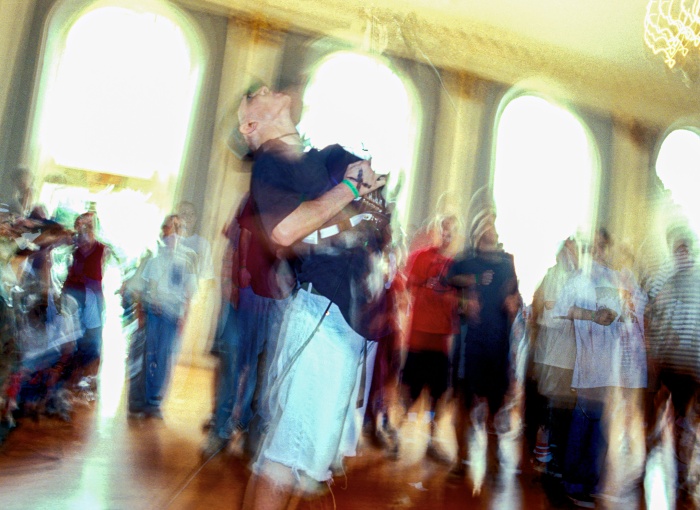
For sure, but at the same time, Earth Crisis would not be the band it is without the controversy, whether it was lyrics on All Out War or the lyrics to "Firestorm."
Oh yeah. 1000 percent.
Whether it was intentional or not, the fact that the lyrics were so polarizing only helped to spread awareness about the band.
Definitely.
Ben Read’s guitar playing was integral to the early Earth Crisis sound and live show. Can you talk about his departure and how that affected the writing and recording leading up to Destroy the Machines?
It's weird. I have a love-hate relationship with it, not him as an individual but the playing aspect of things at that time. My opinion is that what people liked about Ben was the show aspect, but he wasn't playing much guitar. There was a lot of improvisational dive-bombing and that used to really annoy me. But he wanted to put on a show.
I think Ben was very inspired by [Beyond, Inside Out, Shelter, 108 guitarist] Vic Dicara - but the difference, in my opinion, was Vic was doing that and also playing the songs! That was always my argument with him. But Ben was undeniably an integral part of Earth Crisis. It was scary when he left because Ben was the guy that everybody talked to, and Ben was the guy that booked the shows.
I had to step up a lot in that regard, even though I didn't really want to. I've never wanted to be a band dad. I never wanted that…I still don't want it, to be honest, but I just accept it now. Ben was the band dad at the time so when we realized that we had to let him go, I was really nervous about it. He had all the contacts for the shows and he was the one that Victory talked to, but it all worked out.
We went in a different direction. Not to take anything away from him, but we became a much tighter band. He wouldn’t have wanted that. I wanted precision and he just wanted raw emotion.
Chaos.
Yeah, he wanted chaos. We would've been more dissident and messier, which is not a bad thing — it's just different. It got to a point where Ben was bailing on tours a lot. He wasn't much of a team player, and he had a lot of problems like agoraphobia and other anxiety issues. He would get really bugged out when we went out on tours and he would think he had all these illnesses and he would go to the hospital every day when he would get home.
We had our buddy, Jim Winters (Conviction, Believer, Turmoil), fill in for him on a run and then Ben came back and bailed on us again. We had a talk with Ben when we got home and I think the thing that did it for Karl and I was when he said, "Let's record Destroy the Machines, and if it does well I'll stay in the band, and if it doesn't, then I'll quit.”
We told him, "That's not how that works, man. Tou are either in or you're out.” So we basically felt like we had to move on without him, and we didn't see or hear much from him for 20 years. I'm happy that I reconnected with Ben in my like 30s, it was nice. He's a great dude and he was so much fun.
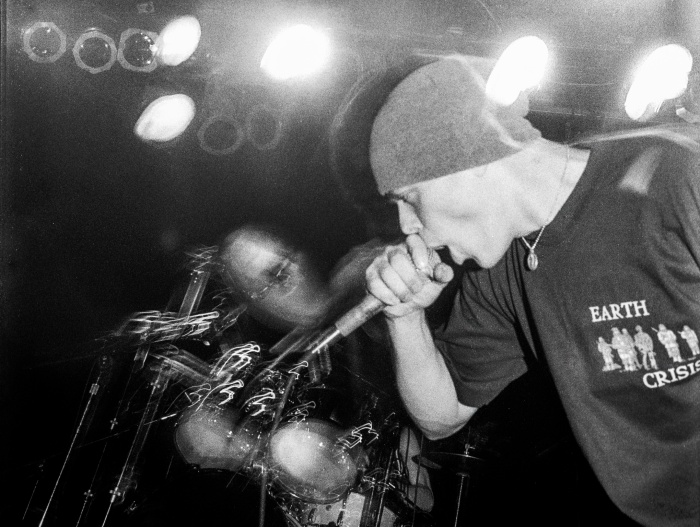
He was always the best to hang out with. From what I remember, when he left Earth Crisis, he was selling encyclopedias door to door.
He did wild shit. That's the thing about him, he was so funny and he always did the craziest things. I heard so many tales of that guy over the years and when we ended up reconnecting years later he confirmed that some of them were bullshit.
Yeah, I mean there were two different times that Ben took a bus cross-country and just showed at the closest bus stop to my apartment. He would show up and live with me for a little while and then he would disappear, and then show up again later.
Yeah, that was his beauty I guess. When he was in Earth Crisis he was never focused on what we were doing. Earth Crisis was doing well and taking off and he was constantly wanting to start a new band.
One time, we showed up at the practice space and he had taken all of our gear. We showed up and there was nothing there, not even the drums. We were trying to find him but we had no cell phones. We finally tracked him down at some dude's house. He had all of our gear there and he was jamming with these other dudes. We were like, “What are you doing? We have practice tonight!”
Do you remember the first time you played “Firestorm” live after the EP dropped? What was the crowd response like and did you sense immediately it was going to become a hardcore anthem?
To be honest, we knew before. Locally everyone had the demo which we didn’t even officially release. That's a weird story of itself. People bootlegged that recording and made covers and sold them. I still have people constantly asking me where they can get a copy of the demo and that demo really was just to shop around to labels.
We never sold it, but it got around and when we would play “Firestorm” it was insane. You know we were just like, "Whoa!" I guess we kind of hit on something there. We were really nervous though because we slowed it down when we went and re-recorded it for the seven inch. Dennis has a really laid-back, John Bonham vibe on drums, which I love, and I loved it from the second he played with us. I wanted to play into that and when we re-recorded “Firestorm” we laid back and really let it groove. It was very fast on the demo, it was much more upbeat.
After we recorded the record, we went up to Guav's house after a show and we played it and it was a room full of bummed-out people wondering why it was so slow! We wanted to be slow and play like doom metal or like Crowbar and they didn’t like it. We thought we fucked up and thought we were shot because that song was like a hit already for us locally. Thankfully, it didn't go that way, and more people seem to latch onto the record version than the demo version.
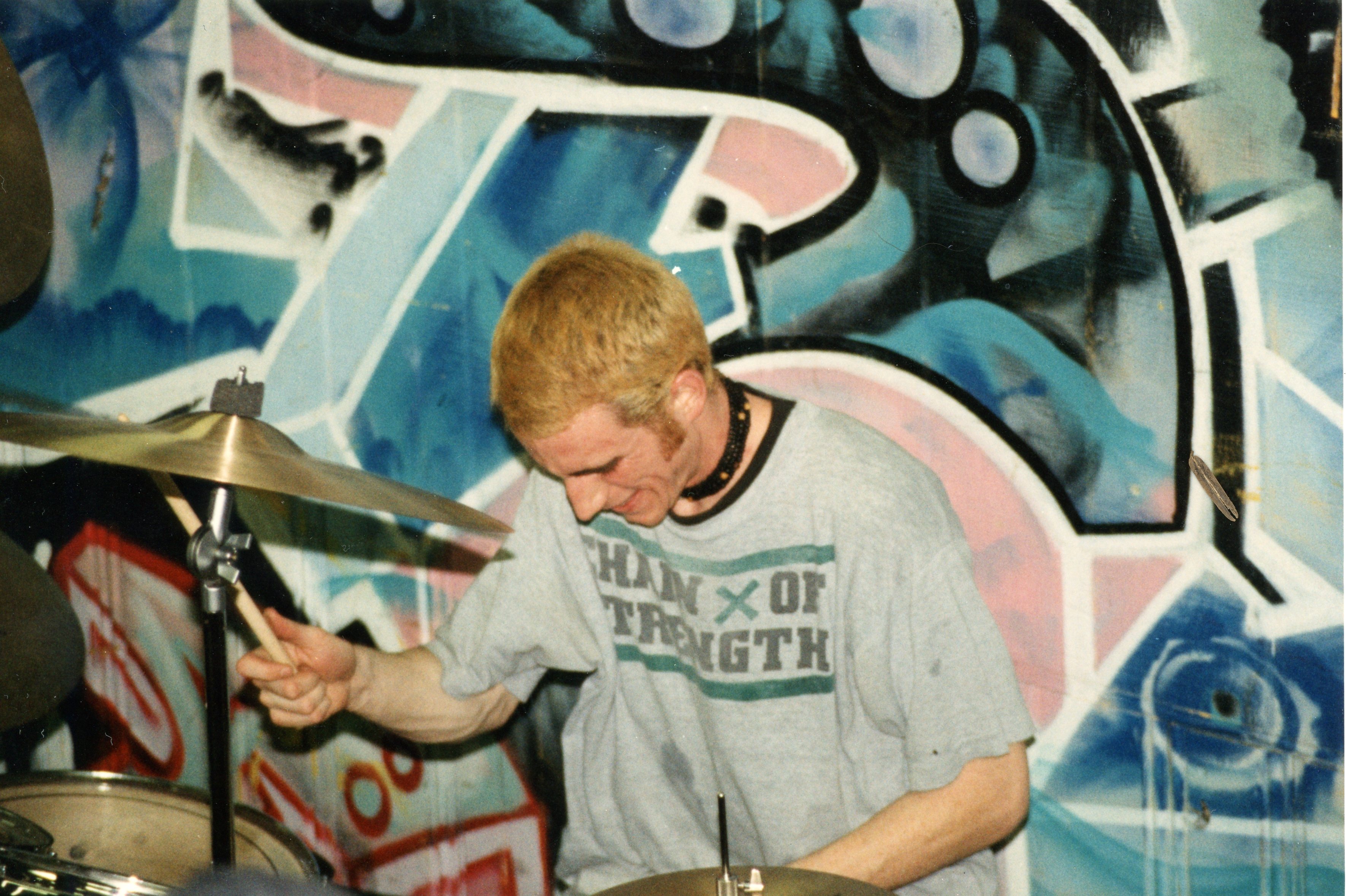
Yeah, at that time I don't think we even had that demo.
Yeah, it was definitely an East Coast/Midwest thing. A lot of people on the East Coast and the Midwest had it. We found out years later that the guy from the label Conquer the World [Mike Warden] was the one selling them and telling people it was an official demo.
Looking back, how do you feel the Firestorm EP fits within the evolution of hardcore and metal core? Did you know then how big it’s impact would be?
We had absolutely no idea. We were just so excited to see a record of ours at our local record store - that was all I wanted. There was a place in town called Knuckleheads where we bought all of our hardcore 7 inches and we couldn’t wait for the record to show up at Knuckleheads - that was gonna be it for me, there was nothing bigger, and I thought I couldn't reach any higher than that. I would go there every fucking day as ask if they had it. And when they finally got it, the owner, Kathy, was so proud because we were the kids that shopped at her store all the time and this was our record. She put it up front and just seeing the record in the store, was all I could ask for.
I thought I'd just do this until it dies out then the freight train started rolling and before I know it I’ve been in the van for for 10 years. But I had no idea. I thought it was cool and I was super proud of it, but I had no idea that people were going to care.
The time I realized that maybe something was happening was when we played a show at The Wetlands in New York. I don't remember who else played, but we met a guy that worked at Caroline Distribution. We were loading up our van and he was said, “Hey, I just wanna let you guys know that your record is fucking moving…” We said, “Oh wow, cool!” And he says that “We're just waiting for more from Victory.” Someone finally asks him how many they sold and he said, “Well, we've shipped 30,000.”
I think we just were in disbelief, I mean it was just unbelievable. Right then we thought that maybe this was something and that maybe people actually like the band. It was wild. All we wanted when we started the band was for our friends to like it, and to maybe get our record in our favorite record store. Then at some point we're in Japan and people there know our band and we can’t imagine how this happened.
That's the beauty of hardcore.
It really is.
Thirty years later, “Firestorm” is still shouted by new generations of hardcore kids. Why do you think that song, more than any other, has endured the way it has?
I guess I would have to say that it’s honest. I think you can hear that in music, you can hear when people are genuine and honest and, regardless of the lyrical content, you can tell when the people involved are true and honest. We didn’t have a plan, we were just writing something from our frustration and our anger. I think people still connect with that kind of thing.
I think there's still a lot of kids that connect with the overall message of it, you know, don't sit by and be a victim, fight back and take back life for yourself. And now that song is a straight ddge anthem - not intentionally, but that's what it is. I think it's kind of timeless in that way and I think that sentiment comes through regardless if you have a problem with a line in the song. Most people understand what the point of the song is.
Other than that, it’s like why does anything work? If we knew, if it was a math problem we would all be rich, right? You know somethings just work, and to me that's always the thing I look at, it’s because it was genuine. If you sit down and you try to manufacture it, nine times out of 10 it doesn't work. But if you're just trying to have a good time with your friends and write cool music, that’s when something awesome will happen.
I think a lot of what makes "Firestorm" so memorable is the simplicity of the riff. If you were trying to manufacture something you might not embrace that simplicity. You might think you need to make it more complicated and push it past what makes the song so primal and cool.
I mean bands tried to do it. You know, Green Rage would be the famous one, they made their own version of “Firestorm.” Other bands tried to do it.
People do it to you guys [Strife] as well, people do with the Snapcase and all of the other bands of our era. That was what was beautiful about our era. We toured together and we all sounded vastly different. Snapcase sounds nothing like Earth Crisis and Strife, Earth Crisis sounds nothing like Strife and Snapcase, and Strife sounds nothing like either. When we were doing it, itwas awesome because we weren't trying to copy you guys and you weren't trying to copy us. It was just like this is what we do and this is what you guys do.
I always say that it was awesome when you would have a show with Integrity, Supertouch, and Lifetime, you know it was like how could you get any different? And everybody liked all those bands. It was just a great era of exploration in hardcore. You were allowed to do whatever you wanted to do and everybody was kind of cool with that.
Some bands were pulling from death metal and other bands sounded like a Green Day-type band and then we would all play together and everybody would get along for the most part too.

I think that the diversity is really what defined the sound of the '90s. It wasn't one sound, everyone was pushing and experimenting and trying to take Hardcore music to a different place.
Totally and we would all be listening to crazy shit in our vans that people wouldn’t expect. We would pull up listening to Lifetime or Ashes — we’d listen to Ashes so much. Or we would be listening to Madonna, we didn't just listen to Carcass all the time.
Everybody was cool with so many different styles of music and it was all kind of feeding its way into the scene at that time.

Any any other memories about making the Firestorm record that that kind of stick out in your head?
The tour that we did around the making of the record was brutal. I am shocked that the band survived that.
That was the tour with that band The Fucking Champs?
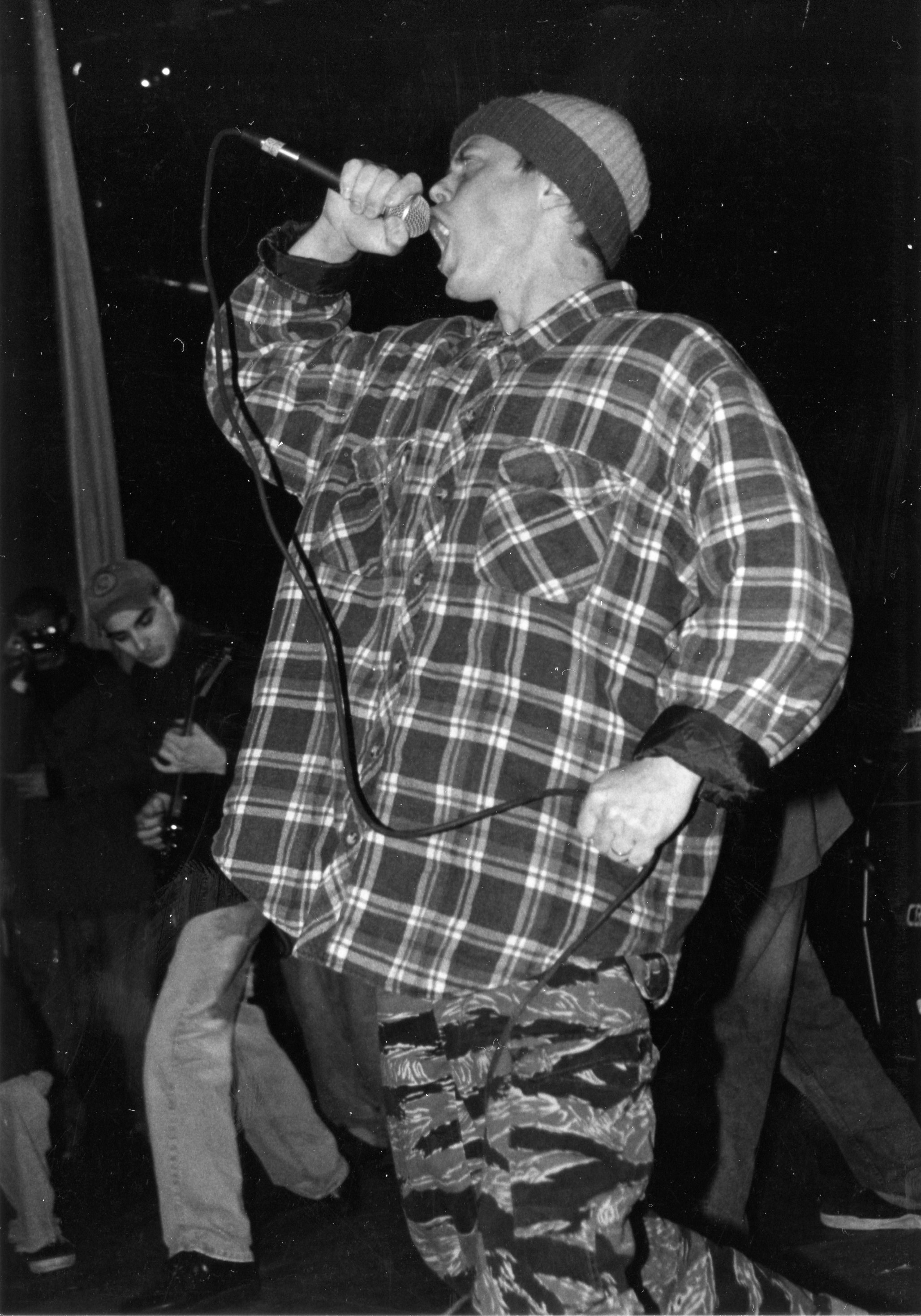
Yes, and that was the tour that we were supposed to make it out to California for the first time. We had never been out there and I think we were going to play with you guys [Strife], if I’m not mistaken.
I remember talking to you guys the next year when we met up and you guys said that the West Coast would have been good and that people would have been excited to see us. We were just in hell… It was hell.
You guys made it close too, like Arizona maybe?
Yeah, we gave up in Arizona. We couldn’t fucking take it anymore. We were splitting tostadas 5 ways [laughs]. It was brutal. We called Tony [Brummel] and asked if he could help us at all because we were so fucked. We were robbing people…
I remember Ben saying that you guys were just living off of peanut butter…
Literally. We were dining and dashing places. We went into a hotel one night and slept in these roll out beds under the stairs and just got a couple of hours of sleep before they kicked us out. It was a terrible tour and that’s when Ben really lost his mind. We hit Tony up and we said, “Can you help us? Can you send us money?” And he said, “Look, if you can get to Chicago I can put you up here until the tour reaches Chicago and then you can pick it up. I will feed you everyday…”
We drove like 30 hours from Arizona to Chicago. Ben lost his mind and he wouldn’t get back in the van at one point. We only had 12 hours left and he would not get in the van. He laid on a picnic table somewhere in like Oklahoma and said to just leave him there. He laid there for 4 hours before we could convince him to get back into the van.
We finally made it to Chicago and Tony kept his word and he fed us, and we stayed there for a week or so before we picked the tour back up. I got arrested immediately. We went to Ohio and I got arrested for shoplifting and got put in jail. I didn’t have proper identification because I literally just turned 18 a few weeks before, so they put me in jail on a Friday night and I didn’t get out until Monday.
I was done. I was like, “I’m done with this band shit…” I went home and I remember I said I was done and thought that I had to find something else to do with my life. And then two days after I got home, Dennis called me and said, “Hey man, we got a show in Vermont. Are you ready to roll? It’s on Friday.” And I said, “Dude, I’m not going.” He says, “What do you mean?” I said, “I’m not fucking going.” And he says, “Yes you are… We are going to come pick you up.” And they did. They picked me up and I got in the van and I guess I was back.
And the rest is history…
***
Earth Crisis on social media: Facebook | Instagram
Tagged: 90s hardcore week, earth crisis