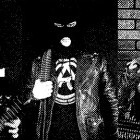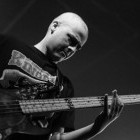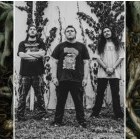
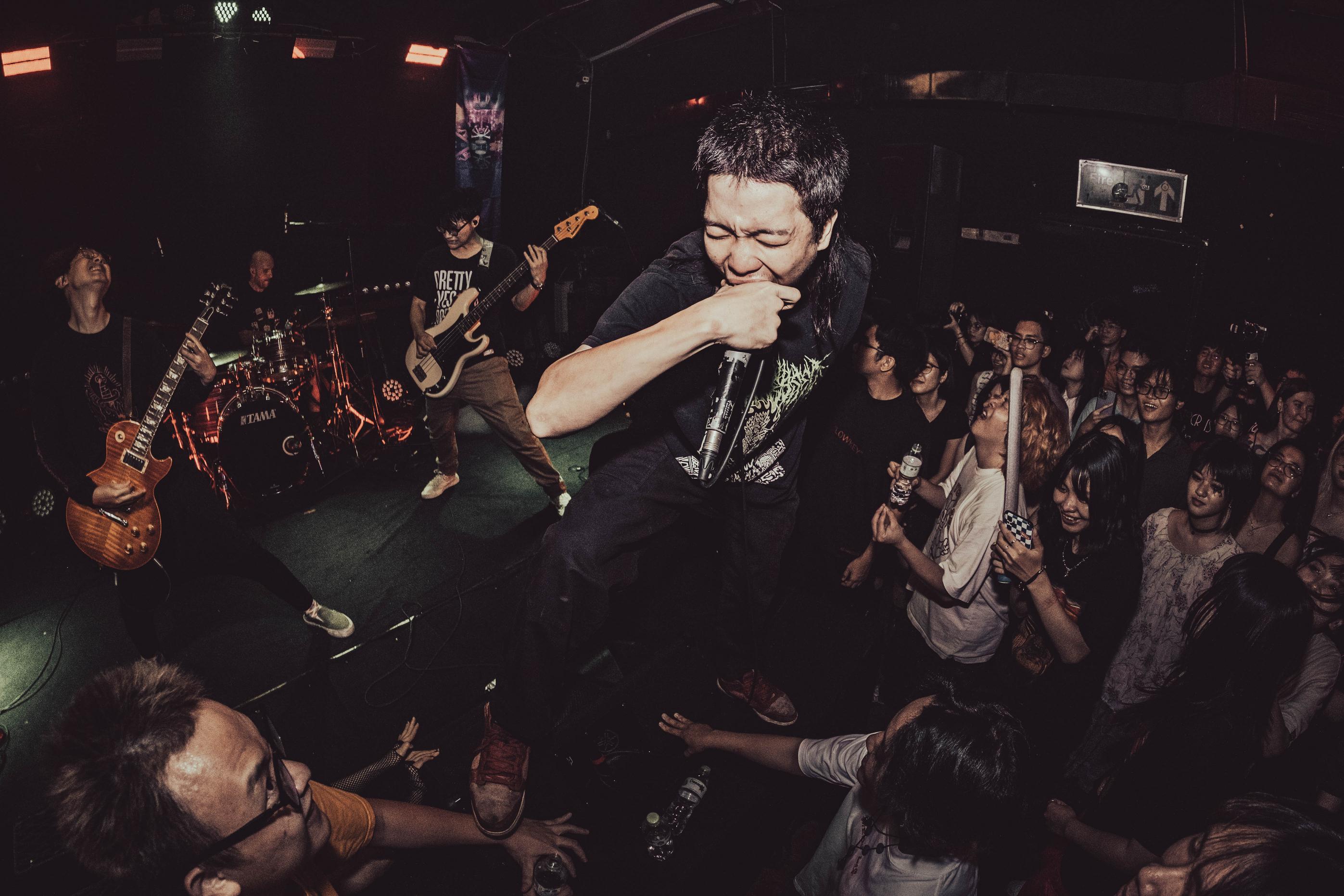
Hardcore from Vietnam still feels like uncharted territory for a lot of listeners, but Ho Chi Minh City-based Cút Lộn have been quietly—and now very loudly—carving out their own lane. Their third album, Dzữa, is out now and finds the band pushing further into darker, more abrasive territory while keeping their music rooted in raw emotion and sharp intent. Across seven songs written between January and July of this year, Dzữa feels like a violent storm—turbulent, cathartic, and unsettling, yet strangely beautiful beneath the chaos.
For drummer Sergey, the existence of a hardcore scene in Vietnam at all is inseparable from the country’s complicated relationship with Western music. “Vietnam received little to no Western influence in the post-war period,” he explains to No Echo. “You could literally go to jail for playing ‘western music’ up until the mid-1980s.”
Despite that, tapes of late ’70s hard rock and early ’80s metal were smuggled into the country, and by the late ’90s, the first local metal bands began to emerge. Access to MTV in the late ’90s and the rapid expansion of the internet in the 2000s helped introduce hardcore and punk to a new generation, eventually leading to the emergence of the first local metalcore bands and a growing underground.
Sergey’s own path into hardcore started far from Vietnam. Originally from Russia, he grew up immersed in punk and hardcore and was already playing in bands and hosting gigs before moving to Hanoi. Guitarist Quang followed a similar trajectory, discovering hardcore through the internet and shows abroad, while bassist Nguyên and vocalist Vui Qá came up at a time when local punk and hardcore gigs were already happening in Vietnam.
“The power of the internet in bringing hardcore music into Vietnam is huge,” Sergey says, recalling hosting a power violence band from Singapore in 2015. “There were maybe 30 people at the show, and the only person who knew what power violence was happened to be a 15-year-old girl who found it on YouTube.”
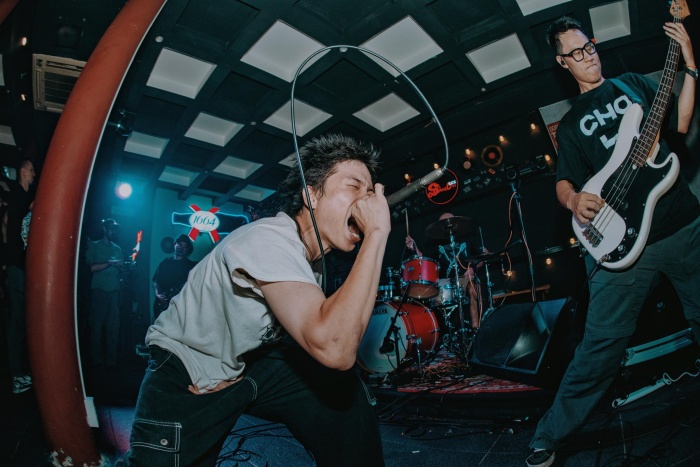
Cút Lộn formed in late 2017, initially as a loose idea between Sergey and Quang, both of whom were already active in Hanoi’s underground. Sergey didn’t even play drums at the time. “I said yes even though I had zero idea how to play drums,” he laughs. What emerged from those early jams was a strange but joyful hybrid: punk drumming paired with thrash-inflected riffs, wrapped in a concept that framed everyday life in Hanoi through the eyes of a seven-year-old boy. Even the band’s name reflected that approach. “Cút lộn is a quail balut egg,” Sergey explains. “It’s something very Vietnamese and also kind of childish.”
That concept fully bloomed on the band’s 2019 debut Xào Ke, a record that many listeners initially dismissed as goofy or gimmicky. Beneath the humor, however, was a layer of sarcasm and social commentary, with childlike language used to ask surprisingly heavy questions. When the band struggled to continue down that same conceptual path, things slowed until early 2024, when vocalist Vui Qá joined and everything shifted. The result was Bắc Thảo, a heavier, darker, and more chaotic album released in August 2024, signaling a clear evolution in both sound and intent.
Dzữa takes that transformation even further. Named after “hột vịt dzữa,” a partially incubated duck egg where yolk and white blend together, the album mirrors that idea lyrically and musically. Love and jealousy, hope and despair, beauty and ugliness all swirl together in a cyclical push-and-pull.
Sergey also points out that “dzữa” is an alternative pronunciation of “vữa,” a word used to describe something broken down or fallen apart—a fitting metaphor for lyrics built from short, fractured phrases designed to work within the constraints of Vietnamese as a tonal language. “Sometimes the vocal technique dictates the pronunciation,” he says. “This approach helped us keep the delivery raw and honest.”
Sonically, Dzữa draws comparisons to bands like Converge, Oathbreaker, Baptists, Primitive Man, and Full of Hell, with some listeners also picking up on melodic crust influences. Despite the extreme feel, the band keeps things relatively straightforward in terms of tuning. “We tried lower tunings,” Sergey admits, “but it sounded too dark and serious. Fuck that shit.”
True to their DIY ethos, the album was recorded at home, with drums tracked in a rehearsal space, help from their friend Bomb on engineering duties, and mixing and mastering handled by Quang.
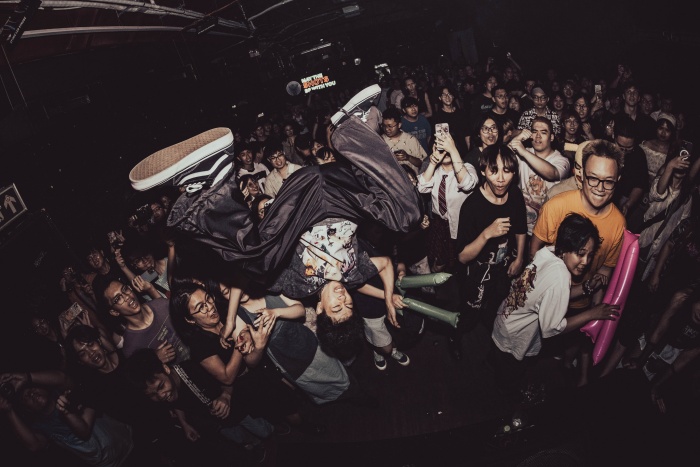
Cút Lộn’s connection to the local scene runs deep, and Sergey is clearly proud of what’s happening around them. “My favorite thing about the hardcore and metal scene in Vietnam is that there are so many girls going to shows,” he says. “It’s like 50/50 between girls and boys. I’ve never seen anything like that anywhere else.” He hopes to see more women playing in bands locally and points to international all-female acts like Dummy Toys and Peach as inspiration.
For anyone looking to dig deeper, he recommends Vietnamese bands like Gỗ Lim, 9xacly, ElbowDrop, KINH, District 105, Diarsia, Under Pressure, Empathize, Happyco, Knife Sticking Head, and Hanoi deathcore newcomers GAI. On the DIY side, collectives like Out the Run, Bad Blood, and the now-less-active but hugely influential Hardcore Vietnam have played vital roles in keeping the scene alive.
With Dzữa, Cút Lộn sound fully locked into who they are right now: darker, harsher, and more confrontational, but still deeply rooted in place, language, and lived experience. It’s a record that doesn’t just document a band’s evolution—it reflects a scene that continues to grow in unexpected ways. And if Sergey has his way, the invitation is open. “Come to Vietnam,” he says. “We have great food and great people here.”
***
Cút Lộn on social media: Instagram

Tagged: cút lộn