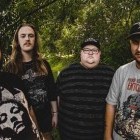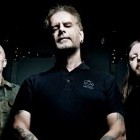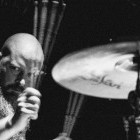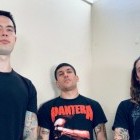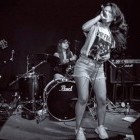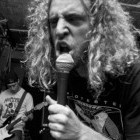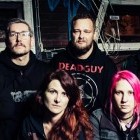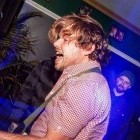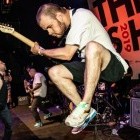

When you talk about the fertile ’90s East Coast hardcore scene, Fastbreak’s name always comes up. Formed in Connecticut, the band carved out a distinct voice through a run of heartfelt yet heavy records that connected just as much with hardcore kids as they did with the growing melodic punk crowd.
From their EPs, split with Ten Yard Fight, and studio albums Fast Cars, Fast Women and Whenever You’re Ready, Fastbreak stylistically evolved at a quickened pace, but always brought high energy and melodicism to what they did.
In this conversation, vocalist Patrick Rorick and guitarist Neal St. Clair take us back through the band’s history, tracing the influence of their records, the miles logged on the road, and the circumstances that ultimately brought their run to a close. It’s a story that captures not only Fastbreak’s legacy, but also the spirit of a scene that continues to inspire.
You can’t talk about Fastbreak without Cornerstone. Tell me the circumstances around the formation of Fastbreak and how the other band’s break up fed that.
(Patrick Rorick, vocals): Fastbreak started young like other early '90s middle-schoolers that saw the "Smells Like Teen Spirit" video, got their first instruments and organized themselves into a band. In our first phase, we were covering popular grunge songs in the basement and playing sets at our 8th grade dances.
By freshman year, we got into covering Rage Against the Machine and Quicksand, our gateway bands into hardcore, and made attempts at writing our first songs.
As you mentioned, Cornerstone was already going at that time and they recruited Steve Pica (guitar) and Tyler Wragg (drums) from our nascent band to play alongside my big brother Kevin (bass) and Toby (singer of Cornerstone). By ‘93, Cornerstone already had their mission statement: “Not Old School, The Only School," referring to the style of fast hardcore they were intent on writing and performing – and as their tagalong/roadie, this was just super exciting to me!
I remember Toby asking me as we were driving home late at night from a Cornerstone show, "when are you guys going to start playing hardcore?" Again, he had the vision – "you’ll be like Crippled Youth/BOLD/Youth Crew!" which was correct as our average age was 15. He re-christened our band Fastbreak to sound more "crucial" and we pivoted to writing faster songs and jumping around at our practices like the photos we saw on the early Revelation Records releases.
Both bands existed in tandem and as literal and figurative younger brothers we learned everything about running a band from them, from recording, making demos, flyers, getting shows, to eventually touring.
Fastbreak benefited greatly from our association with Cornerstone because of all the groundwork and momentum they created before their break-up in ‘95. Fastbreak’s first real hardcore show was opening for Cornerstone "Woodstock ‘94 weekend" at the Boardwalk in Brewster, New York.
READ MORE: Cornerstone: ‘90s Connecticut Hardcore Band Enters Time Machine to Discuss Their History
Listening to the Youth Pride demo, it was crystal clear where Fastbreak sat in terms of the band’s musical and lyrical influences. Speaking for yourself, what was it about that style of hardcore that resonated so deeply with you as a kid?
(Patrick): To my younger mind, the counter-cultural part of hardcore was that the music is fast! The speed (also the screaming) was what kept "normal people" away from this underground music. When you add straight edge to the mix, you’re suddenly in a completely different world than your peers in high school.
For us, this music was local. We grew up in Bethel, Connecticut, which is a suburb of Danbury. We knew that Jordan Cooper (Revelation Records) and Ray Cappo (Youth of Today, Shelter) were from Danbury, also Wide Awake weren’t faraway in Brookfield. Because this music originated here before our time, we romanticized and researched it.
We got all our intel about these local luminaries from Malcolm Tent at his store, Trash American Style in Danbury, buying records and renting VHS videos of shows from the Anthrax in Norwalk.
Also, those early Rev releases had a New Haven address on the back and our first hardcore shows, attending and performing, were held at the Tune Inn in that same city! We felt part of the "tradition," and specifically the Youth Crew style, because it was accessible for us teenagers armed with power chords and a speedy drummer.
How would you describe the Connecticut hardcore community back then? Did you find it competitive?
(Patrick): For our time in Connecticut, it was an organic community consisting of groups of 10-or-less hardcore kids from a slew of high schools, all congregating at the Bristol Bike Exchange, New Milford Teen Center, Maxalunas, Beanery, etc. for these DIY hardcore shows. You know, a bunch of social pariahs, skaters, vandals, some vegan/vegetarian, straight edge or not, troubled at home and/or in school, that found their place at these underground shows.
Things only became competitive when the emerging local bands were vying for opening slots when the Victory bands would come through, nothing too ugly. For the most part we were supportive of each other, sharing band members, recording contacts, and networking for shows.
Outside of the bands, who were some of the key people that made things happen behind the scenes?
(Patrick): Jamey Jasta (Hatebreed, Jasta 14, Stillborn Records) stands out as the driving force of the scene at the time. He booked and promoted everyone from the locals to national acts, and would put energy behind Connecticut bands that he saw were serious. And his band, Hatebreed, were great from the start – any local band was psyched to be added to a bill with them. He was our booking agent right up until the end of Fastbreak and we’re very grateful for it.
(Neal St. Clair, guitar): The local Connecticut scene was super supportive and doing really well in the mid-'90s. Lots of mixed bills and a ton of shows. Jamey Jasta was definitely the center of all that and kept Connecticut Hardcore going strong for years.

1996 saw the release of the Don’t Stop Trying 7” on Third Party Records. How did you feel about the band being included in the so-called “Youth Crew revival” happening during that time?
(Patrick): The “Youth Crew revival” was exciting for us as we kind of inherited Cornerstone’s mission statement. And to meet like-minded bands, Ten Yard Fight, Floorpunch, Halfmast, that had a similar perspective about hardcore and from neighboring states, really expanded our network.
I only wish the Don’t Stop Trying 7” came out sooner – it was completed in ‘95 and as impatient high-schoolers we wanted to get things moving. That record put us on the map in the Tri-state area, especially New Jersey.

The Where It Lies 7” came out that same year through Jesse Gustafson’s Stand Hard Records. He was unquestionably a pivotal participant in the New England hardcore scene, both behind the scene and through his work in Tenfold, Follow Through, and Right Brigade. Talk to me a bit about his connection to Fastbreak and how that EP came together,
(Patrick): Fastbreak was tapped for a compilation on Blackout! Records, and also for the second edition of Too Damn Hype’s East Coast Assault. These comps took forever to come out and we got tired of waiting. Jesse offered to compile these tracks on 250 7”s on Stand Hard Records, so we could get the new songs out on a limited release that wouldn’t alert the comp labels. We first connected with Jesse by playing local shows with his band Tenfold.
Luke, Tenfold’s drummer, was an impromptu fill-in for Fastbreak. We were so excited by Luke’s playing we had him join Fastbreak when our first drummer left. The Where It Lies recordings were our first with Luke, and with our new second guitar player, Chris Legg (RIP) of Break Faith.
I remember the Where It Lies 7" came out at a PWAC show in Long Island with Earth Crisis headlining. Rick ta Life was distroing there and somehow convinced Jesse to wholesale him 50 (!) of the 250 records.
Neal, also from Tenfold and eventually In My Eyes, joined Fastbreak in ‘97 on second guitar after Chris’s departure, and in the next year I went on to create Right Brigade with Jesse and members of Follow Through.
(Neal): Jesse and I went to high school together in Glastonbury, Connecticut and as soon as we connected with the Danbury/Bethel guys we were set as a crew.
I was a roadie/mosher for Fastbreak at the time and putting those songs out on Stand Hard was a perfect fit. Purely fun and organic, crazy to me how rare that record became.
How often was Fastbreak playing outside of the New England area during that period? What were some other cities/states where the band did well in terms of crowd size and participation?
(Patrick): We didn’t get out of New England until we toured with Shutdown in the summer of ‘97. The first stop was in Maryland. During our high school years, Boston (the Rat) was our furthest show.
This was a surreal time for us because we’d play a Sunday matinee at CB’s or the Wetlands, and then have to sit through our English class early Monday morning and pretend to have read Lord of the Flies, or hand in a book report on [Henry Rollins'] Get in the Van.
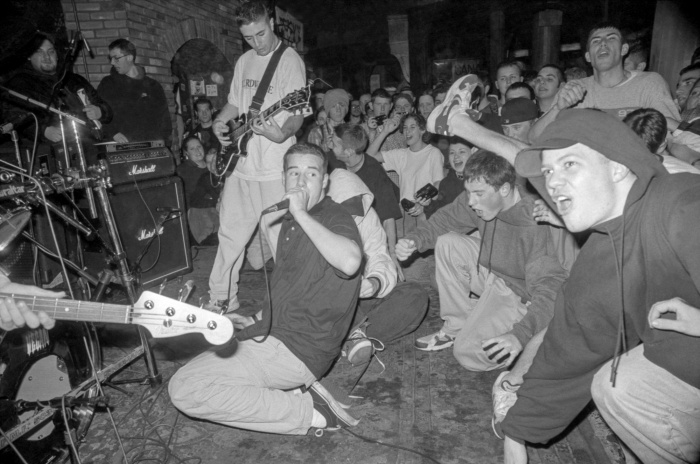
At this time, Jersey truly was our second home and those shows were always super fun. The crowd's reaction was what we set out to create – singalongs, pile-ons, and stagedives. There was a crew of NJ kids, the Morris County Youth Crew, who would go off for Fastbreak and then proceed to wreck shop for Floorpunch.
(Neal): Another great spot for Fastbreak early on was Long Island. So many great shows and memories playing there. I traded some tapes and shows with the band Tension* from Long Island and those guys would go hard for Tenfold and Fastbreak when we came through.
I loved the concept and graphic design behind the split you did with Ten Yard Fight. Talk to me a bit about that project.
(Patrick): We met Ten Yard Fight through Sweet Pete, eventual vocalist for In My Eyes, who was an early supporter of Fastbreak. He plugged us into the Boston scene where we connected to Rama Mayo at Big Wheel Recreation.
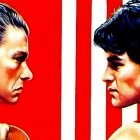
The design concept came from Big Wheel and we were asked what we wanted our boxer to look like. We were Descendents fanatics so we said "Milo" and they used Clevo, bassist of Ten Yard Fight as the "model."

Things got really interesting with the Fast Cars, Fast Women album. From its name to the cover imagery, it felt like the band was making a statement, moving past the Youth Crew/straight edge imagery. It didn’t look like a hardcore record when you saw it at the store. How intentional was all of that?
(Patrick): It was Rama’s art direction and his connection with Josh Hooten, a designer for Punk Planet, also the photographer Paul Drake, that really elevated the look and feel of the record.
During this time, we did feel the constraints of our place in the scene. Previously, we added a member to our band that wasn’t straight-edge which actually led Crucial Response Records to go back on a label offer.
Being aware of the box we were in, that design really did create some space for us. Maybe the "Youth Crew revival" had already peaked, mission accomplished, and it was time to expand our musical and visual vocabulary. The design also aligned well with Big Wheel’s overall aesthetic, making it more normal to have our record out alongside labelmate, Jejune’s.
Regarding the title, Fast Cars, Fast Women, it’s a quote from a Jerky Boy’s prank call, who we listened to often on long van drives. One thing Fastbreak has in common with Radiohead [Pablo Honey] is that both of our debut albums are titled after Jerky Boy’s quotes [laughs].
(Neal): From the album artwork to how we were dressing at shows, I think we were making an intentional effort to move past the Youth Crew tropes. We still loved that style of music and fast hardcore but it was fun to challenge the status quo and stand out a bit.
Pat’s lyrics also became much more personal and emotional and it definitely felt like a step forward from the early recordings.
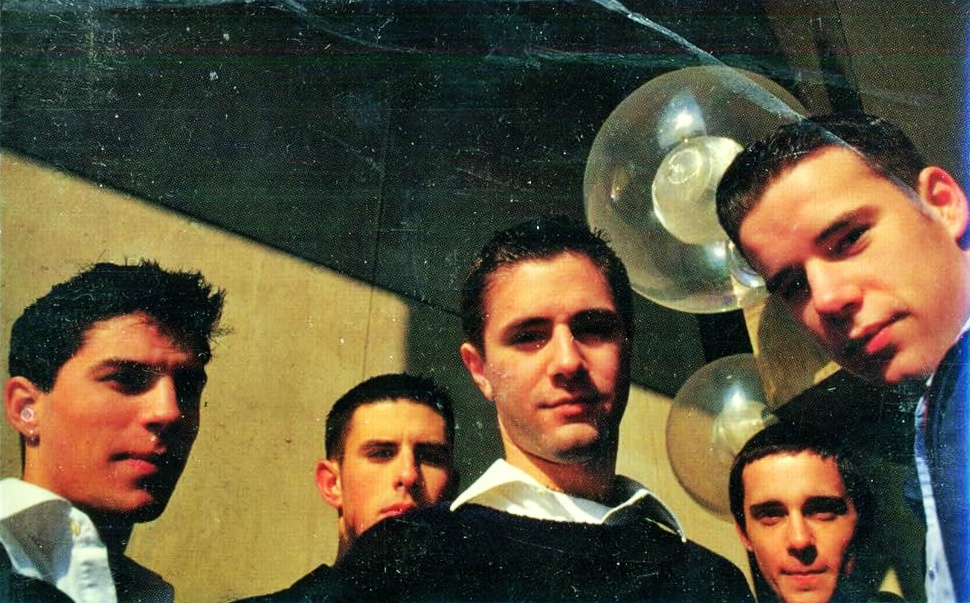
Visual aesthetics aside, the material on that album is still mainly rooted in classic hardcore, but there are also hints of where Fastbreak would venture towards on the next LP. There’s a lot more melodic flair to the songwriting.
(Patrick): When Chris Legg joined on second guitar, he encouraged us to incorporate more melody, or "stomach-feeling" as he called it. Two tracks on this LP, "At Times" and "Where It Lies" are his music which have a melancholy in their chord structures.
As we improved at our instruments (except our guitarist Steve (Coach) who seemingly always ripped!), we wanted to include more influence from bands like Lifetime, Dag Nasty, Gorilla Biscuits/CIV, Gameface, even Face to Face. Listening back, we were lucky to have a killer rhythm section with Luke’s first-rate drumming which really allowed Don’s super-melodic basslines to shine through.
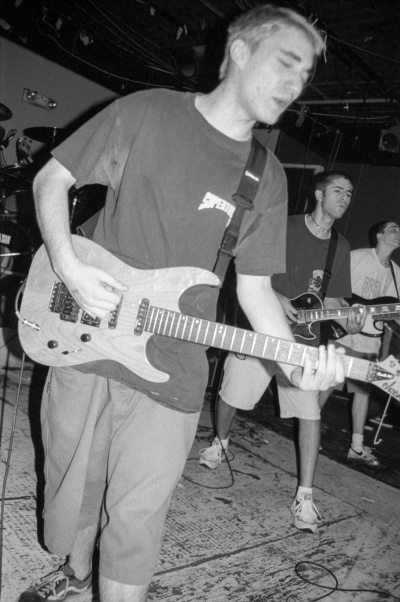
Lyrically, things became more introspective with reflections on the personal relationships around me. I didn’t feel I had to be ‘Positive Pat’ anymore but still could be ‘hardcore’ in honestly expressing how I felt internally.
And we loved recording with Dean Baltulonis. He was the first recording engineer we worked with that came from the hardcore scene which was a major improvement over all the studio experiences prior.
(Neal): As Pat mentioned, we were definitely listening to and inspired by more melodic hardcore. To this day, Start Today album blows me away with the combination or raw hardcore energy mixed perfectly with melody and emotion. I don’t think a band has ever reached the pinnacle of that album but we were sure going to try!
How much touring did the band do to support Fast Cars? How tough was it juggling the band’s commitments with school/work/personal relationships at that point? I remember some of you moved to the Boston area at some point.
(Patrick): We went out for a 4-week summer tour in the US with Ten Yard Fight in ‘98. We accomplished what every East Coast band sets out to do, arriving and playing in California!
The years prior to our complete Boston relocation were tricky logistically. In three waves Fastbreak morphed into a Boston-based band. ‘96 Luke and Neal went to college there and also started In My Eyes – in Fall ‘97, Steve moved there for college too. Don and I made the leap in Fall of ‘98 leaving Connecticut and NYC respectively to arrive in Mission Hill.
For us, the band was always first priority – although we did share members with In My Eyes and Right Brigade which did create scheduling and personnel conflicts. We were in college and had throwaway jobs – so most weekends we were playing, and for consecutive summers we toured nationally.
(Neal): The summer ‘98 Ten Yard Fight tour was great! Luke and I started the summer with In My Eyes and then we met up with Ten Yard Fight and Fastbreak in Columbus, Ohio.
We got to go back to all the spots we just played and hang with all the kids we just met on tour. Looking back, I’m pretty impressed how we balanced multiple bands/school/jobs.

How did Fastbreak end up signing with Revelation Records? Who at Rev was behind that, and did you speak with any other labels before committing?
(Patrick): Jason Upright (very crucial name!) was our A&R at Rev. He contacted Rama when he received a cassette with Get High’s LP that Big Wheel had submitted to Rev. On side B were two new Fastbreak tracks we demoed with Dean in summer ‘98. Jason asked Rama who the band is on the second side, and subsequently Rama told me Rev was interested in signing us.
There was talk with Equal Vision Records as Steve Reddy wanted to sign Right Brigade even more than he wanted Fastbreak, but the deal would have been two-for-one. A year prior I wanted very much to be on EVR but couldn't refuse the "Star with the R" when they offered.
Even after signing with Rev, the early days version of Vagrant was sniffing around, which we only heard about as "the label of Face to Face’s management" is trying to reach you.
(Neal): I remember having some good conversations with Initial Records as well. I also remember getting a rejection letter from Fat Wreck Chords where they referred to us as “Fatbreak." [Laughs] Not sure where that falls in the timeline but thought that was pretty funny.
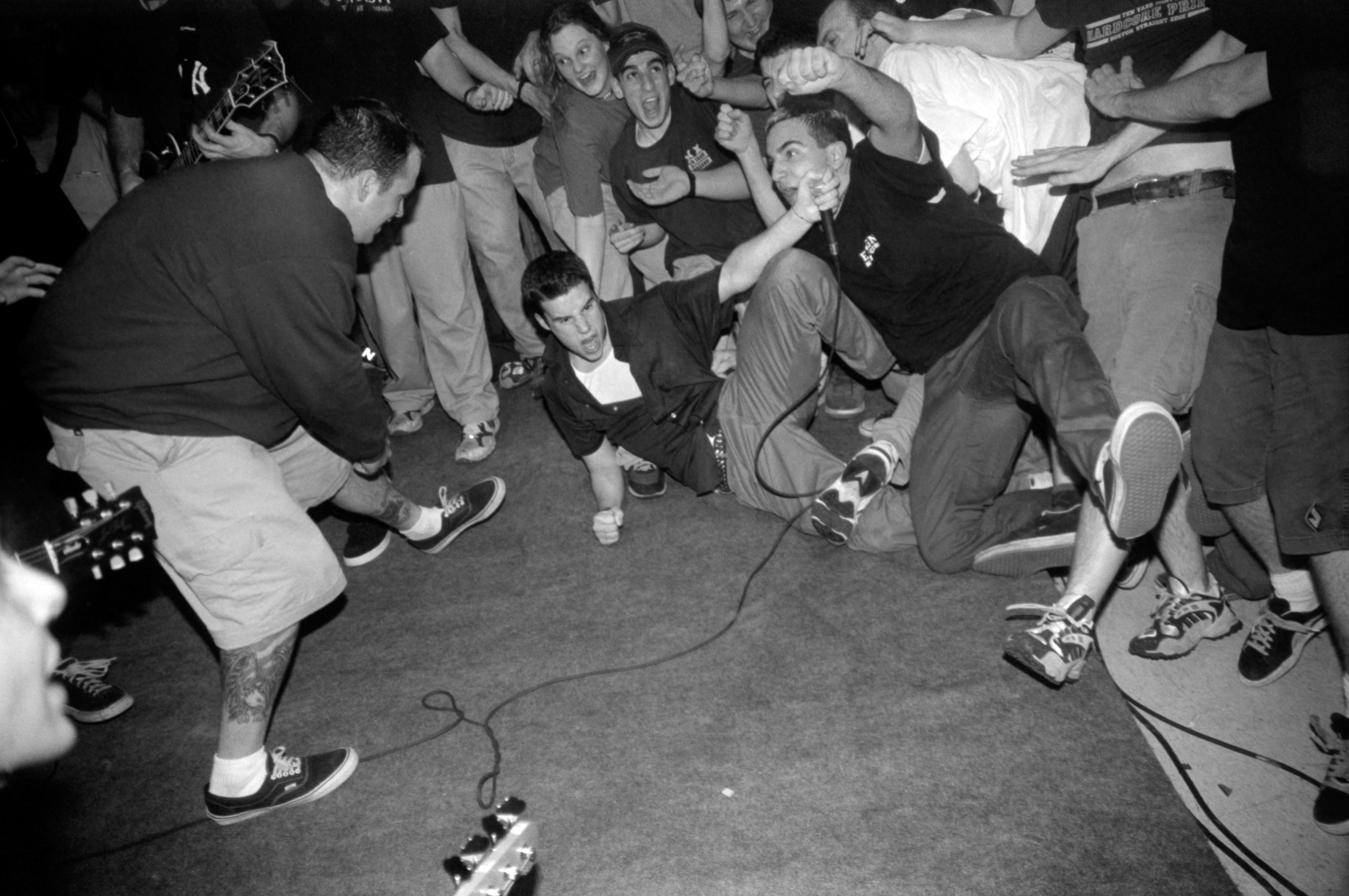
While I’m sure many purists will lean towards the earlier releases, but my favorite Fastbreak record is Whenever You’re Ready. What was the vibe like within the and going into the writing and recording of that album? Did you feel like the band could crossover to a new audience since the material was more accessible to people who might have not listened to hardcore before that?
(Patrick): Thanks for that! The overall vibe was good as the band lived together split between two houses in Mission Hill, and there was so much great music happening in the Boston scene at the time.
We felt we were making a hardcore record, albeit a more melodic and personal one. We were reaching outside the genre for inspiration i.e. the sonics and syncopation of early Foo Fighters, Rocket from the Crypt, and Superdrag, and incorporating more confessional lyrics like Counting Crows, or even Harvey Danger. All the while employing the speed and expression of fast hardcore with varying results.
We weren’t really thinking about our audience's reception as our aim was to please ourselves. That being said, around that time we did open a show for MxPx to a much larger audience and when the audience squealed emphatically when Luke took his shirt off mid-set, I thought, "What is this new world?"
I didn’t necessarily want to crossover to that, and hoped we could grow together with our audience in our scene. Ideally, something like the reaction you see for bands like Fiddlehead or Anxious now. That lane didn’t exist for us.
(Neal): I agree with Pat. As a band, we were feeling great and hitting our stride playing live. We were all really excited about the new songs and direction. Honestly, it didn’t feel like a huge departure for us at the time. I think we were evolving with our songwriting but still coming at the process with a hardcore perspective.
As we started playing the new songs live, we could definitely feel the energy change. I think we were too “heavy” for the pop-punk/emo scene and too “poppy” for the hardcore scene. I’m proud of that record and it definitely came from an honest place for all of us. There was never a masterplan to change genres.
How involved was Revelation Records during the making of Whenever You’re Ready? Did they have any A&R input? Also, did they provide a decent budget for the recording sessions?
(Patrick): Rev was not involved regarding musical decisions. We re-recorded the demo tracks that got us signed for the LP. And worked with new tempos in order to create an album with more dynamics. The lyrics were emotionally raw and carried with more melody. Rev was into it when it was delivered.
The recording budget was around 5K, if it was enough – you’ll have to ask Dean, he’s a pro and managed that side of things for us. We slept nights on the floor of the control room in the studio accordingly.
I did the album layout on my roommate's Mac desktop with a bootlegged version of QuarkXpress. Forgive me, I was a first-year design student, ZIP disks and all. Revelation decided to emphasize our appearance in promoting the record which was embarrassing in interviews and the press that followed.
Note to self, don’t plaster your faces all over your record expecting otherwise. It’s worth mentioning that most of the Boston "revival" bands had one or more art students in their lineups, and it safely can be said, despite our band names, most of us weren't any good at sports [laughs].

What do you remember about the way the album was received when it first came out? I remember there being some backlash to the pop-punk-leaning elements, and the similarity to Lifetime, but I think many of those people have changed their mind throughout the years about that. The “only play your old shit” crowd.
(Patrick): Amongst our core audience there was a backlash. And being a young person it wasn’t easy for me to navigate, especially because the album’s themes are very personal. I felt very vulnerable and somewhat abandoned by my community, which in turn made me very reclusive.
Regarding the Lifetime influence, they were the first band that wrote us back after sending out our demo tapes in ‘94 so I wear that band’s overall influence on us, not just sonically, with a lot of pride. And we toured with Saves the Day and got to witness them transcend their heavy debt to Lifetime’s sound. We were all just part of the Lifetime-appreciation club.
Even beyond Lifetime, we were at a stage where we wanted more pop-punk in our music as the "Youth Crew revival" sound had already been perfected by other bands in our cohort.
(Neal): Playing those songs was so fun for us as a band. We definitely could tell that the crowd wasn’t reacting to the new songs like the old songs but that didn’t deter us. We kept the sets pretty balanced with Fast Cars/Whenever You’re Ready material, and I always loved seeing a handful of kids that loved the new songs.
Compared to the current scene, the definition of “hardcore” was fairly narrow in the late '90s. I’m still curious how Whenever You’re Ready would go over today. A future remix/remaster will give the record a second chance.

I know you went to Europe after the album came out, but how much touring did you do? What was your take on the hardcore scene of that era? How did it change from Fastbreak’s earliest shows to 1999? Did the scene feel bigger? Smaller?
(Patrick): Europe was very cool and a direct benefit of being on Revelation. M.A.D. put us out there with Cause for Alarm for over 4 weeks. We took off a semester and got to travel abroad for the first time in our lives because of hardcore music! For the Italian stallions in Fastbreak, Lucian and Coach, getting back to the patria, was a big deal.
Preceding Europe, we toured the summer of ‘99 for six weeks with Farside and Saves the Day – the Rev record came out during the tour. It was wild not going back to school in September, leaves changing outside the van windows and still on tour!
And you’re right, there was a sea-change in the scene that left us feeling unmoored. The "revival" era was ending and we didn’t fit in with the harder, darker turn that came with bands like Blood for Blood, Right Brigade (ironically), and eventually, American Nightmare. We weren’t 100% comfortable with the other emerging lane for bands to be upstreamed from their existing labels to go "pro" on Vagrant.

What was the impetus behind the Fastbreak's break up in 2000?
(Patrick): Burnout. Jamey Jasta gave us an amazing pep talk regarding the music business at the end of a particularly depressing show he booked for us. I walked away from that talk realizing I didn’t want Fastbreak to be part of the "music business."
I didn’t want to think about demographics, crossing over, or leaving behind the support of a tight-knit music community, even if it felt they had already given us up. And performing the new songs wasn’t healing for me, it compounded my anxieties and depression. I needed a long break from Fastbreak.
(Neal): Unfortunately, it felt like we had hit a wall with Fastbreak. The European tour was really up and down for us. There were a bunch of amazing shows and experiences but a lot of misses too. The new record wasn’t connecting with people and we didn’t have a great path forward. The positive thing about the end is we were all on the same page.
How close are you guys all these years later? Did you need time away from each other at any point, or did you always stay in touch?
(Patrick): I’ve been missing in action for a long time. I needed to pursue my spiritual health which led me on an unexpected journey. Happy to have reconnected with the band as the reissues are in the works.
(Neal): Me, Luke, Steve and Don have remained super close over the years. At the very least, we try to see each other at least once a year and our kids have grown up together on family vacations. I’m super happy to have reconnected with Pat in the recent months and I’m excited to rekindle that relationship. Honestly, everyone in Fastbreak is family to me.

Thinking back, how did the straight edge aspect of the band and scene you came out of factor into everything? “Are they, or are they not, edge?” Was that an albatross?
(Patrick): Straight edge for me was very personal because of family history. But we stopped writing explicitly straight edge songs after our demo and you’d be hard pressed to find us X’d up at shows (besides the In My Eyes dudes). I felt early on pushing that message wasn’t inclusive to everyone participating in our scene.
If you were in the room, you were already a misfit, so to draw more lines that would separate people further, did not make sense. When Fastbreak members weren’t straight edge to begin with, or decided to stop being straight edge, the people that judged the band only reinforced these suspicions.
(Neal): Past the demo songs, straight edge was never a huge focus for Fastbreak. The lyrics always seemed more introspective and emotional. I think being Edge was much more a personal decision for everyone in the band and not as much as an identity.
After I quit In My Eyes and "broke edge," it was obvious that I wasn’t going to play in In My Eyes, but it didn’t feel like an issue for Fastbreak.
Fast Cars, Fast Women recently got the expanded reissue treatment.
(Patrick): Casey and co. at Iodine Recordings reached out to reissue a deluxe version of Fast Cars, Fast Women. In fact, this led to a larger reissue project for most of Big Wheel’s long out-of-print catalog.
With the Fast Cars re-release, the packaging was redesigned and expanded to include a comprehensive view of the band. Demos and our split tracks were also included. All the tracks were remastered and also made available for streaming. We are very grateful for that label because they do such an amazing job for their bands!
What can we expect Fastbreak-related in the near future? How about the possibility of a reunion show?
(Patrick): You missed the reunion show. Neal’s son, Tate and his posse of crucial friends, already reanimated Fastbreak in the live setting with a surprise set opening for Piebald at a guitar shop in California. More surprise sets are in the works for the future – expect the Youth Pride to be in full effect!
(Neal): My son is in a new hardcore band out of Los Angeles called Start Today (read the No Echo feature on them). He set up a secret show in Riverside, California around some West Coast Piebald shows and we had Don fly out to play 5 songs. We had 3/5 of Fastbreak playing to a room of 100 kids and it was so much fun.
I love reunions as much as anyone but there was something really special about playing those songs again in front of kids in a small room without any announcement. Literally felt like a Fastbreak show from 1996.
What’s your favorite Fastbreak song and why?
(Patrick): If I have to pick one it’s "At Times." I appreciate the soul-searching found in the lyrics, and the chords roughly are Descendent’s "Hope" rearranged by Chris Legg into a fast-paced hardcore song. It’s probably the best balance of the early sound and our later approach:
(Neal): I think I would pick “Thanks for Trying." It perfectly captures melody, emotion and a killer mosh part at the end!
Thanks for taking this time machine trip with me!
(Patrick): Thank you for reaching out and putting energy into this band. Fastbreak’s intention was always to sincerely connect with people, and I can only hope that came through in our music and performances.
For our current music, check out Don in The Format, Luke in Piebald, and my Bandcamp tunes here. Fastbreak Go!
(Neal): Thank you so much! This has been a great walk down memory lane. “Don’t stop trying!”
***
Fast Cars, Fast Women vinyl reissue is available via Iodine Recordings.
Tagged: 90s hardcore week, fastbreak