We’ve all heard tales of Bands That Could Be God. The little engines that could – that sort of thing. More often than not they ended up like Jawbreaker or Jawbox, spent and broken, short of some corporation’s idea of success.
Die Kreuzen were poised for a similar trajectory, though always a few steps ahead, chafing against their contemporaries.If they’d had it in ‘em to bow to industry pressure they could have sold out and made a small bundle for a year or two, but the collective members never saw fit to take the compromising gamble.
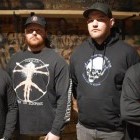
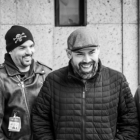
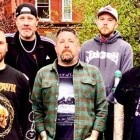
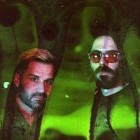
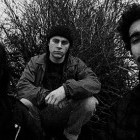
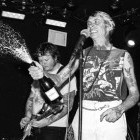
While they never clutched the brass ring, Die Kreuzen emerged with their reputation unscathed, something few bands can claim. Sahan Jayasuriya's Don’t Say Please: The Oral History of Die Kreuzen is an ode to integrity and adherence to a persistent ever-evolving vision.
Straight out of the gate, Die Kreuzen wasn't messing around. Issuing their debut EP Cows and Beer in 1983 via the pride of Xenia, Ohio, Version Sound, the band emerged with a masterstroke of untamed hardcore that painted a picture defying the malaise of daily Midwestern life. Their
eponymous LP dialed up the intensity and further established the band as a singular entity. We’re not talking revered in hindsight, their debut full length was highly regarded in its time.
Riding high on praise, the band’s calling card emerged by way of shifting gears with each subsequent album. October File dropped the hyper speed in favor of Killing Joke-styled post-punk. Century Days leaned into rock moves.

With the final album, Cement, the band dove into a diverse collection of melancholy alt rock. Even with each album staking its claim as a singular standout release, the band never fully disconnected from one release to the next.
The best band bios sell the band to you, temporarily transforming them into your favorite band while you absorb their history. Our Band Could Be Your Life is a prime example. With each chapter a new band and a new obsession. Even a difficult band like the Butthole Surfers have the reader digging deep before their chapter’s done.
As much as this book is a stage for Die Kreuzen to build their legacy, it’s also a love letter for their fans to bask in, and an extended hand for casuals to step in and investigate. Even if the reader’s someone who dips out after the first album, that’s 117 pages to devour.
From Chapter Three onward, the book is conveniently sectioned by record. It makes for obvious soundtracking, though Cows and Beer’s brevity may complicate the task.
One of the book’s greatest strengths is the chapter focus. Each album is given proper room to fully show itself. The recording breakdowns could easily venture into audio nerd territory but they never overstay their welcome. Much light is shone on each record’s unique approach and it actively works to tie the band’s progression together. The time devoted to breaking down each record’s art is a true highlight.

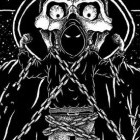
Richard Kohl’s museum-worthy pieces get thorough dissections that are fascinatingly informative without removing any of the mystique. It’s astounding that Kohl wasn’t tapped for a career in album art based solely on Die Kreuzen’s albums. Quite a portfolio.
Kohl is one of the major coups of the book. Being off the Social Media grid, the artist had fallen out of contact with the band decades earlier. Through sleuthing and friends of friends of friends, Kohl was located and brought into the fold. Visual aesthetics being such a large part of the Die Kreuzen legacy, his contribution to the book is pivotal.
Alongside the unexpected inclusion of Richard Kohl, readers are gifted a healthy dose of details from Touch and Go Records head honcho Corey Rusk. Not one to make the media rounds, Rusk is informative and forthright about the band. His commentary is crucial in providing extra shading to the story.

There’s expected characters like Steve Albini, Thurston Moore, and Paul Mahern of the Zero Boys, and plenty of surprise fans as well, like Neko Case, Bob Nastanovich of Pavement, and Justin Trosper of Unwound. Truly a case of Die Kreuzen being your favorite band’s favorite band.
Throughout their lifetime Die Kreuzen walked through the wilderness, paving their own path. The band was an adventure and Don’t Say Please: The Oral History of Die Kreuzen is the roadmap.
***
Don’t Say Please: The Oral History of Die Kreuzen is available now from the esteemed Feral House, publishers of such classics as American Hardcore, Lords of Chaos, and Lexicon Devil.
Tagged: book, die kreuzen