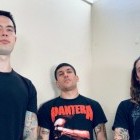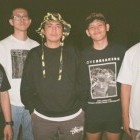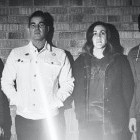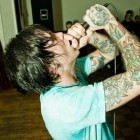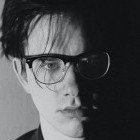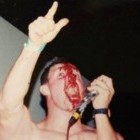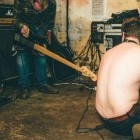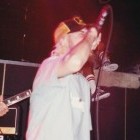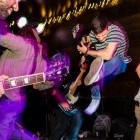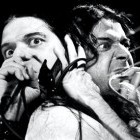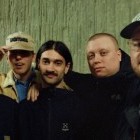

Emerging from the fertile H8000 scene of Belgium in the early ‘90s, Spirit of Youth stood as one of the era’s most powerful voices, blending metallic riffs with the urgency of straight edge hardcore.
With releases like The Abyss and Colors That Bleed, the band helped define a moment when European hardcore was pushing boundaries and leaving a lasting global mark.
I recently connected with guitarist Dominiek Denolf to revisit those years and talk about Spirit of Youth’s place in the ferocious legacy of H8000 hardcore.
Do you remember how you got into hardcore? Is that how you came to learn about the straight edge mindset?
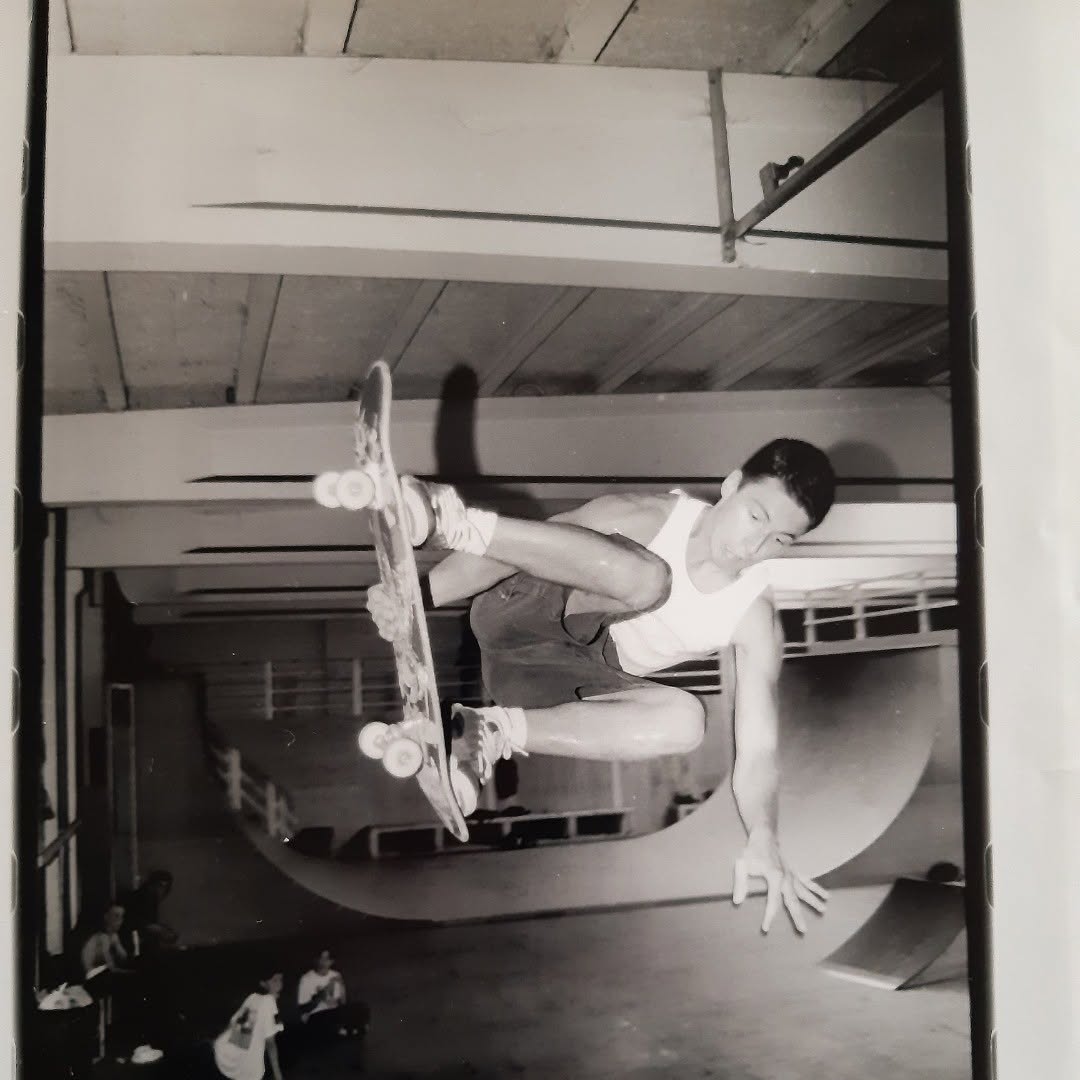
My brother and I started skating in ’87, I was 11, bro was 9. We got to listen to some stuff in our metalhead friend's room: Nazareth, Overkill, Manowar, to Suicidal Tendencies, Beastie Boys. He and his friend were older than us, 18, and one of them was Sid [Giovanni Debruyne] who later on would sing in Solid.
So they knew UxJx [Jan Vandekerkhove of Congress and Liar] and Hans Verbeke from school. I got to listen to his band Rise Above, created by Edward Goodlife on vocals and guitar; Hans on lead vocals, Hazel on bass (The Sisterhood), going to a rehearsal and I was sold very quickly.
I was introduced to Gorilla Biscuits, BOLD, Youth of Today, Minor Threat, Cro-Mags, and the straight edge message, of course. Friends convinced us to go vegetarian. That was in 1989 and we were committed.
What were the roots of Spirit of Youth? How did the band form?
Spirit of Youth already had a start up before us, the brothers, joined. Hans came up with the name, their friend Fré singing, but didn’t fly. So they tried again with us, Jan Maelfait now on vocals, UxJx on bass, Hans on drums, and bro Fré on second guitar (who took UxJx his place later on bass).
I already learned to play some guitar at Hans' house, first riffs were Youth of Today's "Honesty" and Cro-Mags' "Malfunction." Man, I was impressed with the patterns, how these structures were threaded throughout the songs in the same vein. I remember being so into The Exploited's "Insanity," which is experimental, and made the first Spirit of Youth song based on it.
What was the Belgian hardcore scene like when you were first getting started?
We went to some concerts of Rise Above, but also Profound (Manliftingbanner), and Seein Red. We also saw American bands playing Ypres like Majority of One, Supertouch, Downcast, and Nausea. Rise Above changed to Nations on Fire and I was so into them. The Scraps from France were also around. Alot of bands from other countries passing trough at the Vort'n Vis in Ypres, from crust to punk to hardcore. We did our first gig there in 1990.
Everything in this whole hardcore atmosphere was so caring, uplifting, sharing, just like all kids should have to experience to grow into a conscientious, confident, and caring person. And, of course, our older mentors around us. The Blindfold and Shortsight dudes, we did some gigs with that first lineup, but we never released those songs.
We were inspired by Insted, Wide Awake, No for An Answer, Turning Point, and especially Up Front. Our singer Jan had a resemblance with Up Front's singer. Their lyrics were our deal, and we loved their LP, Spirit.
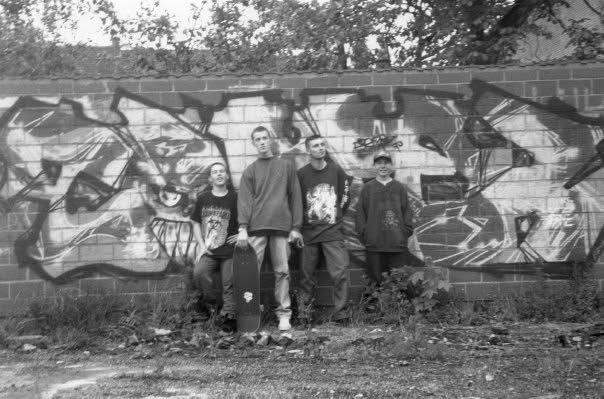
I must add that before we went into The Abyss 7" era, Spirit of Youth broke up and formed what would later be named Love, Truth & Honesty, first under the Spirit of Youth name released a demo with Edward Goodlife on vocals. So that was the first real release. Bro Fré switched from
bass to drums that time.
I was watching alot of skate movies, Dan O'Mahony’s 411 was really getting to me, and Edward also gave me the Dag nasty record, Can I Say. Listen to that album! [Laughs] Damn, I made all those demo songs inspired by it. It even got picked up in Poland. We did some gigs, but then i wanted to continue the Spirt of Youth path again.
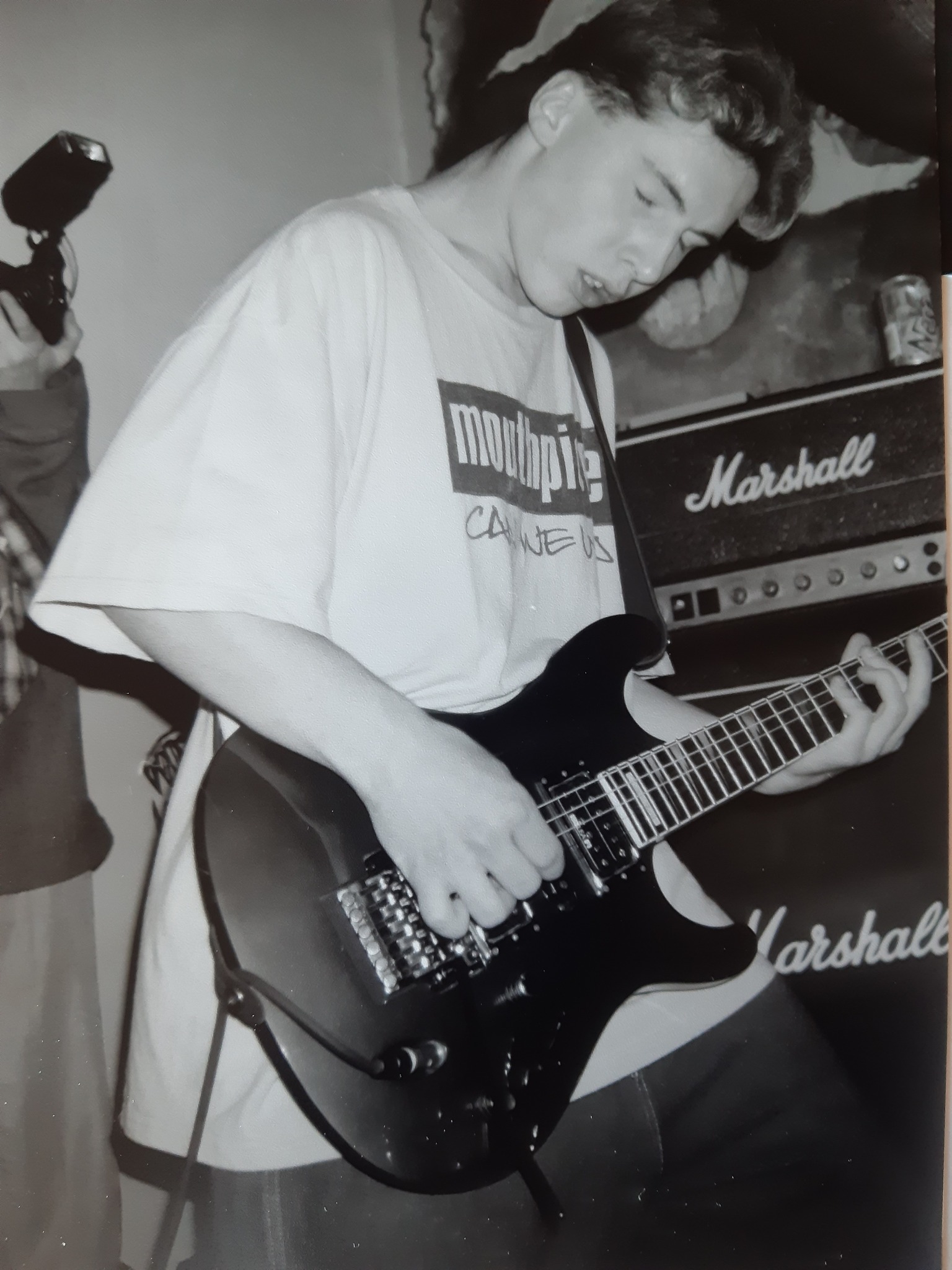
By then, Mouthpiece's "Can We Win" was released [on their 1991 self-titled EP], and I wanted to play that furious powered staight edge fast stuff again. So we reunited in the old lineup. We played some shows with this, also outside of Belgium with Inner Circle (Spawn) in Germany.
You mentioned The Abyss 7". How did you connect with Peter Hoeren of Crucial Response Records for the release of that EP?
Peter was at most of the hardcore shows, together with Michael Muller who did Counter Clockwise fanzine. We did a weekender in their area and he was interested to release our stuff. Feeding the Fire—featuring Rob Franssen who later formed Born from Pain—were at most shows watching us play, so there was a Holland-Belgium-Germany thing going on. We just were all on the same course.
The Abyss 7" turned out OK, except the fact the studio put too much sound effects on it. We didn’t really have say over it. It was not really the right studio that time [laughs]. But I am proud of the songs on that EP. "Dreamescape" would be played with the later Spirit of Youth lineup in ‘97.
I remember being so inspired by something Hans let me hear at his house. Oh man, I was there a lot, whenever there was a new release [laughs]. And I didn’t catch the band name at that time, but I was so overwhelmed with how heavy and overloaded with sub bass that record was. The riffs were smashing like crazy. I did the song "The Cradle" on our 7" fully inspired by that.
Funny thing was later on that band released another 7", and I got to know them through that. Josh Congress was also big fan of that record. It was Jim Winters' band, Conviction. It was the record with the blue cover [laughs]. It was also so stomping heavy, and would influence us later on towards the well-known H8000 metalcore, stop n go riffs...
Don't laugh but in 2017 I found out that what inspired "The Cradle" song, was Conviction's first 7", A Question of Commitment. It blew my mind that it was also them, but with the old-school sound/style, and that heaviness made sense [laughs].
READ MORE: H8000 Hardcore: 10 Records That Helped Define the Movement
I must admit that I wasn't aware of the 2-song Engine single from 1993 until I was getting ready to do this interview.
Good to point out that release. It was eleased by Hans on Sober Mind Records. Due to a winter tour we had in Germany in ‘93, Hans put out the tape as a cassingle. We would had a full-length release by then, but there was a story behind that.
After The Abyss EP, we worked on new songs, but I got kinda blown away by Cro-Mags Alpha Omega album. Hardcore was evolving so much. More bands started playing groovy, not uptempo, and I was fascinated to learn how to make songs in that style. Not fast, but also not boring. Only Living witness was also such a big thing for us. We heard this band already with a Tool song on a Burton snowboard movie.
Our radar was picking up everything going on [laughs]. Transcend, Bloodline, all bands in that vein. Mean Season! I got a live tape from their Euro tour, before their Grace release existed, and all what I named formed that direction. But I would especially say Alpha Omega. That's the guitar style I took over, but here is the crazy thing. It went fast, so we had like 9 songs ready, in the summer before the winter tour that followed in ‘93.
We had a show with Transcend and Bloodline at the Vort'n Vis, and Schizma (Poland) also played it. So I could play a show with bands I looked up to, very much [laughs]. Peter Hoeren checked the new stuff at that show, and he wasn’t down with its style [laughs]. He had an old-school hardcore kinda label, so imagine what he thought, and the crazy thing, that songs would never see daylight until ‘97, except the two songs on the Engine/Darkroom cassingle. It was a bummer for the band when we heard this at the show.
That winter tour we played some shows with Nations on Fire, and we had a good response. People were open minded and looked fascinated. But in ‘94 it would evolve in another lineup change where we played that unreleased source record at gigs with a new singer, Jurgen Desmet, and Josh from Congress who helped us out on bass.
Hans and Jan had busy times with Blindfold and Spirit of Youth, so it kind of faded for them. Josh was playing with Congress, so we played some shows together.
At the end of ‘94, Spirit of Youth quit. And us brothers started Solid, with Sid on vocals and Kris Casier on bass. Spirit of Youth was put on the side, not knowing if those songs would be used ever again.
The early Spirit of Youth material was rooted in Youth Crew style, but the sound evolved into something much heavier. What drove that transition, and how intentional was it?
We also listened that time to records like Sepultura's Chaos A.D., Helmet's Meantime, and Biohazard; and those bands were tuning their guitar to D. It really inspired, and a song like "Engine." That riff came from the moment i also tuned my guitar to D. On my big Marshall stack the power and heaviness was immense [laughs]. It also created that groove, it slowed things down.
The Source LP really stands as a defining document of the H8000 sound—heavy, metallic, but still emotionally raw. What was the writing and recording process like for that record, and how do you view it today? Also, why was there such a long gap between releases?
This so cool hearing your view on it since I was always guessing what style it really was. So we did our second band Solid from ‘95 till 97, and after the full album, Darkside Moments, we had to part ways again with the second singer. We tried out a new singer, Vincent Merveille (he sang in a local Ypres hardcoreband called Resist the Pain).
But the songs didn’t fit his voice to well, so we threw in a song called "River" from our unreleased Spirit of Youth songs [laughs]. We did a gig like that with Vitality on the coast. Vincent and I figured we should redo Spirit of Youth again, so we convinced my brother (drums) to quit Solid and bring new life to Spirit of Youth.
All the songs on Source mainly consisted of the stuff I had written already. Maybe the title track was a new one. I don't remember since everything went so fast: gigs, hitting Midas Studio again (H8000 trademark sound), and Vinnie and Sim from Voices at the Front, a hardcore band from Poperinge hardcore band, joined the lineup. So I was in a band with the second generation dudes in our scene. Kris Casier (Solid) on bass played in the band for a short time, and on the release before the new members.
At that time, we had influences from Swedish death metal bands like At the Gates and In Flames, plus Carcass and Machine Head behind us (Solid). So it could possibly played a factor in our approach doing the old Spirit of Youth songs . The lyrics from Jan SOY were used on those old songs, Vince found himself in that style. We decided we would keep that emotional personal approach. Although straight edge and songs about vegetarianism were on the Source record, the next step would truly form the new Spirit of Youth direction.
My view of the Source album is that songs like "River" and "Backdraft" that I wrote in ‘93 should have been released back then. But thats personal because it was during that time that creativity got to be shaped. But I'm very happy that it finally got released. Songs like "Effort" had like a total different structure when we played it in ‘92 for instance [laughs], and I have to admit the new members' contribution in the band made it flow.
We hit Midas Studios, and here comes your view on the sound in the picture: after all the metalcore he did, his approach on our more old-school sound was sounding fresh and dynamic. It's hard to form a real idea of it cause this was different as how we heard our old-school stuff back in the days. But a lot of people have that similar response.
We felt good about what we did. And we were ready for the next step because now we had to write new songs, creating the real new Spirit of Youth style.
By that point, the hardcore community was paying a lot of attention to what was happening in the Belgian scene. Were you connecting with people from the States and other parts of the world? Was there ever a plan to tour in other places?
Mostly American bands came over here to play shows. We had shows with bands like All Out War and Morning Again and got to know them. But the focus was more on them playing Europe from what I remember. They liked it over here. UK was a place where we did some shows. We were good friends with Iron Side from the start.
Our first big tour with the new Spirit of Youth would also lead to the end of the band. The tour was with 25 ta Life in ‘98, 6 weeks throughout Europe. We wrote and recorded Colors That Bleed to have a full-length LP to take out on that tour.
If we would have continued after that tour, M.A.D. Tourbooking already was interested to book a winter tour in ‘98, with us headlining. But arriving in ‘serious land’ with that 6-week tour was a lot for us youngsters to be ready for. I was 22, and the oldest in the band.
Some of us had started working full-time jobs and had to quit them for this tour. Our second guitar player, Vincent Theeten, still had high school exams, and couldn’t come out on the first 3 weeks of the tour. So we asked David from Shortsight. There’s some YouTube vids with him playing (Holland, Portugal).
There’s alot of aspects going on, and the mindset of 25 ta Life didn’t help. They were arrogant, so we faced troubles now and then. It was wild behaviour [laughs], while we were more a sober-minded band. We played shows in front of 500 people, but of course then a show would
have like 50 people in attendance. For me personally, I started wondering if I could fully commit to Spirit of Youth.
We knew that we were getting bigger, but the real Colors That Bleed effect would come later. Things exploded after 3 weeks on that tour, we got thrown of the tour, had to pack our backline 400 km’s from home in Holland. So that really kicked in. The organisers of the gig had to hold the guitar player from me, cause he wanted to do damage after our discussion. They blew up our bass amp’s pre amp after I warned not to put it at full volume.
This created tension between us for sure, and we quit. Still we would try to continue the year after, but thats for question 12 [laughs]. Racial Abuse (Austria, also on Good Life Recordings) finished our tour, and they needed a backline band anyway.
How much did venues like the Vort’n Vis contribute to shaping the hardcore community? What are some standout memories from playing or attending shows there? For people like myself, I would have loved to seen bands like Spirit of Youth, Regression, and Congress play there!
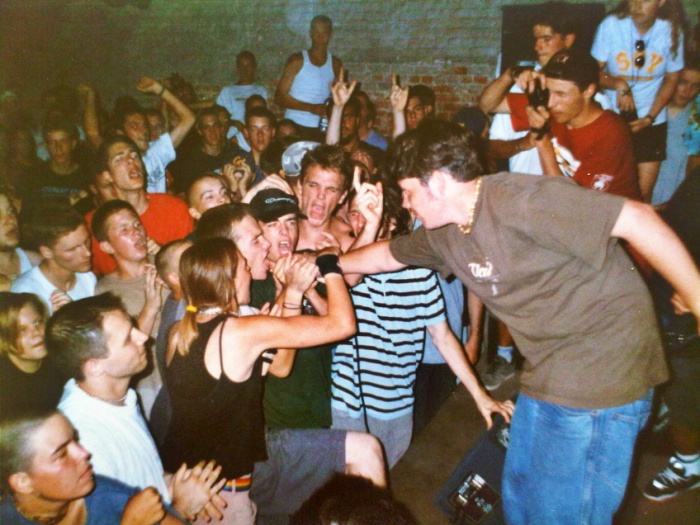
The Vort'n Vis was the epicenter of our scene. As I said earlier, Holland, Germany, France, and even UK bands were represented at gigs there. New York City hardcore the way it is was a holy hardcore bible when we started, so when Supertouch played at Vort'n Vis, it was like so crazy, and we were also on that bill!
The Downcast gig. Their sound and style was unreal. Majority of One! That 7", Rage, I love it so much. I truly was so young, meeting the singer and guitar player who together with Hans Verbeke, we all went for a walk trough the city of Ypres because they wanted strawberries [laughs]. It was all so direct and pure. Nations on Fire, when they started there for their winter tour ‘90 with Betray. GO!, Mike Bullshit was my friend, that "Holy Roller" song just was impressive; Bad Brains lost all their credit from then on.
And of course, Blindfold and Shortsight who we played with a lot. I remember this one memorable gig on September 1, 1991, shirts and posters were made by Edward. Agathocles, Nations on Fire, Cry for Change, and Spirit of Youth all played. Also, a part of this gig video is on H8000 chronicles on YouTube. So much people there and all going wild.
That Monday after the show, I went to my new school (ditched the Christian school were I already got into trouble) and I sat there in the morning, with my long sleeve of that gig, It was like I came out of another dimension, and those kids would never understand how awesome my life was. Yeah, I just played in front of people from all over Europe, and they liked my music. Oh yeah, and my band is on that shirt, how about you guys [laughs].
There is a site (90s.vortnvis.wordpress) where you can see all the gigs.
You've mentioned some H8000 staples like Congress, Liar, and Vitality. How interconnected was everyone back then, and was there a healthy sense of competition—or just support?
We were all friends, and got to know each other mainly trough skateboarding. Coutere from Regression and Josh from Congress... came to my house and wanted to start a band. Even Hans was playing riffs at my house and then Blindfold came around. We put Congress on a Spirit of Youth bill, their first show, Poperinge at The Gilde.
We helped each other out throughout the years. I remember playing a gig in The Ardennes Riverside festival, Congress handed us the gig cause they couldn’t make it. Obituary were headlining, standing there behind the stage with this dudes, unreal [laughs].
Vitality were skate buddies from the coast. Bloodlines by them is a personal favorite record of mine. We all played a kinda different approach to metalcore at that time. I remember meeting Ward from Liar later on, and suddenly he tells me he is so into Spirit of Youth. I was like, "Huh? Your playing next-level metal and you're liking my stuff?" [Laughs] You can really say we were all into each other's bands.
And that whole scene we still see each other at gigs, at the skateshop Steve ODK from Vitality has, or Hans Verbeke's record store, Vuvve. Even when we went skating at the skatepark, members of bands like Spineless and Amenra might be there.
Back to the records! How did the split with One King Down come together? "Into Despair" is such a killer track!
Thanks! Yeah, that song would be mentioned together with the Spirit of Youth name from that poibt on [laughs]. So after the Source album, we played lot of gigs in the H8000 area. "Into Despair" was fully written while we were chilling at a gig.
We recorded 4 songs that would have come out on Genet Records, but the offer for a split with One King Down was a no-brainer for us. We loved their Bloodlust Revenge album. Edward Goodlife arranged the deal with Equal Vision Records. It was pretty funny, they didn’t really get involved, until we played together at a gig in Limburg, Belgium. There was a big scene over there.
We were also close friends with Limburg's Kindred who also were on Good Life. Eric Kindred did some singing on the "Into Depair" song, and we did some gigs over there with them.
So, when One King Down saw us play, and 500 people were going nuts, we talked backstage. They said if they knew they would have put more effort in the split songs. But that’s cool, H8000 wasn’t to be messed with [laughs].
READ MORE: Sektor Bassist Lenny Sektor Looks Back at His Band and the H8000 Era
We now arrive at Colors That Bleed. Tony De Block is a name that appears on many Belgian hardcore/metalcore records of that era. Tell me about working with him, and how the recording sessions went.
For us, the brothers, we started recording at Midas with our band Solid in ‘95, a mini CE, and then a full length. So, recording Source in ‘97 was a walk in the park, joking around and all that. It was just pure fun. We were used to hanging with each other, and Tony was in for a few laughs too.
Then the split One King Down, so Colors was the 5th time recording there. I had added some influences from new-school bands that Vincent was into like Turmoil, Snapcase, and even Morning Again inspired us for this one. Biohazard always was an influence, so in the end mix,
we missed something.
I thought of Biohazard's song "Tales from the Hardside" and how that bass brought grit to it. So we put some overdrive on the bass tracks, and that was what we were missing. Maybe in the States it's an obvious thing, but we had to stumble on this.
I remember we wanted to redo the mix, but there wasn’t any time enough to get it released and hit the 25 ta Life tour. But people liked the record a lot so it was cool. Tony was always the engineer and producer. So he was a part of the results for sure.
According to my research, Spirit of Youth didn't officially break up til 2002. Was the band playing sporadically after the release of
Colors That Bleed? Why did you decide to break the band up?
So, ’98 after the 25 ta Life tour, was when broke up. A year later, we tried to pick it up again. We started making new songs. Very fast we got 3 songs together. I remember we had a gig in the famous Lintfabriek in Kontich, Belgium. First time we would play the Colors That Bleed material since it was out and absorbed [laughs].
We put the intro of a new song in front of "Puritan," let it ring out, than Fré started the drum intro part of "Puritan." It was fucking crazy how that whole place exploded. It was packed with 500 people. That show was all adrenaline. I remember I had my glasses on instead off with my usual contac tlenses on. I had to throw them off because of the dampness from the heat that blocked my eyesight.
We did another gig in Harelbeke local H8000 place near Kortrijk. We played one of those new songs and people went nuts. So many H8000 bands played that one. We had to play at 1am. A couple from New Zealand especially came to see us play.
But somehow we couldn’t keep going. Their were negotiations with another label, at a big show with Morning Again in Antwerp, but it didn’t go through. Those songs never saw daylight. I could fill up a record with unreleased ones again if I wanted [laughs]. So it must have been early 2000. In 2003, we picked up Solid again and released the Total Rush mini CD.
In recent years, the H8000 era has gained an almost mythical allure to it with younger hardcore listeners. How closely have you followed that, and why do you think it's had such a lasting mystique with people?
Well, when Japanese and Indonesian kids started adding me on Facebook, I was really surprised. I was surprised that the power that I once experienced was still there for other generations to come. And it gives me so much strength that these values still hold high to these days.
They even made Spirit of Youth shirts with an amazing Colors That Bleed design that people in our time would have gone crazy over [laughs]. And just some shirts as a royalty, because…its hardcore. Shout out to Albertus Rio (Interest progress) and the whole hardcore community of Indonesia.
Also, out of the States, I became friends with people that were into Spirit of Youth back in the day. And the recognition. As for the total H8000 sound, I find it funny to read sometimes, cause there was a certain path/sound that most bands followed. And of course, bands like Integrity
and Slayer have influenced us all, but still we varied from each other.
But I'm proud to be called H8000, hell yeah. For me, it strikes all friendships between all of the bands of that scene. We walked the same path, and when we still see each other in this tiny country at shows, that bond is always there.
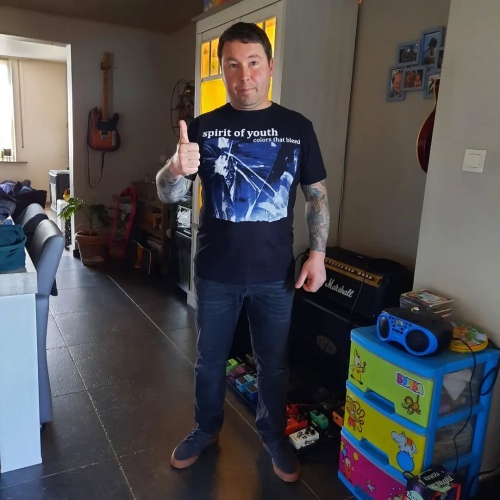
Spirit of Youth got together and played a show in 2019? Will we ever see the band play together again?
Sim and Vince did Chain Reaction. My brother some other projects like Marooned. But mainly some people that I’m not gonna mention, kept it off doing a reunion. For me, it’s the respectful thing to do towards the support you got. So when bands decide to reunite, or start again, is there really a law that says what can and can’t be done? Only Living Witness reunited and paid respects to Eric, and he wouldn’t have wanted it any other way. I mean, hardcore was against control and people saying what to do.
It always makes me laugh when people think they can lay down the law when we were always against that. Be open minded, be happy you still can do things. People suffer diseases or losses, and then you can’t play again. Music brings people together. But as I pointed out, there’s a big factor why Spirit of Youth couldn’t.
I got to know future generations inspired by us, one of them was the Limburg straight edge kids that formed Blade, Devour, and Invictus. Two members shared that love for Spirit of Youth: Alexander and Jan.
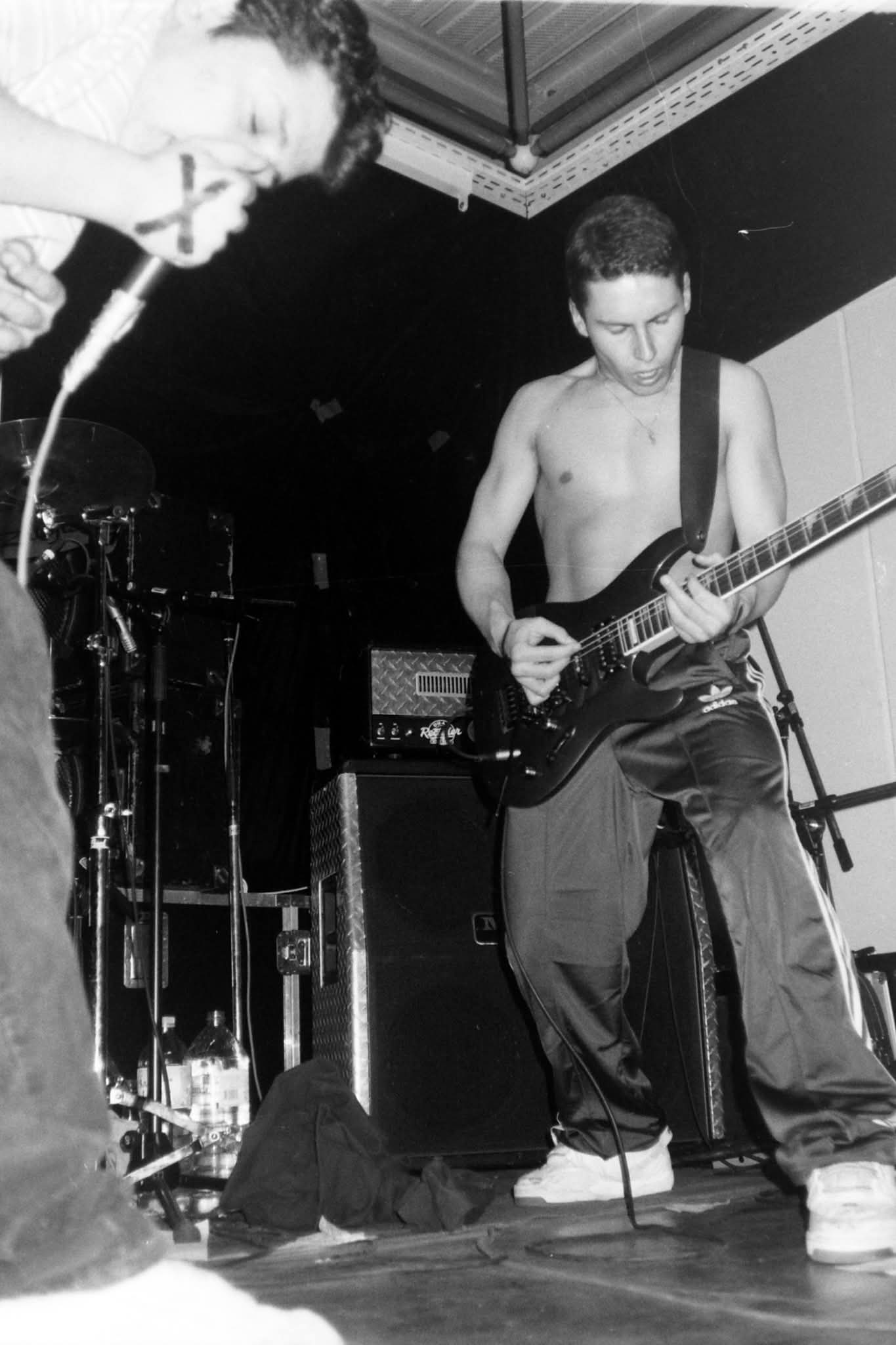
Together with Kris OG on bass and Greg on vocals, we sometimes do a "SOY" gig, and I get to play that songs that I put all of my life into, the hardcore path that helped me through our Dad’s suicide when we were fully going (’92). So I can’t imagine how devastating it would have been, if we didn’t have this in our lives. But it touched my brother and my life for sure.
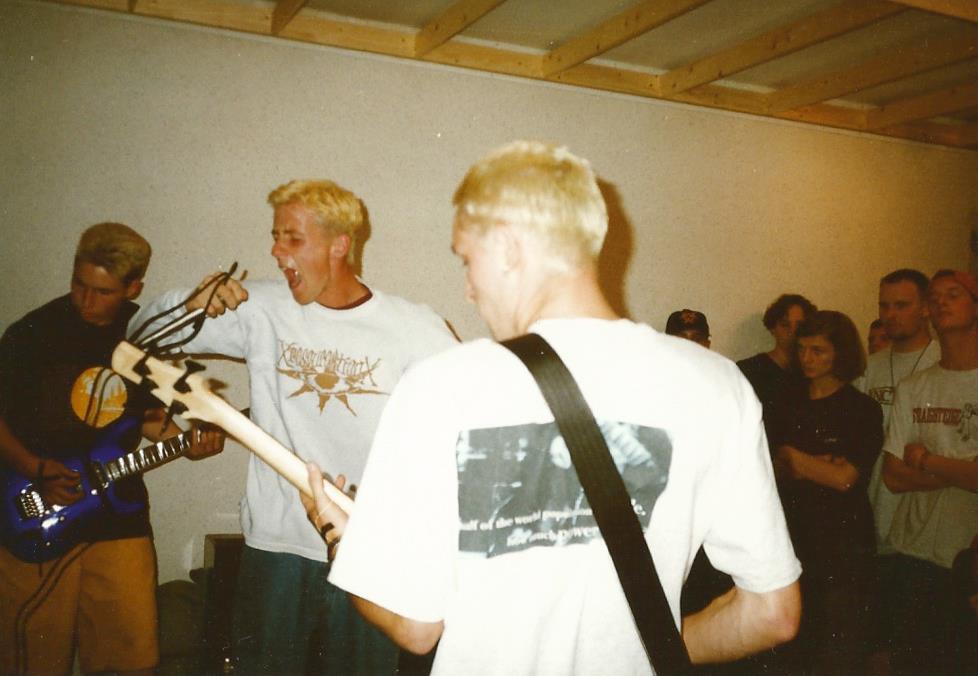
Our family dropped us, but luckily we had H8000 and our skate buddies, such a pure and powerful community. We just wanted to get that out there, we had reasons to be different from the standard society. From a young age, we roamed Belgium with our skateboards, found underground gigs early on, gigged, and met all this awesome people worldwide. It will stay the biggest thing in our lives.
Thanks for all that support, and I can assure we were humbled getting all that appreciation. And oh, I can't forget to name Into Another [laughs]. I had to do that since we all share that love for bands that put their strength into songs, and then passed it on to the world.
So, thanks Carlos for this awesome and intense interview. I had a lot of them back in the days in many zines. This was so cool reliving that again. Keep the spirit alive.
***
Follow Dominiek Denolf on Instagram.
Tagged: 90s hardcore week, h8000, spirit of youth