
Jeffrey Ladd never planned to record hardcore history. He simply showed up with his camera, learning as he went. Now, decades later, those moments have taken on a life of their own.
Ladd’s photography has appeared in venues such as the Art Institute of Chicago and the International Center of Photography, and he’s worked in both fine art and documentary styles. His new hardcore-centered book, Move Up Front, gathers images from 1985 to 1992, going back to his early days when punk, skateboarding, and photography all came together.

“I didn’t have any conscious approach,” Ladd tells me of those early years. “I was just pointing the camera and grabbing whatever I could.”
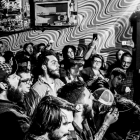
Ladd’s approach began in New Jersey in the mid-1980s, when he co-edited a zine with his girlfriend and photographed venues like City Gardens and the Kennel Club. Though he hit as many hardcore shows as he could back then, he made sure to stay out of the way when possible. “I would hardly photograph, maybe 10–15 shots during a show because it made me self-conscious whenever the flash went off,” he recalls. Most of those early photos are gone. He often threw away negatives and prints, so only a few remain today.
Living in New Jersey at the time, Ladd eventually moved to NYC to study photography at the famed School of Visual Arts. He provides some No Echo-friendly trivia when thinking about his alma mater. "SVA, by the way, had some Punk, Hardcore, and Metal royalty pass through its classrooms: Joji Tani (The Mad), Parris Mayhew (Cro-Mags), Jimmy Yu (Death Before Dishonor / Judge), Fred Armisen (Trenchmouth), Alan Robert (Life of Agony), Mark McCoy (Charles Bronson / Das Oath), and others.
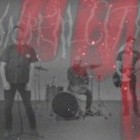
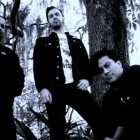
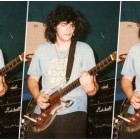
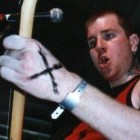
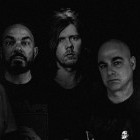
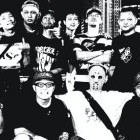
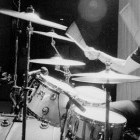
Move Up Front captures an important period of hardcore music across New York, New Jersey, Philadelphia, and beyond, featuring bands like Sick of It All, Turning Point, Slapshot, and Life's Blood. Still, Ladd says he wasn’t trying to document the scene on purpose. “To phrase it as documenting the scene is an exaggeration,” he says. “I wish I had had more intention… what was happening outside the clubs, on the sidewalks—that’s what I would focus on if I could go back.”
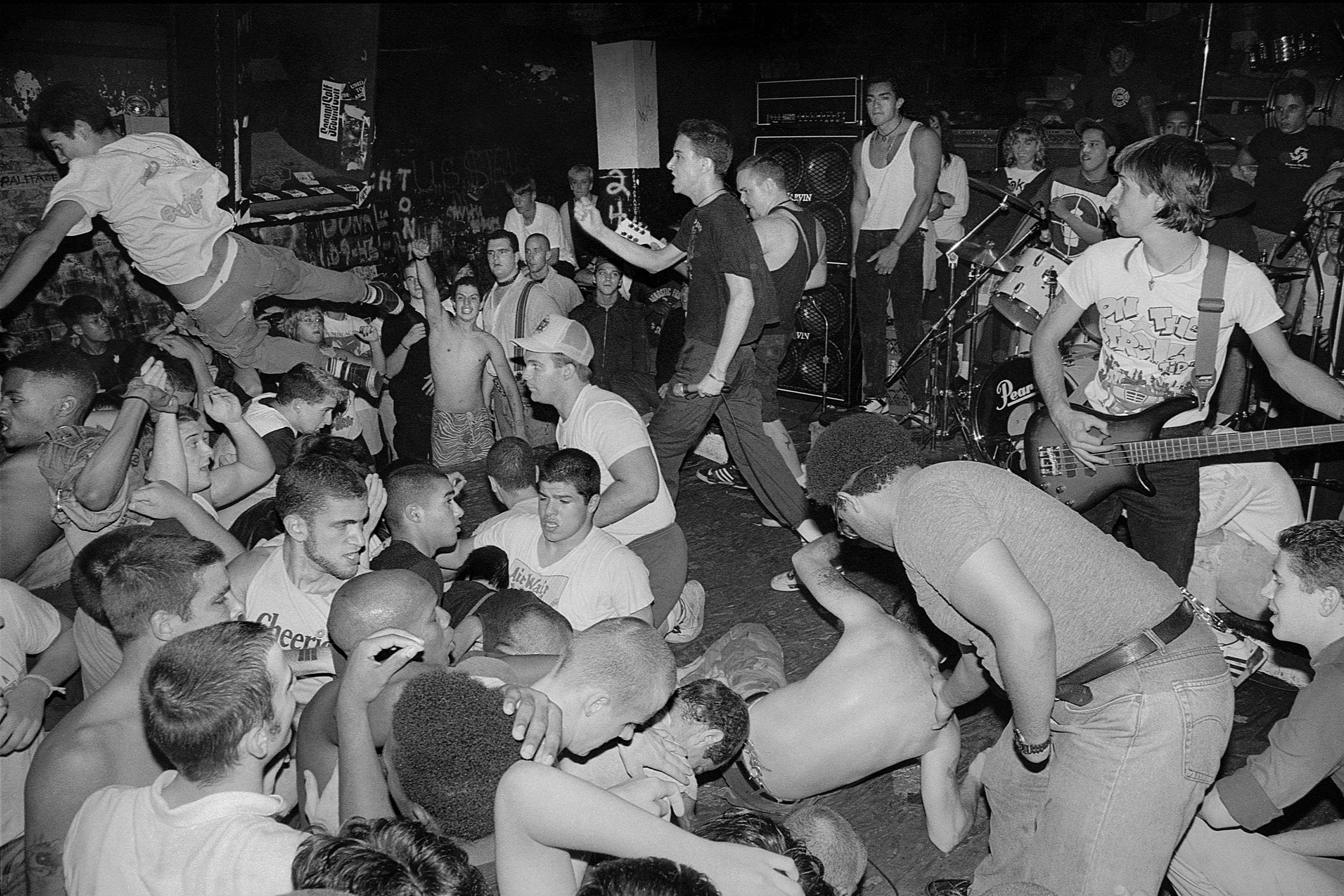
The push and pull between being part of the scene and photographing it gives the book its energy. Ladd often struggled to stay behind the camera. “The pull of certain songs was too intense,” he says. “I needed to be in the crowd, moving, singing along.” Because of this, many of his favorite bands weren’t photographed much, while other, more random moments grew the lasting images.
The venues also influenced how Ladd worked. Bigger rooms like City Gardens could feel overwhelming, but smaller rooms let him get closer to the action. “You could get up close or on stage and make photographs that didn’t feel like the camera was just observing, but participating,” Ladd explains. That feeling of being in the middle of the chaos, not just watching it, is a big part of the book.
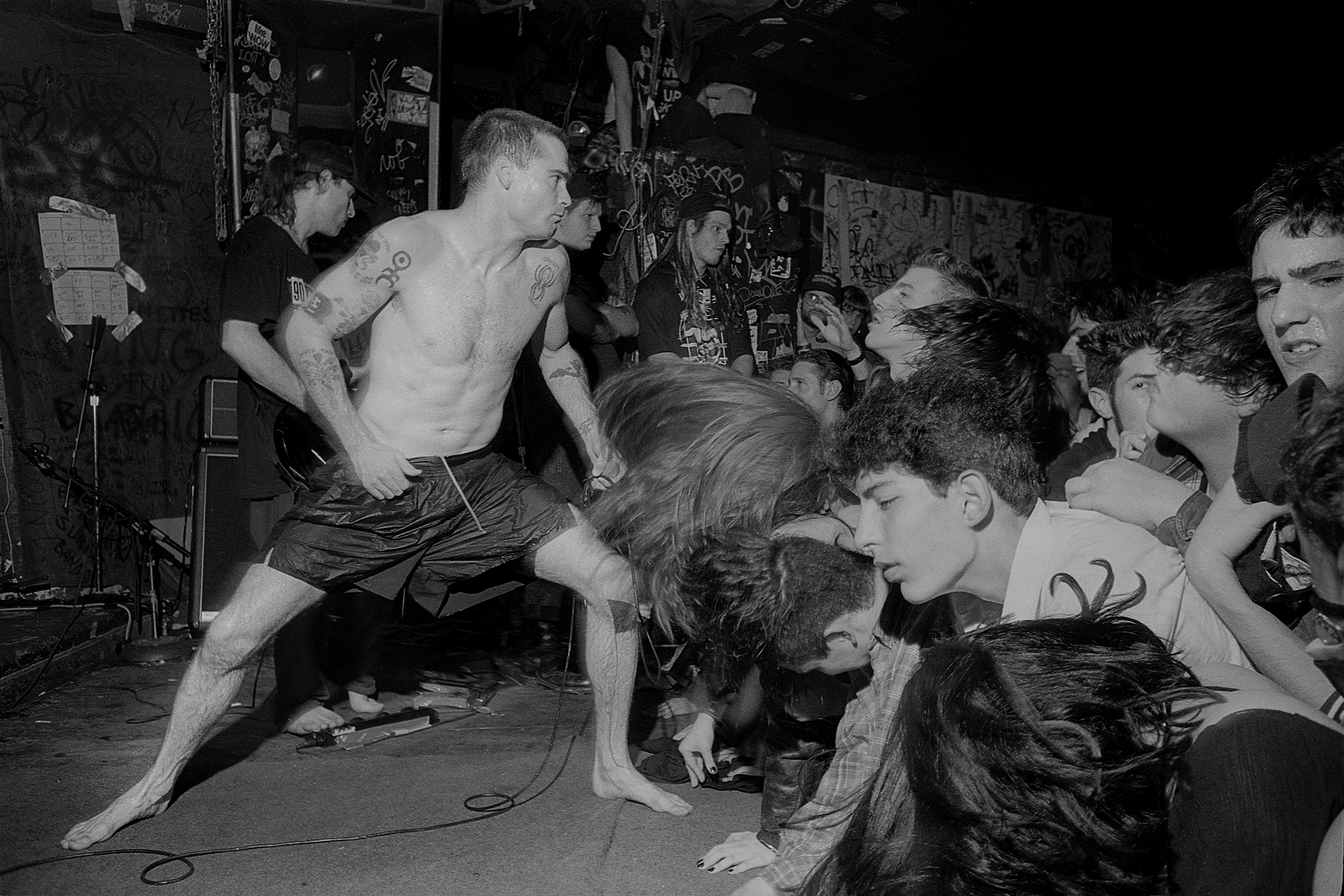
Still, that time had its problems. Ladd says that even though hardcore music claimed to be inclusive, it often wasn’t. “There was little to no fight against casual homophobia, sexism, or mindless violence,” he says. This difference is clearer to him now, especially since moving to Köln, Germany, in 2011. “The shows here are inclusive and mindful… people look out for one another,” he notes. In some ways, he thinks today’s scene better reflects hardcore’s original ideals than what he saw in the ’80s and ’90s.
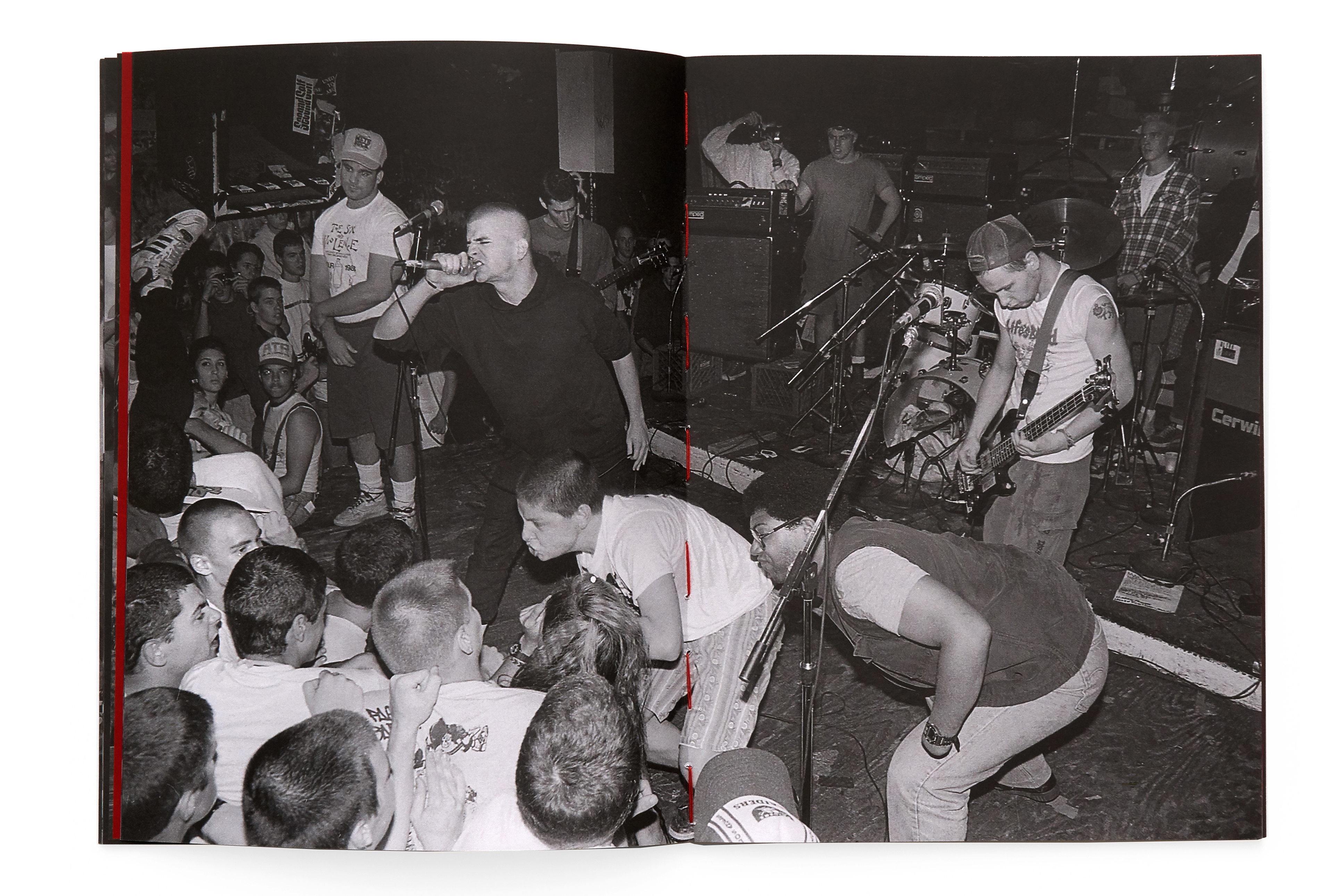
Even though it’s based in music, Move Up Front fits with Ladd’s other work, which often focuses on place and memory. “It’s about spaces that have shaped and influenced me,” he says. The book’s design also reflects this idea. He left out captions on purpose to keep the feeling of being at a show. “Anytime I included text, it distracted from the energy,” he explains.
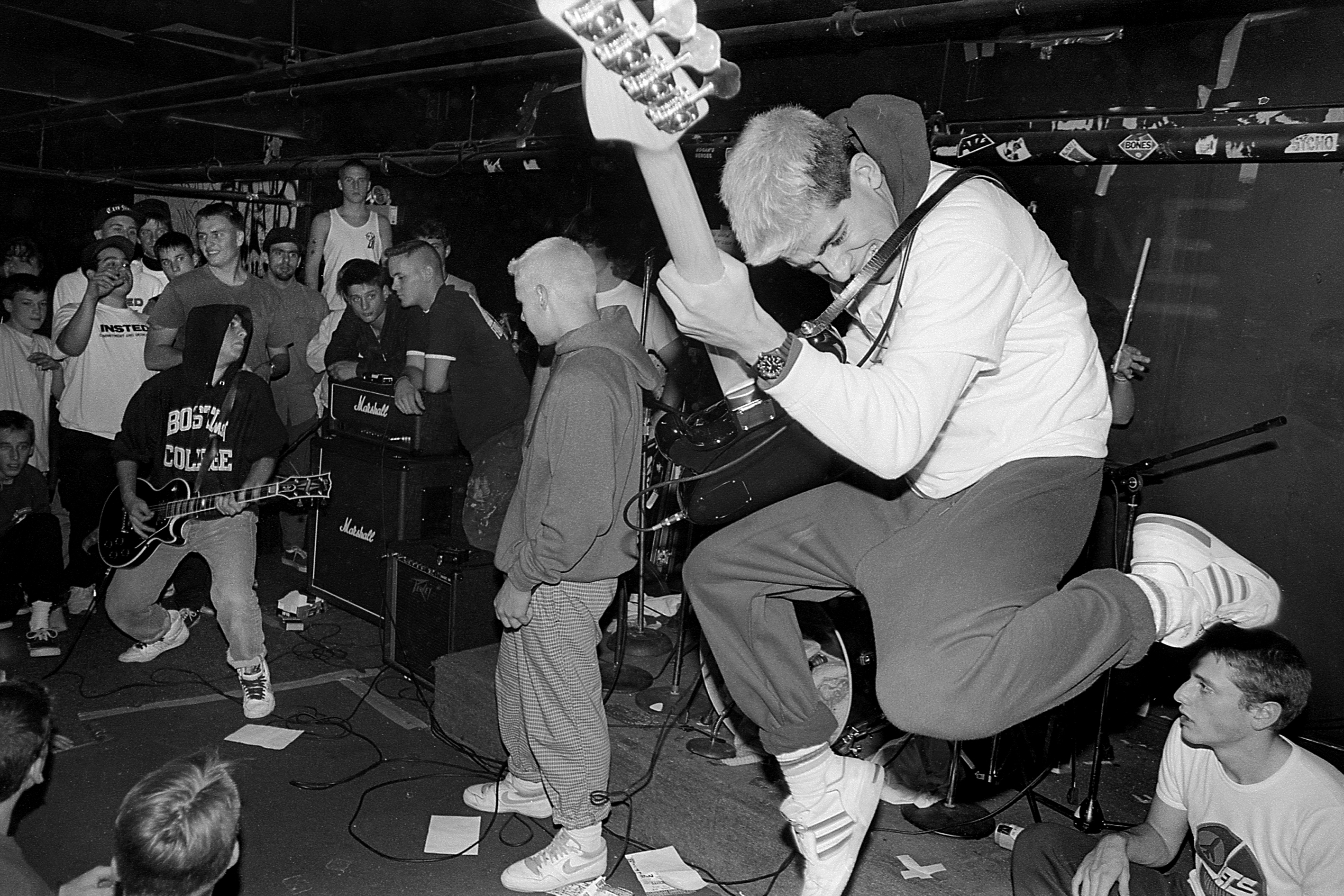
For Ladd, this project isn’t about nostalgia. It’s about capturing a feeling that still matters to him. He appreciates what he managed to photograph, but he also thinks about what he missed.
“I wish I had shot everything.”
***
Move Up Front is available now via Unterwelt Books in the United States, Lifers Books in Canada, and CoreTex in Europe.
See more of Jeffrey Ladd's work at his website.

Tagged: book