
When I ran the first '90s Hardcore Week on No Echo back in 2020, I wanted to do a feature on Conversion Records. Things didn't work out as I had planned, but now that we're in the middle of the second chapter in the series, I rectified that.
Throughout the early ‘90s, Conversion Records quietly built a catalog that captured the energy and experimentation of a hardcore scene in transition. Founded by Outspoken drummer Dennis Remsing in Southern California, the label released a string of releases by such bands as Endpoint, Ignite, Face Value, Hard Stance, and Battery.
It was one of those labels where if you saw their logo printed on the back of the record jacket, you took a shot on it even if you hadn't heard the band yet.
For this No Echo feature, I spoke with Dennis about the origins of Conversion, the stories behind its key releases, and the label’s enduring impact on hardcore history.
Let’s talk about your early days in the OCHC scene in the late '80s. Who were some of the people you met early on?
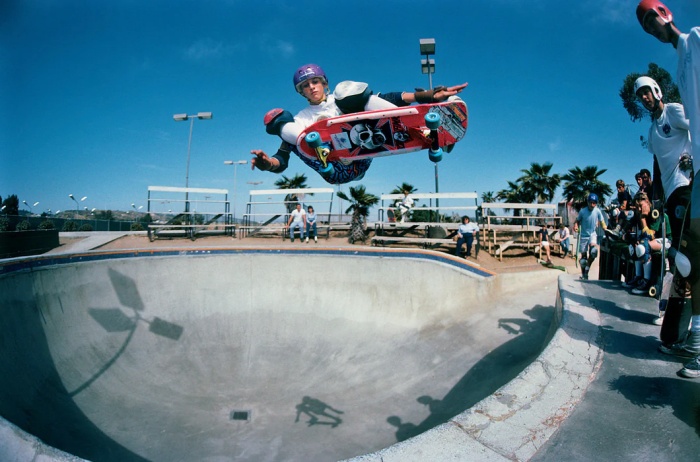
My introduction to OCHC was through skateboarding. In my mid-teens, I made friends with Mike Crowell, a guy who became one of my best skateboarding friends at the time. We spent many nights in empty parking lots skating and talking about music. We were both into punk rock but he knew a bit more about hardcore than I did.
I had recently discovered Minor Threat and Uniform Choice but I didn’t know there was any type of scene around it yet. I just liked the more aggressive sound and was inspired by the messages these bands had. Mike turned me on to local bands like Half Off, Visual Discrimination, and Insted who I really liked and would become a major inspiration towards me playing music.
During this same time, my brother and I spent a lot of time skating in San Diego with our friend Rex Kay. We would travel south to skate Del Mar Skate Ranch and stay at his house in La Jolla on the weekends. Rex was also into punk rock and had started going to local shows. Through him, I met the guys in Amenity and made friends with Mike Down. He was a great guy and an integral part in building the San Diego scene. I saw them play a show in San Diego and became a fan immediately. They were great.
What were some of the local bands that truly inspired you back then?
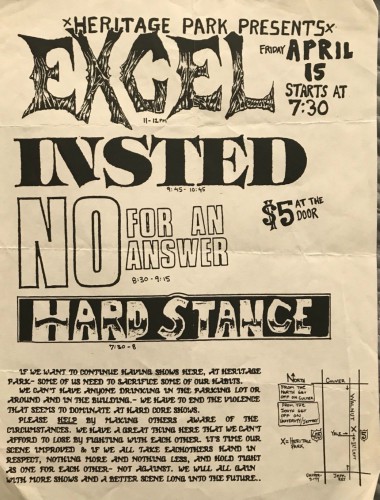
If I could pinpoint a specific show that played a pivotal part in the influence of OCHC for me, it would be the one at the Heritage Park in Irvine in 1989. The lineup was Excel, Insted, No For An Answer, and Hard Stance. The whole night was explosive. Right from the beginning, my 17-year-old mind was blown by Hard Stance. They played with such heart and intensity. Everyone in the room could feel it.
My love for Hard Stance started at that moment and continues today. No For An Answer and Insted were just as mind blowing. Unfortunately, the show was broken up before Excel could play. But one thing was crystal clear in my mind after that experience. I was going to start a hardcore band.
Before we dive into Conversion Records, I would be remiss if I didn't ask you about Outspoken. What's the origin story there?
The whole thing started with Yuckmouth. I had made friends with [future Yuckmouth vocalist] Sam Velde at Mike McGill’s skatepark. Our introduction was a Chain of Strength sticker on his water bottle which inspired me to talk to him. We started talking about bands and I mentioned I had started a record label. He told me about his friend’s hardcore band Yuckmouth. I was a little put off by the name initially but he said they were great and I should come check them out.
They set up a rehearsal in Sam’s mom’s garage in Costa Mesa and invited me over. He was right in saying they were great. They definitely were. It sounded like the Cro-Mags if they were raised in Orange County. I was excited and started talking to them about releasing a 7” on my record label. They were pumped and 100% into it.
This was also the day my lifelong friendship with John Coyle began. He was playing guitar in Yuckmouth and we became friends almost immediately. It’s not an exaggeration that we talked on the phone daily after that rehearsal. We continuously talked about music and bonded over Rites of Spring, Embrace, Black Flag, BL’AST!, Dag Nasty and so many more which lead us to talking about starting a new band.
Initially, we rehearsed in secret since he was already playing in Yuckmouth. He was concerned that they would be upset about him playing in another band. It wasn’t true but when you’re 17, those are the things you worry about. We would do late night practices in John's dad’s machine shop 3-4 times a week, after Yuckmouth practices. To keep it secret, I would pick John up from practice, say goodbye to the Yuckmouth guys, and literally drive around the block and come back to work on our new band.
We had the idea to write and record a bunch of songs anonymously and put out a demo under the name Spotlight. And that we did. We actually recorded a demo of music. Both John and I were very excited about how the music was sounding and couldn’t wait to share it. I’m not sure what the actual timeframe was, but around the same time, John’s friend Mike Hartsfield got in touch with him about starting a band.
Mike played bass in Freewill but was interested in playing music that was a bit more hardcore sounding. They shared ideas about music and the scene and aligned on a lot of it. Excited by the conversation, John told Mike about this project we were working on. He was into it and had a friend named Dan Adair that wanted to join as well. Even though I liked the idea of doing a secret band, I was more excited about turning the songs we wrote into a new band.
Mike and Dan met us at the machine shop. Since Dan was a bassist, Mike moved over to guitar. This allowed John to focus on singing which is what he was most interested in doing at the time. Even though John wrote all the songs on guitar, he wanted to do something different. Plus, he had many ideas for topics and messages he wanted to share through his lyrics. John taught them the songs we had written. That first practice was explosive. We connected so well and it all felt right. Each following practice got better. We were becoming a band and were excited. The only thing to figure out was the band name.
We all knew we didn’t want to call it Spotlight. It didn’t feel right anymore. I can’t remember exactly how it happened but I remember driving home from practice one night thinking about potential band names and I visualized the name Outspoken. I’m not sure if I read it or heard it somewhere recently but I liked how it sounded and felt like it represented what we were doing with the band.
I remember calling Mike when I got home and he told me he had an idea of calling the band Outspoken. I’m not a spiritual person but I was kind of freaked out. I told him I had been thinking about the same exact name on my drive home. It seemed like a sign. We called John and Dan the next day to share the name. They both loved it. We were now Outspoken.
You launched Conversion Records right as that early ’90s shift was happening in hardcore. What made you want to start a label, and what was your vision for it at the time?
I actually got the idea to start the label in ‘89. I had an offset printing night class when I was in high school. I met a guy in class named Sean who was into punk rock and was printing inserts for two different records he was releasing on his peace punk label. This was fascinating to me. I had recently started to collect punk and hardcore records and knew about record labels like SST, Dischord, Epitaph, Frontier, etc… but it never crossed my mind that you could release records yourself.
Around this same time, I was starting to play music with my friend Mike Crowell who I mentioned earlier and we talked about eventually releasing a 7”. Each class, I asked Sean more questions about how records are pressed and started to realize I might be able to do it too. My creative gears were turning and I was inspired. I thought about potentially doing a label for a few weeks.
Then, one night, Mike and I were skating an empty parking lot. I shared my label idea with Mike and much to my surprise he was ecstatic. What I thought was a crazy idea, now seemed much less crazy. I asked him if he wanted to do it with me. He said yes without hesitation. We now had a record label but now where to start?
Initially inspired by what Wishingwell Records was doing, I liked the idea of releasing hardcore straight edge records but also having more diversity and not being limited to only that. Mike was aligned with this since he was less into the straight edge movement than I was. Much like the idea of starting a label, I spent weeks brainstorming potential names for it.
After many terrible ideas that I don’t care to mention, I came up with the idea of Conversion. Inspired by a transition and growth, I liked how it was left up to interpretation but rooted in making a change. I saw it as a form of personal protest to the norm. I wasn’t sold on it initially so I sat on it for a little while.
However, the more I kept coming back to it, the more I liked it and was finally ready to run it by Mike. When I told him and explained the idea behind it, he was sold. That was the beginning of Conversion Records.
How did Positive Approach end up becoming first band/record ever released on the label? I must admit that I wasn't familiar with the band before researching for this interview.
Mike was the connection to that band. He had grown up in Downey and had started going to hardcore shows around LA. I don’t remember exactly how he knew Positive Approach but when we decided to start the label, he mentioned that we should talk to them about recording a 7”.
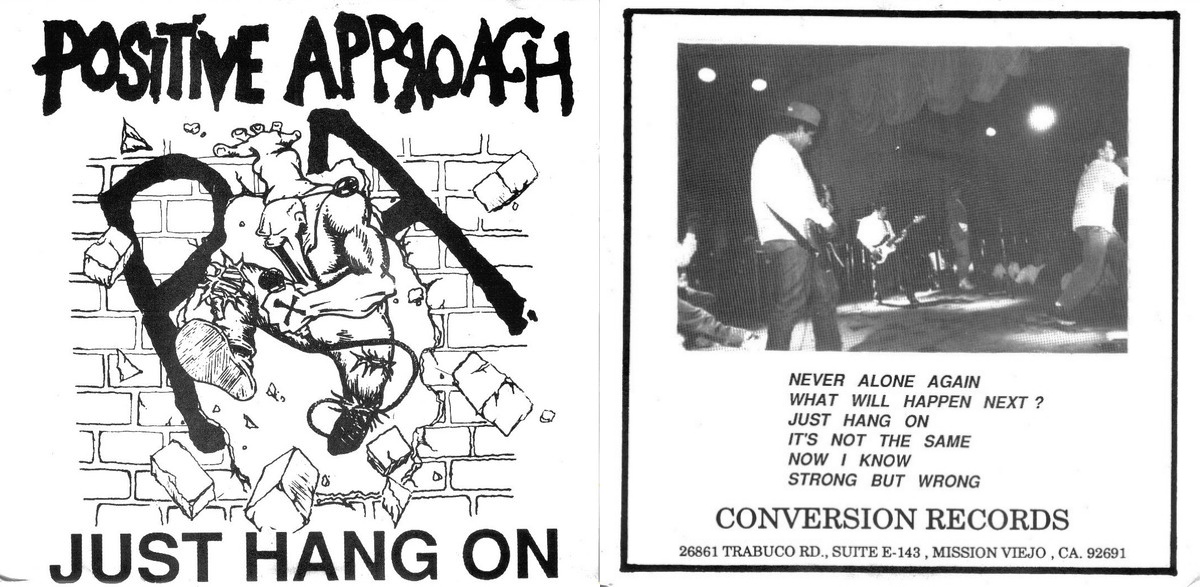
I got a copy of their demo which I really liked. I seem to remember that we called them on the phone but we might have gone to see them play and talk in person about doing a record. Either way, they were excited about doing it and so were we. Mike and I saved exactly $500 each from our minimum wage jobs and we helped pay for their recording at Spot Studios in Santa Ana.
I think the recording cost $200 and we spent the rest getting it mastered and pressed. We did 100 blue vinyl and 900 black vinyl. I became the only kid in my high school to have their own business run out of their bedroom.
Speaking of bands I am not all that familiar with, I have to admit that I never heard of Borderline before prepping for this. I am especially ashamed since I've always been an Outspoken fan!
Borderline was my first band. I started it with Mike Crowell. After skating together and bonding over punk and hardcore music, we decided to start a band. Some of this coincided with my ideas of starting the record label. Mike and I wrote songs together in our bedrooms. He played guitar and I was learning to play drums. I had recently become friends with [future Farside singer] Mike “Popeye” Vogelsang through shows at Spanky’s Cafe.
After bonding over music, I told him about the band we were trying to start. Mike Crowell wanted to sing so I asked Popeye to join on guitar. He was into it. My high school friend Dustin Cook was learning bass. He just got a cool Rickenbacker so I invited him to join too. He was also into it so we started to rehearse weekly in my bedroom and garage. Our neighbors were less than thrilled but we didn’t care because we were inspired.
We started playing local hardcore shows + 1 road trip to Fresno to play with Insted. Then we recorded 5 songs for what would become the ‘Unseen’ 7”. We played more and wrote a few more songs. but the band was splintering. Mike and Dustin were losing interest.
Coincidentally, Mike was also losing interest in the label. I started playing in Outspoken and Popeye started Farside. We started recording a second 7” but never finished it. We played one more show in our friend Dirk’s garage. It wasn’t intended as a last show but ended up being the last time we played.
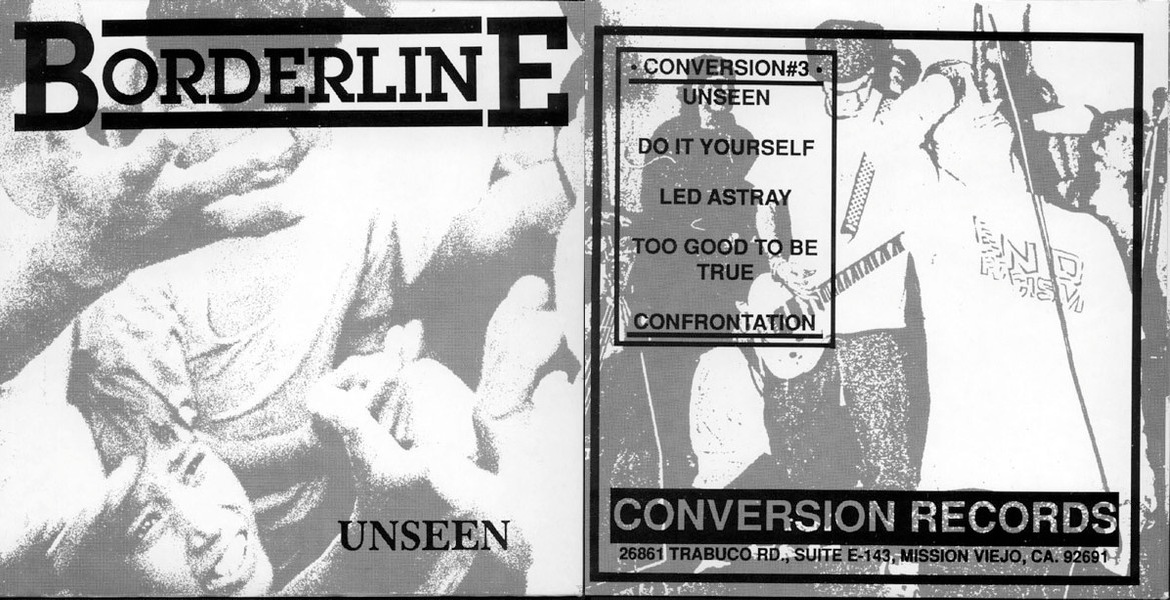
A couple of the early Conversion releases came from two Ohio bands: Die Hard and Face Value. Did you meet those bands while on tour, or were those relationships first established through tape/zine trading? Did the fact that came from outside of the Southern Californian region help the label's profile during that time?
I met John “Dwid” Integrity through my friend Ron Guardipee (Brotherhood, Resolution, Overkill Records). I became friends with Ron through Outspoken. He booked our first shows in Olympia and Seattle in 1990. Ron was one of those guys that made things happen. Very cool, motivated and connected. He was the Mike Down of the Seattle scene in my opinion. He seemed to know everyone in the scene.
I started working on putting together a comp which I’ll go into more detail in the next question. Ron gave me a bunch of phone numbers, one of which was Dwid’s. Ron told me about this great hardcore band Dwid was starting called Integrity and said I should consider putting them on the comp. I called him one day and introduced myself.
We talked for a while and he said he’d mail me their demo tape which I was excited to hear. Once I received it, I must have played it 50 times in a row. It was awesome. I would have offered to do a 7” but they were already releasing it on Victory. Either way, I was a fan and excited to learn about a new hardcore band outside of Southern California or NYC. Their sound was heavy in a different way. Dwid said I could use one of the tracks on the comp which I was very excited about.

Around this same time, Outspoken was attempting to plan an Eastern U.S. tour, starting in Chicago. I had made friends with Detroit-based band Relapse. They were helping book a Detroit show and were also interested in playing some of our shows since they were booking a tour around the same time. The Outspoken tour never happened due to John moving to San Francisco. However, the Relapse guys invited me to meet them in Chicago and go on their tour as a roadie. I was hesitant since I never met them in person before, but I ended up rolling the dice and deciding to do it.
I was excited to see new parts of the country and see new bands along the way. Part of the motivation was that the tour was ending in Cleveland. One of the other bands I had a number for was Louisville, Kentucky’s Endpoint. I received their demo and really liked them as well. We had been talking about releasing their album on Conversion and they wanted to record it at Mars Studio in Cleveland where Integrity recorded. This would allow me to meet them in person and be there for the recording.
Dwid offered me a place to stay at their house in Cleveland once I got there at the end of the tour. He lived in a house with a few people. One of his roommates was Tony Erba. Both of the guys were very nice and generous for letting me sleep on their couch. I truly appreciated it. During this time, Tony and I became friends. He acted as an unofficial tour guide of Cleveland, taking me and some of the Relapse guys around town. It was a lot of fun.
Tony was singing for a band called the Bagmen at the time. He gave me a demo which I liked and brought me to one of their practices. The band was very good and the guys were nice as well. I remember talking to Tony about potentially doing a 7” as well as including them on the comp I was doing but said I just can’t get over the band name. I didn’t like it at all and didn’t want to put out a record with that name on it. By the time I returned home the next week, Tony called me and said they changed the name to Face Value. That was it.
READ MORE: Face Value Singer Tony Erba on the Story Behind 1991's The Price of Maturity Album
During the same time in Cleveland, I also became friends with Tony Pines (Chubby Fresh) who was playing drums with Integrity. He was also very nice. I enjoyed hanging out with him. He shared a cassette tape with me of his old band Die Hard which I really liked. We started talking about releasing that on vinyl at some point. It took a while but eventually happened.
This tie to Cleveland and the Midwest definitely changed the profile of the label for the better. We were no longer confined to bands from Southern California. Not only did it open my eyes, ears and mind to hardcore music happening around the country, but it helped open many others too.
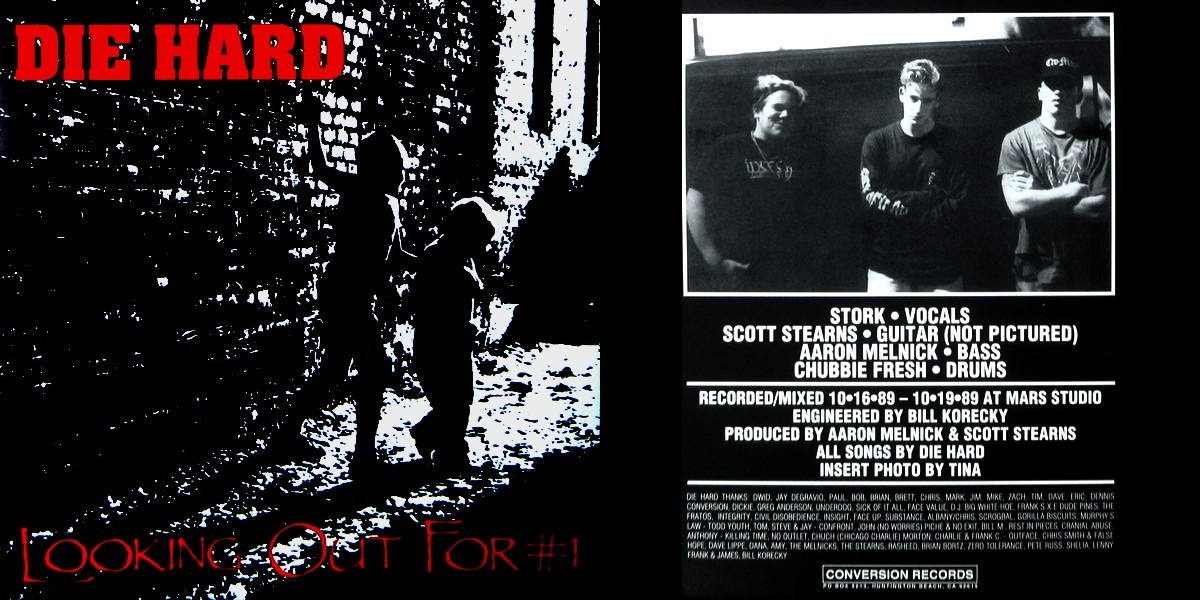
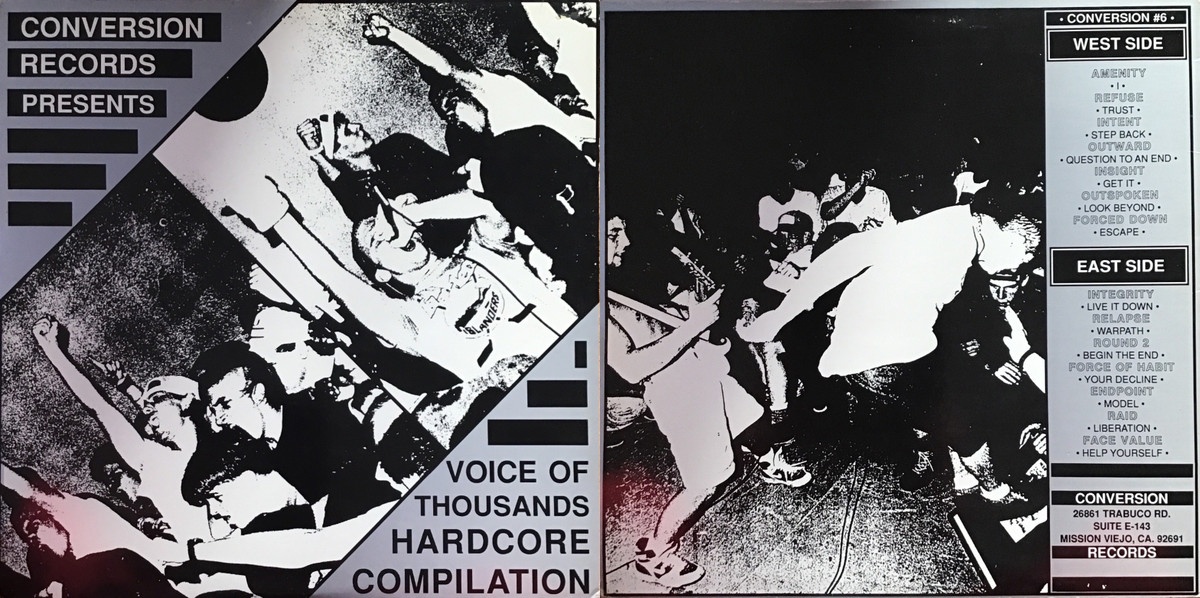
The Voice of Thousands compilation was another early release for Conversion. What do you remember about putting that one together? I always bring this up, but speaking with other friends who have released comps through their labels, I know it can be a huge headache dealing with so many bands and deadlines.
My main idea was to create a comp that joined bands from the western and eastern parts of the U.S. on one record. As I mentioned earlier, the idea was to open hardcore fans' minds to music happening around the country. Side W were bands west of the Mississippi. Side E were bands to the east. John Coyle came up with the title. I loved it because it represented the idea of the comp perfectly.
I had some band connections already but Ron Guardipee was the one who helped connect me to almost every band in the east. Mike Hartsfield connected me to Chris Daily of Smorgasbord Records to help print all the booklets for the comp. Saying it was a challenge to put together is a massive understatement but in the end it was all worth it.
Endpoint's In a Time of Hate was the second studio album you released through the label. Financially speaking, how much of a strain did taking on full-lengths present back then? Were you also covering studio costs? How were you funding everything?
Funding full-length albums was expensive for sure. I had borrowed some money early on but also had some money coming in from mail order sales for previous records. I also had a job. I did pay for the recordings, including Endpoint’s LP.
Studios back then weren’t as expensive so it was manageable. Also, one key factor was I had built a solid working relationship with the pressing plant Erika Records. They started letting me press records on credit which enabled me to put out some of the records without having to pay it in full first. I would give them a deposit and make monthly payments.
As long as payments were made consistently, they allowed the label to have a credit line. Most of the records would not have happened otherwise.

Outspoken was active during that period, so was it tough juggling the band with the label, work duties, and your personal life? Did you have people helping you with the mail order and all that kind of stuff?
It was definitely busy but it was all exciting so it didn’t really bother me. I was constantly in the music world which I loved. It definitely had its challenges but it was fun and inspiring.
Initially, Mike Hartsfield [New Age Records] and I ran our own labels independently. We did our own business responsibilities and sent out mail orders. As things grew, we moved both labels into a warehouse in Costa Mesa. We also started a third label called Network Sound which became sort of the parent company of the three labels.
At that point, we also hired a few friends as employees to help run things with us. Mike and I were still very much involved but it was nice to have help, especially as the band got busier.

Did that relationship with Mike Hartsfield run smoothly on the label front? Did you guys tackle everything 50/50 in terms of the budgeting and decisions on that stuff?
All the releases were co-released by both Conversion and New Age. We split all the costs 50/50. The [Outspoken] Survival 7” had two initial pressings, one on each label, differentiated by the center labels. There’s 1000 black vinyl with silver New Age labels and 1000 black vinyl with yellow Conversion labels. After the first pressing, we stopped having separate pressings. It was too difficult to manage and keep track of.
READ MORE: New Age Records: Everything You’ve Wanted to Know About the Seminal Hardcore Label
Ignite's Call On My Brothers LP is a standout on Conversion Records' discography.
It was an exciting time. There was a lot of buzz around the band. They had a solid lineup with their new vocalist Zoli. Joe Foster came by the office to play me the songs and to ask if I’d be interested in releasing their record. I was floored. It was so good. I felt like I was being given the opportunity to release one of my all time favorite records, Screaming for Change.
I couldn’t say yes fast enough. Joe’s original idea was to release the In My Time EP on the label. It was going to be released in Europe by Lost & Found. After much discussion, I talked them into re-recording those 8 songs + any additional new songs they had and we would release it as an album. They agreed and started writing some new material.
When they were ready, they went into For The Record to work with Jim Monroe. I couldn’t have been happier with the end result. They were already well known in Europe but this album put them on the map in North America.
Outside of the Outspoken and Face Value stuff, Battery's Until the End LP would be my favorite Conversion release. What can you share about that project and the people in the band? Were you all close back then from playing shows together? Lastly, what did you think of the recent reissue that Equal Vision did of the album?
I think the Battery album is probably my most favorite release on the label. They were good friends. I knew Ken [Olden] from Worlds Collide and Brian [McTernan] from Ashes. Outspoken played with both bands multiple times. When they were looking to release their new album, they were excited by the work and success the label had promoting Ignite in the U.S.
Battery had a similar situation to Ignite where they were well known in Europe but didn’t have much support here. They reached out to me asking if I’d be interested in releasing their album. I was already interested but once I heard it I was sold. I’m still blown away by what a solid hardcore record that is and I’m very happy that it’s available again via Equal Vision. They did a great job with the reissue. That record needs to be out there.
Was there ever a point where you thought you could take the label "to the next level," so to speak? You would end up seeing labels like Victory and Equal Vision do that in the years to come/
As I mentioned earlier, there was a point when Mike and I joined forces and rented a warehouse together to run the labels out of. Our first warehouse was in Costa Mesa. That was probably the height of the labels. We were trying to push things further so we could grow and be able to offer more support to the bands. We eventually moved into a larger warehouse in Huntington Beach but the overhead was too expensive and we had to downsize.
When exactly did Conversion Records come to an end, and what brought that decision on?
September 1997. The month I moved to San Francisco, I was in a huge amount of debt and could no longer afford to keep going.
OK, here are some quick ones for you. Do you remember approaching any bands to put out their record that turned you down?
Yes. Earth Crisis and Snapcase. They sent demos to both Conversion and New Age but by the time they reached our mailboxes on the West Coast, Victory already signed them both.
How about records Conversion was supposed to do but fell apart for whatever reason? The "almosts" in the discography.
The Statue 12” EP was an almost. Foundation Records was folding and Ryan Hoffman [also of Justice Leagye and Chain of Strength] called me asking if I wanted to buy the recording from him. I said yes but by the next day when I called him back to get his address to mail a check, he said that he was selling it to Revelation.
What is the most underrated release in the label's catalog?
For me it’s a three-way tie between Process, Man Will Surrender 12” EP, and the Metroschifter LP. All great records for their own reasons but didn’t make a lot of waves in the music world.
Which Conversion Records release had the best cover art?
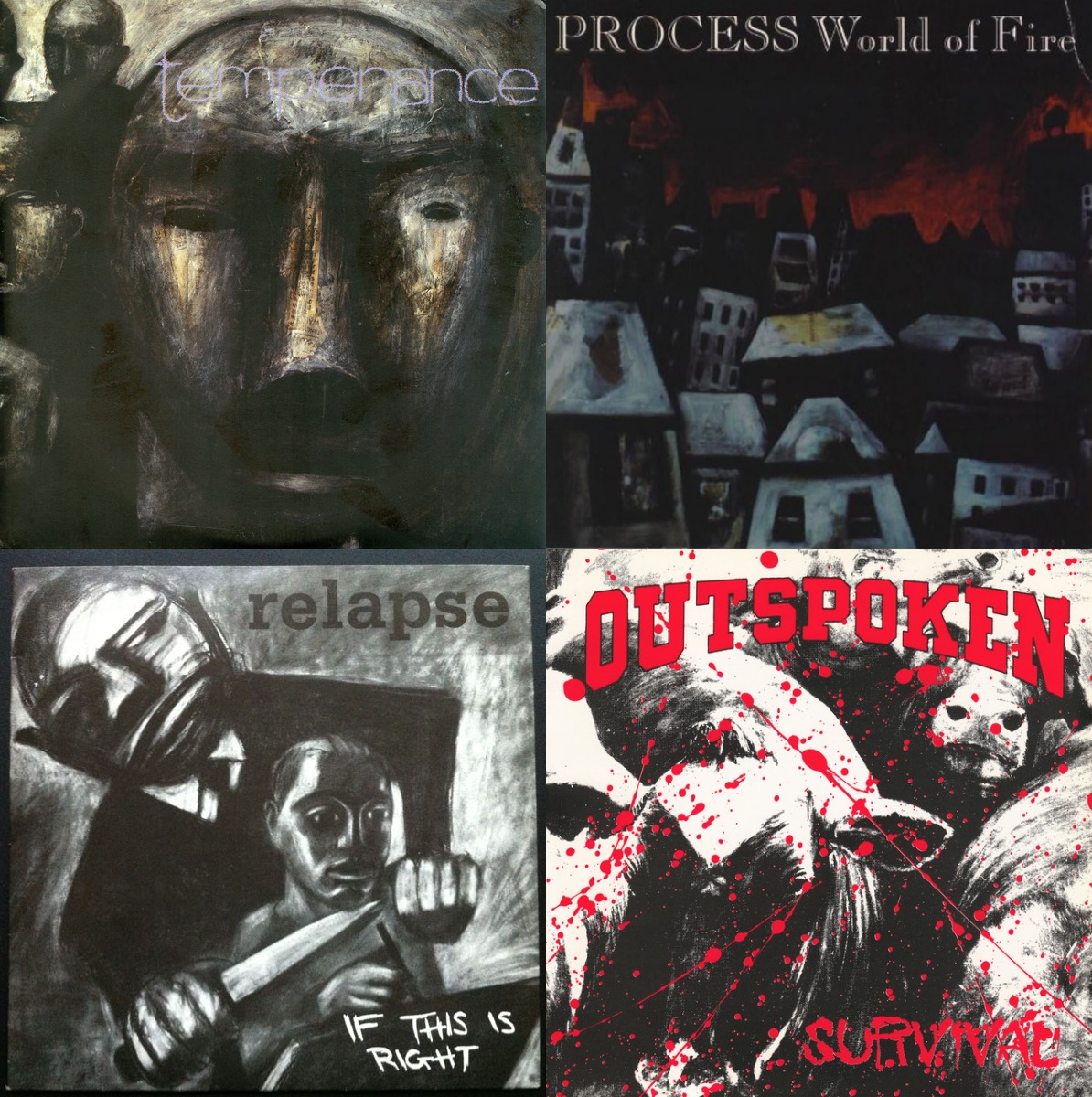
Another tie for me between Outspoken Survival, Face Value Coming of Age, and any of the 3 covers illustrated by New York artist Jordin Isip (Process, Relapse, Temperance).
What was the all-time best selling Conversion Records title? How many copies do you remember pressing up?
Ignite Call On My Brothers. Not sure these numbers are 100% accurate but here goes:
- LP: 1st Press - 100 Clear / 900 Black | 2nd Press - 500 Black
- LP Europe Press: 1000 Black (Different center labels)
- Cassette: 1000
- CD: 6000 (Not sure on this amount?)
Finally, for younger kids who might just be discovering Conversion through Discogs or random playlists, what’s the one record you’d want them to hear first—and why?
Face Value 7”, Endpoint LP, Face Value LP, Process LP, Hard Stance (Discography on Indecision), Man Will Surrender Instrument 12” EP, Metroschifter LP, Endeavor LP, Battery Until the End LP (Equal Vision), and of course all the Outspoken releases.
***
Dennis Remsing on Instagram.
Minus Numbers on Instagram
Tagged: 90s hardcore week, die hard, endpoint, face value, hard stance, outspoken