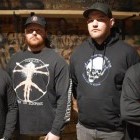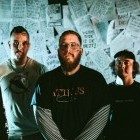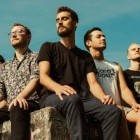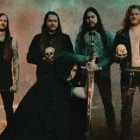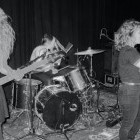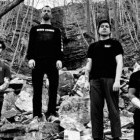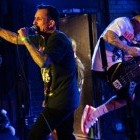
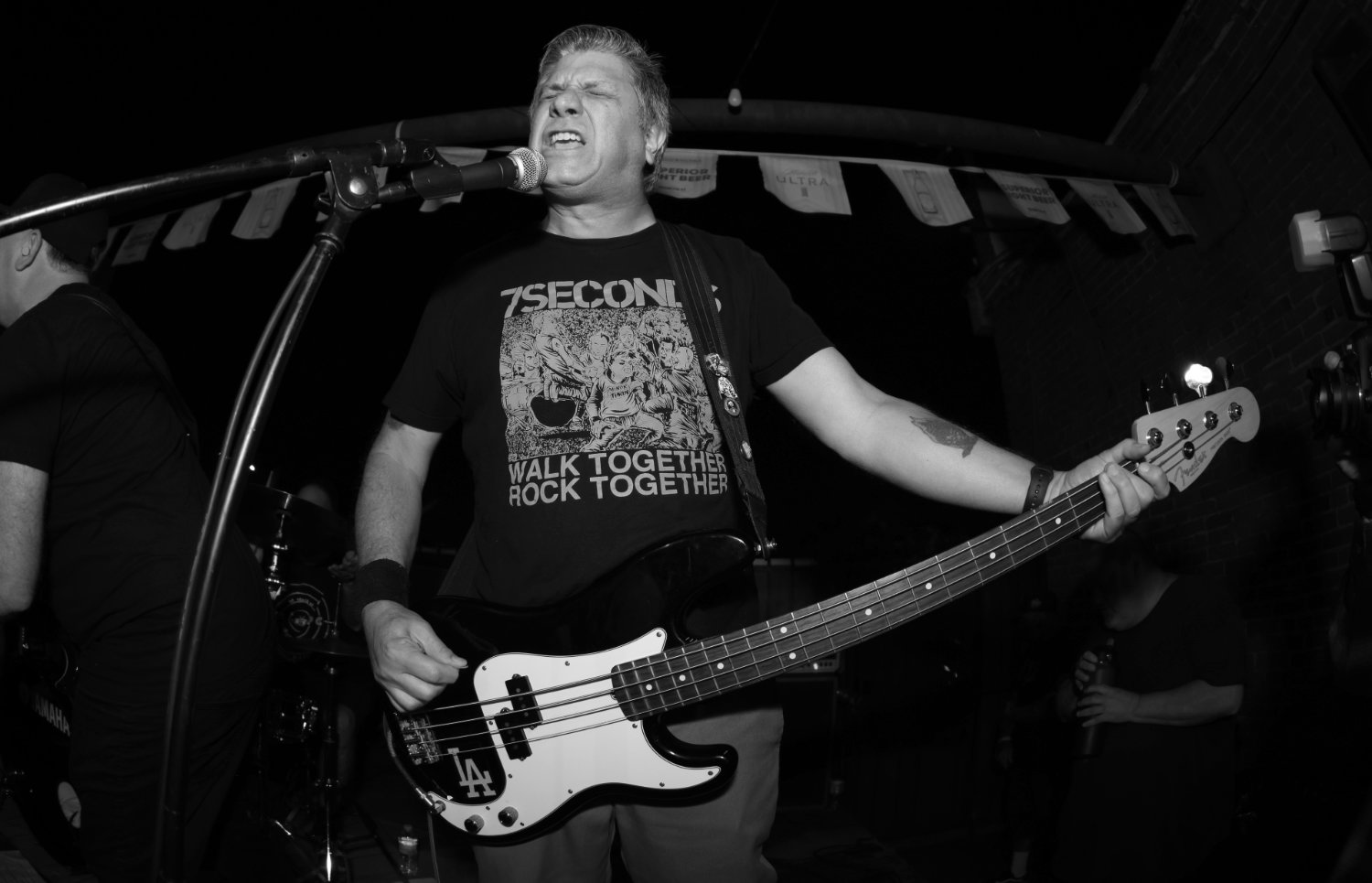
Justice League emerged from the California hardcore scene in the early '80s. The band released one album and two EPs during their original run together and shared live bills with the likes of Social Distortion, 7Seconds, and Youth of Today along the way.
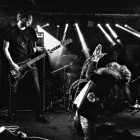
With its members going on to play in such influential hardcore outfits as Chain of Strength, No For An Answer, and Inside Out, Justice League resurrected its spirit with some reunion shows this past summer, culminating with a performance at the Big Frank Harrison tribute in Orange County in June.
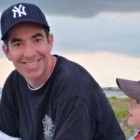
I spoke with bassist Marc Maxey about the California band's foundational years, their shifting lineups, and what it felt like to stand back onstage under the banner of Justice League once again.
Tell me a bit about your upbringing and how music entered your life.
I grew up in Southern California, only child of a single mom, visited my dad on weekends. I got super into music around the age of 9 when a classmate introduced me to KISS. From there it went to Aerosmith, Queen, AC/DC, Led Zeppelin, Black Sabbath, etc.
In middle school the highlight of our social life was the school dances they held on Friday nights every month or two. The DJs at the dances were mostly playing disco at the time, but they would mix in some guitar-based stuff like Devo, B-52s, The Vapors, Blondie, and The Police, so my friends and I started getting into what we though was “punk."
A classmate of mine, Joy Aoki (who would later go on to write for Flipside and do art for Epitaph), loaned me her Ramones records but unfortunately, I didn’t appreciate them as much as I should have at the time.
Fast forward a couple of years, and I was living in Orange County with my dad for high school and mostly into whatever KROQ was playing at the time, plus some rockabilly via The Stray Cats and some locals like Jimmy and the Mustangs, and The Rockin’ Rebels. I went to stay at my mom’s house in Ontario for the summer between my sophomore and junior year and a childhood friend introduced me to some new friends he had made.
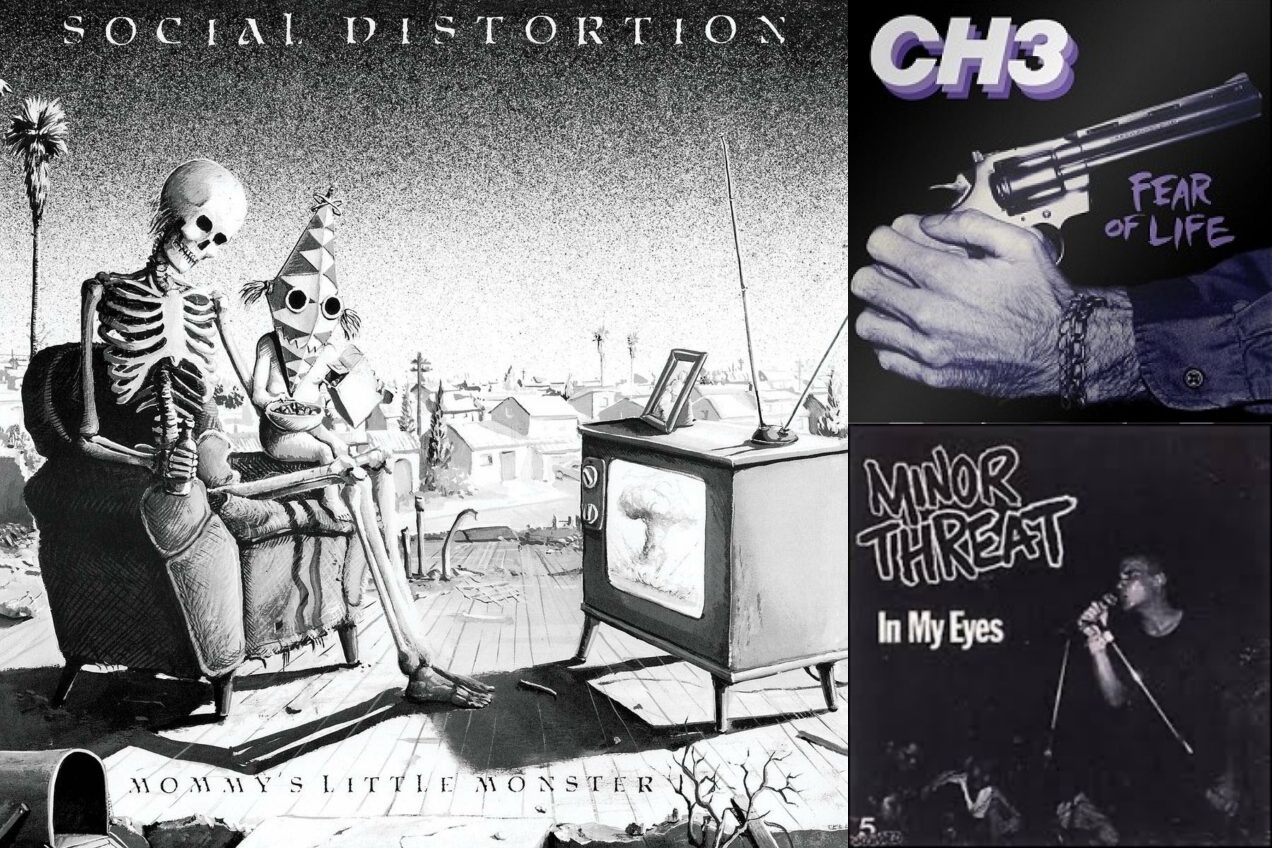
It was the guys in a local band called Diversion and they were all between 14-16 years old. We became fast friends and I went to see them play, went to a Circle Jerks show, and started hanging out at Toxic Shock Records in Pomona where some of my first purchases were Mommy’s Little Monster by Social Distortion, Fear of Life by Channel 3, and In My Eyes by Minor Threat.
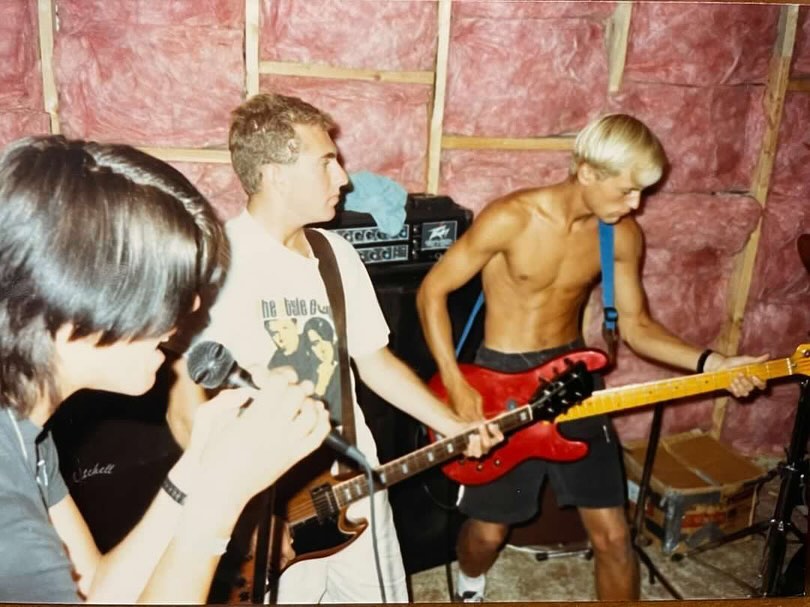
The guys in Diversion broke up for a minute, and then reformed as Justice League. I was hooked for life…
What were some of the influences the band shared during the early Justice League days? There's cover a Weirdos song on the first LP, so that’s definitely an indication of the influences.
The original Justice League material was definitely influenced by a mix of early LA/OC punk combined with East Coast, and mainly DC hardcore. I think Bob Durkee, who put out the first two records, probably turned us onto The Weirdos.
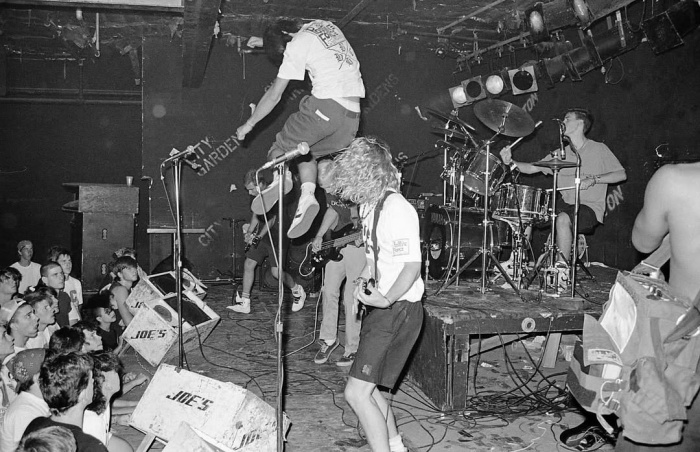
We would go see bands like Decry, America’s Hardcore, Stalag 13, and Youth Brigade almost weekly. Then there were bands like Negative Approach and the Necros from the Midwest, Minor Threat and The Faith from DC, and DYS and SSD from Boston that all played a big part as well.
READ MORE: 2018 interview with Frosty (Chain of Strength, Man Will Surrender)
Take us back to those early Justice League shows, even before you were in the band. Were the crowds more "punk" in the traditional sense, or did it start looking more like what most people would associate '80s hardcore with?
The first official show was in February 1984 with DRI, Ill Repute, Dr Know, Stalag 13 and more at the Cathay de Grande in Hollywood. Back then there was no real distinction between hardcore and punk.
At shows there was a pretty even mix of kids with spiky hair and leather jackets and kids with jeans and flannel shirts. A lot of bands even had a mix of both. The one thing that was very different then was the scene was very young. Someone over the age of 25 definitely stood out and were the exception.
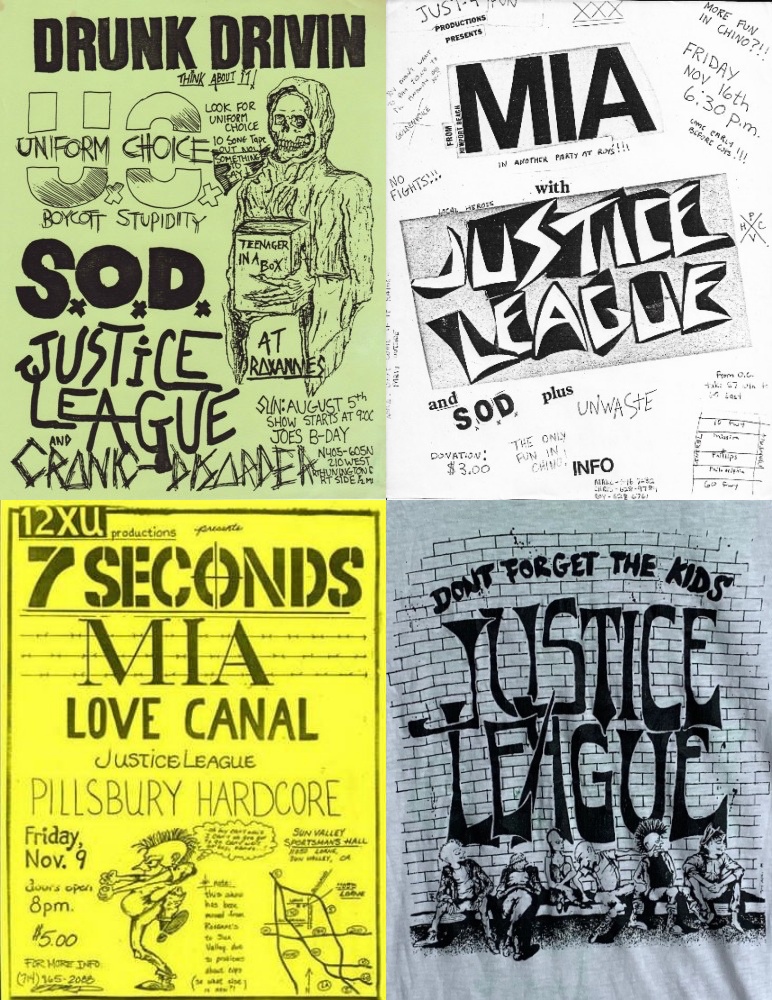
I didn’t join the band until May 1985. Before that, the band played shows with everyone from NOFX, 45 Grave, Agent Orange, Unity, Uniform Choice, Mad Parade, 7Seconds, MIA, Broken Bones to Battalion of Saints
Let's get to the Shattered Dreams LP. You recorded at Radio Tokyo, a studio I have seen in countless liner notes but don't know much about. What do you remember about the sessions?
The [Justice League's first vinyl release] Think or Sink 7” was 6 songs recorded and mixed, all in one night which seems insane now. This time around we actually took some time to record, I think we were there off and on for about two weeks. Maybe 5-6 sessions in total?
Radio Tokyo was a little house in Venice that was converted into a studio. It was owned by Ethan James who played in the '60s/'70s band Blue Cheer. He engineered and produced the record. A lot of the SST bands had been going there so he had somewhat of an idea of what we were going for.
I remember doing some of the backing vocals and the guys realizing that I could actually sing a little which led to me doing the lion’s share of the vocals on Reach Out, but I guess we can get to that later. I wasn’t there for the final mixing session, and i remember being very surprised at all the vocal effects that were put on “Falling Apart” when I heard it later.
The main thing when getting Casey to take over in vocals was making sure he could actually sing in key and not just scream. The newer songs on Shattered Dreams were way more melodic than anything prior so they needed a great vocalist and I think Casey killed it on that record.
Yeah, what was the issue in holding on to a vocalist? Did it come down to people being able to commit time to the band? It was cool seeing Casey join the band on stage at the Big Frank benefit.
Ryan made a joke onstage that night about us having fewer singers than Black Flag, but just barely. [Original Justice League singer] Trevor [Raham] was originally replaced by Jon Roa for whatever reasons the guys thought were important when they were 15-16 years old. Roa left in January of 1986 because he didn’t like the direction the band was headed towards a more melodic sound. Casey left because he didn’t want to go on the 6-week tour we had booked for the summer of ‘86.
For whatever reason each time we got a new singer we just kept moving forward with the same name. In hindsight, it might have made sense to change it at some point but there was never a hard and fast change, it was all gradual.
What are some highlights and lowlights of the band's touring? I didn't get touring until the mid-'90s, and there was so much groundwork laid down by the prior generation by then. Were there any horror stories of showing up somewhere and the "promoter" dropped the ball?
Touring in the '80s was the Wild West. I know all us old guys like to say it, but there were no cellphones, no internet, no GPS. To contact a promoter you had to find a pay phone then use a “borrowed” calling card number and pray they answered.
There were multiple shows on our ‘86 tour that we didn’t find out were canceled until the day before, or the day of when we arrived in town. Looking back our tour routing was kind of crazy, as well as the number of days off we had. A lot of times you’d pull into a town and look for someone who “looked punk” and ask them for directions to the show, or sometimes they would just hop in the van with you.
The best show of that summer ‘86 tour was in Omaha, Nebraska. We were playing all of the Shattered Dreams songs even though the record wasn’t out yet. But for this show, [Fartblossom Enterprizes, Pillsbury Hardcore] Bob Durkee had sent a cassette of the record when he was helping us book the tour. The promoter, a kid around our age, had made copies for all his friends and apparently half the scene had our record on a dubbed cassette months before it came out. So that night was an incredible sweaty set with the whole crowd singing along to all our songs.
Then there was the show in Muncie, Indiana where the opening band played to 30 of their friends, then the band and all their friends left, and we were left with a completely empty club.
The next year we had the opening slot on the 7Seconds U.S. summer tour, so that one was a lot smoother with much bigger crowds, but there were still some crazy moments.
I want to make sure I have the timeline correct. You already mentioned it above, but at some point you became the singer in the band. When the material that comprised the Reach Out EP, was it always intended for you to handle the vocals? That's my favorite Justice League release! I always have thought that it sounded like a DC band from a melodic point of view.
Zack from 185 Miles South put it best. He said it seemed like we were always chasing DC and he’s totally right. Justice League started out wanting to emulate Minor Threat and ended up worshipping Rites of Spring. A couple of times on our ‘86 tour people called us "Rites of Spring West," and we totally took that as a compliment.
As for vocals, after Casey left we had a 6-week US tour booked and no singer. So we kind of figured out over the few weeks before we left who could do what parts of each song on vocals and really made it a team effort. Then when we were writing the Reach Out EP the following spring we kind of kept with that approach but as we got in the studio and started laying down vocals, it ended up with me doing the majority.
So when we were about to head out for our summer 1987 tour with 7Seconds, Ryan asked me to focus on vocals and we’d bring in our roadie John McKeown to play bass. So for what ended up being our final tour I mainly just sang. Ryan was still doing the main vocals on a handful of songs so I did play third guitar on those so I had something to do.
Why did the band end after that Reach Out tour, and was it amicable?
After spending an entire summer together in a cramped van with no A/C, we were all ready for a break. We were also down a guitarist as Mat Baker went off to music school in Boston after the tour and was never meant to be a permanent member. We got together for a rehearsal in August of 1987 with just Ryan on guitar and worked on a couple new songs but it felt off, and we just never picked back up after that. There was no official break up, it just kind of died.
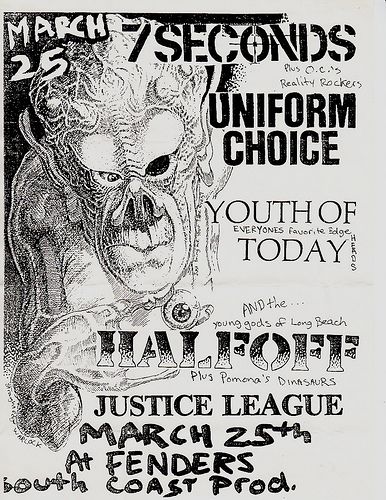
Then, in March of 1988, we got offered a show at Fenders with 7Seconds, Uniform Choice, and Youth of Today. I think Chris [Bratton] and Ryan had already started putting Chain of Strength together by then so their idea was to bring Justice League full circle back to hardcore roots and have Roa sing and play all old songs with me moving back to bass for that show. I wasn’t interested at the time so I passed and Ryan played bass, and that was it for 20 years.
There was a one off 5-song reunion at my birthday party in 2007.
How did the reunion shows come together over the summer? Was it a double-purpose matter of paying tribute to Big Frank and closing things out for the band on a high note with some more local shows? Also, how did it feel playing with Trevor?
Joe Nelson (Trust Records) and Ryan were talking about the Big Frank memorial and the idea of Justice Leagye playing came up. Ryan asked me and I jumped at it. Roa wasn’t interested in singing so Ryan asked Trevor to do it.
We got Mat on board to play guitar. Bratton wasn’t available so I asked my drummer in For Closure, Wal Rashidi, to play drums. It was a total blast and way better than we could have imagined.
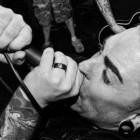
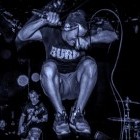
The Pomona show felt like a high school reunion but with people you actually liked, and the Big Frank show was beyond amazing. We had Fred come up and play a song with us, and Casey came up to sing a song which totally capped off the set on a high note.

What's your favorite Justice League song and why? You know, the one you think captures what the band was all about.
Tough one but probably "Never Me" from the Shattered Dreams LP. Really beautiful melodic part at the beginning then it flows pretty seamlessly into a heavier part. I’ve always loved playing that one live and the end where Casey is screaming “It’s Never Me” is totally cathartic.
***
Justice League on social media: Instagram
Tagged: chain of strength, justice league